%22%2F%3E%3C%2Fpattern%3E%3C%2Fdefs%3E%3Crect%20width%3D%22100%25%22%20height%3D%22100%25%22%20fill%3D%22url(%23ph7nnfg)%22%2F%3E%3Crect%20width%3D%22100%25%22%20height%3D%22100%25%22%20fill%3D%22url(%23ph7nnfp)%22%2F%3E%3Ctext%20x%3D%2250%25%22%20y%3D%2250%25%22%20text-anchor%3D%22middle%22%20dominant-baseline%3D%22central%22%20fill%3D%22rgba(255%2C255%2C255%2C0.95)%22%20font-family%3D%22Georgia%2C%20'Times%20New%20Roman'%2C%20serif%22%20font-weight%3D%22700%22%20font-size%3D%22272%22%20letter-spacing%3D%22-0.02em%22%3ERoyal%3C%2Ftext%3E%3C%2Fsvg%3E)
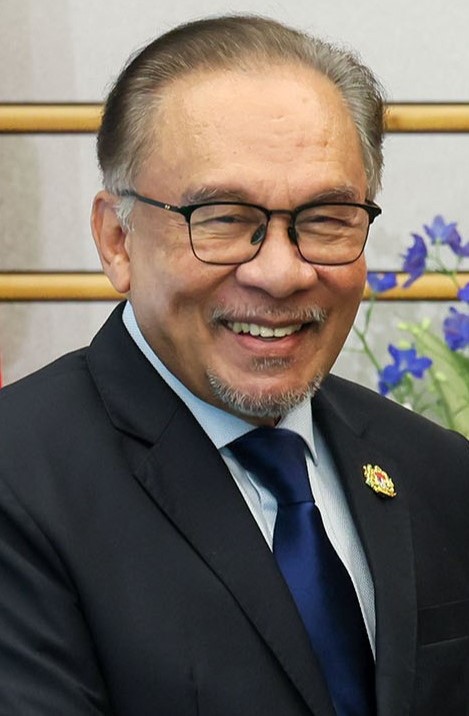
Prime Minister Datuk Seri Anwar Ibrahim has issued a forceful reminder that Malaysia's constitutional framework demands a clear boundary between the royal institution and electoral competition, particularly as Johor prepares for state elections. Speaking in Tangkak on June 23, the Prime Minister stressed that all political parties must recognise and respect the limits of their authority, ensuring the monarchy remains insulated from partisan campaign activities and electioneering disputes.
Anwar's intervention reflects a broader concern within Malaysia's political establishment about maintaining institutional integrity during election cycles. The timing of his statement, ahead of polling in Johor, suggests awareness that election campaigns can sometimes blur the lines between legitimate political competition and inappropriate involvement of constitutional bodies that derive their legitimacy from standing above day-to-day politics. By articulating this principle publicly, the Prime Minister seeks to establish clear expectations for how the electoral contest should unfold.
The separation of powers and institutional independence constitute foundational elements of Malaysia's constitutional monarchy system. The royal institution, as defined by the Federal Constitution, performs ceremonial and symbolic functions while remaining politically neutral. This arrangement protects both democratic electoral processes and the monarchy itself by preventing the crown from becoming entangled in partisan disputes that could diminish its standing as a unifying national symbol. Anwar's statement reinforces these constitutional principles at a moment when they warrant explicit restatement.
Johor holds particular significance in Malaysian politics given its status as one of the most developed and politically influential states. The sultanate's historical prominence and the current Sultan's visible engagement in state governance have occasionally generated questions about the appropriate scope of royal involvement in policy decisions. By emphasising boundaries now, ahead of the election, Anwar appears intent on preventing any future controversy where electoral outcomes might become tangled with royal prerogatives or perceived royal preferences.
Political campaigns naturally generate passion and competing claims about governance priorities and policy direction. In such environments, the temptation sometimes arises for contesting parties to invoke the perceived support or positions of respected institutions, including the monarchy. Anwar's warning signals that such approaches are impermissible and that parties must compete purely on their respective platforms and records without attempting to leverage royal backing or involvement. This represents an important safeguard for electoral integrity.
The Prime Minister's remarks also carry implications for how federal-state relations should function. During election campaigns, federal and state politicians may find themselves on opposing sides, potentially creating incentives to seek advantages through appeals to external authorities. By explicitly circumscribing the royal institution's role, Anwar effectively prevents such strategic manoeuvres and ensures that electoral outcomes depend solely on voter preferences and campaign effectiveness rather than on any institutional machinations.
Malaysia's experience with complex federal systems and the distinct positions occupied by state rulers within the constitutional framework mean that clarity on these matters proves essential. Unlike purely parliamentary systems without regional monarchs, Malaysia must carefully manage the intersection of sultanic authority and democratic electoral processes. Johor's Sultan, as a significant constitutional figure within the state, potentially occupies a position where partisan actors might attempt to align his perceived interests with their electoral goals. Anwar's statement effectively preempts such attempts.
The separation principle Anwar emphasises also protects political space for genuine competition. When voters cast ballots based on party platforms and leadership quality rather than on perceived royal approval or institutional alignment, the electoral process becomes more representative of actual public preferences. Conversely, if parties believe that association with or invocation of the royal institution provides electoral advantage, such incentives could distort campaign dynamics and undermine authentic democratic choice.
For Southeast Asian regional observers, Anwar's approach represents a considered defence of constitutional monarchy within competitive democratic systems. Several nations in the region maintain similar institutional arrangements, and Malaysia's practical experience in managing the boundaries between royal protocol and electoral democracy offers instructive lessons. By articulating these principles explicitly and publicly, the Prime Minister contributes to broader understanding of how such systems can maintain legitimacy and functionality across both their ceremonial and democratic dimensions.
The statement also reflects Anwar's broader governance philosophy, which emphasises institutional respect and constitutional adherence even when political advantage might accrue from more aggressive tactics. Since assuming office, the Prime Minister has consistently advocated for strengthening Malaysia's democratic institutions and rule-based governance frameworks. His insistence on keeping the royal institution beyond electoral contestation aligns with this trajectory and suggests his administration intends to model appropriate institutional behaviour for other political actors.
Moving forward, Johor's election campaign should demonstrate whether political parties genuinely internalise and respect the boundaries the Prime Minister has delineated. The degree to which candidates, party officials, and campaign materials avoid any suggestion of royal involvement or preference will serve as a practical test of Malaysia's political maturity. Success would validate the institutional safeguards that have enabled Malaysia to maintain both constitutional monarchy and competitive democracy, while reinforcing public confidence in the integrity of electoral processes.