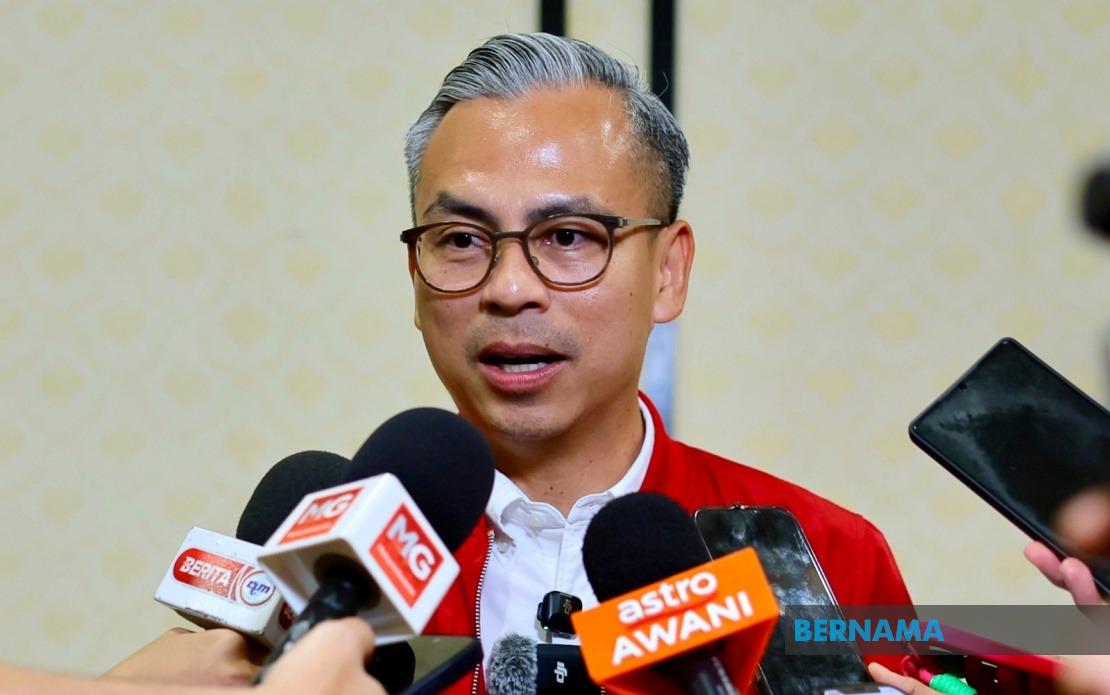
With the Johor state election bearing down on July 11, Communications Minister Datuk Fahmi Fadzil has extended an olive branch to the state's political contenders, offering the national broadcaster RTM as a neutral ground for substantive public dialogue. Speaking in Muar on July 2, Fahmi proposed that Johor Menteri Besar Datuk Onn Hafiz Ghazi and Pakatan Harapan's Dr Maszlee Malik—who is contesting the Puteri Wangsa state seat—could utilise RTM TV1 to engage in a live, televised discussion centred on the state's development priorities and future trajectory. The gesture represents an attempt to elevate electoral discourse beyond traditional campaign rhetoric, introducing a platform where policy substance might take precedence over partisan grandstanding.
The proposal carries particular significance given ongoing tensions within Malaysian electoral politics around the role of national media institutions. Fahmi's emphasis that the platform is designed to facilitate "an exchange of ideas" rather than "political sparring or partisan debate" reflects broader concerns about maintaining RTM's perceived independence and credibility as a public broadcaster. For Malaysian viewers accustomed to media coverage that sometimes favours the incumbent government, the explicit framing of this opportunity as one grounded in developmental discussion rather than adversarial combat suggests an effort to recalibrate public perceptions of how state institutions can support democratic discourse.
Fahmi positioned the dialogue as a demonstration of leadership qualities essential for Johor's advancement over the ensuing five-year term. He articulated a view that elected leaders must possess the capacity to engage professionally with differing perspectives and constructive criticism—attributes he suggested are prerequisites for effective governance. This framing transforms what might otherwise be dismissed as a campaign stunt into a purported test of candidates' readiness for high office. The minister's confidence that Onn Hafiz "will be willing to engage with Dr Maszlee" carries an implicit challenge to the Menteri Besar, positioning acceptance or refusal as a measure of openness to dialogue.
The timing of Fahmi's announcement arrives amid what appears to be tactical pressure on Pakatan Harapan to clarify its Menteri Besar candidate before committing to public debate. Some quarters within the opposition coalition have apparently called for PH to first designate its chief ministerial hopeful as a precondition for any dialogue with the incumbent administration. Fahmi's intervention, by proposing a platform specifically for Maszlee and Onn Hafiz without requiring prior formal declaration of a unified opposition leadership candidate, effectively sidesteps this procedural obstacle. The move suggests either confidence in PH's internal coherence or pragmatic acknowledgment that electoral dynamics in Johor may not conform to opposition leadership preferences.
The Communications Minister separately praised Maszlee for conducting interactive engagement with 41 youths to canvass their aspirations for Johor's future. This commendation underscores a strategic emphasis on youth participation in electoral processes—a demographic segment increasingly courted by all political formations in Malaysia. By highlighting such grassroots dialogues, Fahmi implicitly validates the notion that candidates who actively seek constituent input demonstrate a governance philosophy aligned with inclusive decision-making. For younger voters evaluating options in the Johor contest, such endorsements may carry weight in assessing which candidates genuinely prioritise intergenerational dialogue versus perfunctory campaign appearances.
The Puteri Wangsa constituency presents a crowded field that extends beyond the Onn Hafiz-Maszlee comparison. Maszlee will contend against Barisan Nasional's Teow Chia Ling, Nicholas Paul Vincent representing Parti Bersama Malaysia, MUDA's Rashifa Aljunied, and independent Wang Wee Seong. This fragmented contest illustrates how Malaysia's electoral landscape has fractionalised beyond the traditional two-coalition framework. While the government's RTM proposal implicitly centres on a BN-PH confrontation, the actual constituency contest involves multiple challengers pursuing distinct political visions and constituency bases.
In contrast, the Machap seat—where Onn Hafiz himself is defending his incumbent position—has crystallised into a straight fight between the Menteri Besar and PH's Nor Hafiz Roslan. This binary contest carries immediate implications for Johor's executive leadership, making it arguably the most consequential race within the broader state election. Onn Hafiz's simultaneous role as a constituency candidate and sitting Menteri Besar potentially complicates his scheduling and media positioning, though the Machap contest appears to have attracted less public attention than the Puteri Wangsa dynamics.
Fahmi's intervention also addresses logistical concerns surrounding mid-month polling. The state election commission has designated July 11 as polling day, with early voting permitted on July 7. The minister explicitly urged younger voters to overcome any practical difficulties associated with this timing and exercise their franchise, framing participation as both a civic responsibility and instrumental act in determining Johor's developmental trajectory. This appeal carries particular resonance given that youth voter mobilisation often determines electoral outcomes in Malaysian contests, and mid-month polling dates can depress turnout among students and mobile workforce segments.
The proposed RTM platform represents a calculated political manoeuvre by Pakatan Harapan's communications apparatus to shift the contest narrative toward policy substance while simultaneously testing whether the incumbent administration demonstrates genuine confidence in its record and vision. Should Onn Hafiz decline the dialogue offer, opposition narratives would frame such refusal as evidence of reluctance to defend his tenure before voters. Conversely, if he accepts, the dialogue provides a nationally televised opportunity to articulate BN's developmental achievements and future commitments. Either way, Fahmi's initiative has succeeded in establishing an implicit challenge to the Menteri Besar's willingness to engage substantively with political opposition.
For Southeast Asian observers monitoring Malaysian electoral evolution, Fahmi's proposal illustrates ongoing tensions within the region between formal democratic institutions and political party competition. The effort to utilise the national broadcaster as a deliberate platform for policy-focused dialogue—even while acknowledging political realities that may constrain such discussions—reflects an aspiration that Malaysian elections might transcend personalised conflict. Whether this particular dialogue materialises remains uncertain, but the proposition itself signals that communications specialists within Malaysia's political establishment increasingly recognise electoral legitimacy benefits from demonstrating commitment to inclusive, substantive public discourse.
The broader implications extend to how Johor voters will evaluate competing visions for their state's economic and social development across the five-year period following this election. Development agendas for Malaysian states increasingly centre on balancing industrial diversification, technology adoption, labour productivity, and sustainability—challenges that transcend conventional left-right political divides. A substantive policy dialogue, should it occur, would allow Johor's electorate to assess how different political formations address these shared governance imperatives, potentially elevating electoral choice beyond faction loyalty or charismatic leadership assessment. Whether Malaysian electoral culture has sufficiently matured to embrace such discussions remains an open question as the July 11 polling date approaches.

