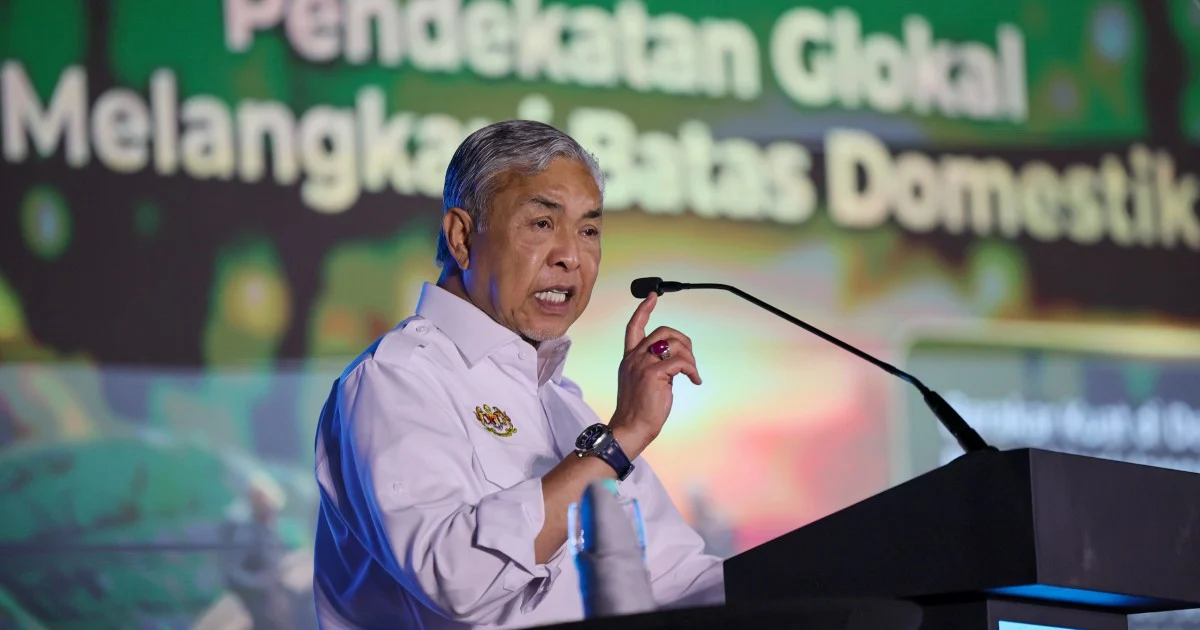
Deputy Prime Minister Datuk Seri Dr Ahmad Zahid Hamidi has emphasised that Malaysia's approach to rural development must evolve beyond isolated regional initiatives, instead positioning the National Rural Economic Agenda as a comprehensive roadmap that integrates domestic ambitions with the broader international development landscape. Speaking in Maran, Zahid underscored the need for rural growth trajectories to move in concert with established global economic frameworks, suggesting that isolated approaches to village-level development risk leaving Malaysian communities disconnected from worldwide prosperity corridors.
The statement reflects a strategic recalibration in how policymakers view rural advancement across Southeast Asia's third-largest economy. Rather than treating rural development as a separate track operating independently from national and international economic systems, the government appears committed to embedding rural economies directly into global supply chains, trade agreements, and investment frameworks. This positioning carries particular significance for Malaysia's agricultural heartland, manufacturing clusters, and emerging digital economy sectors that increasingly depend on international connectivity.
The National Rural Economic Agenda serves as the operational framework through which this alignment is intended to materialise. By explicitly anchoring rural initiatives to global economic priorities, the agenda potentially opens rural entrepreneurs and communities to international funding mechanisms, technology transfer opportunities, and market access arrangements that might otherwise remain concentrated in urban centres. This approach acknowledges that rural Malaysia cannot thrive in isolation, particularly when regional competitors increasingly integrate their hinterlands into cross-border economic systems.
For Malaysian policymakers, the challenge involves threading a complex needle between preserving rural character and livelihoods whilst exposing rural communities to global market dynamics. Agricultural sectors, which remain fundamental to many rural economies, face pressure to meet international quality standards, sustainability certifications, and digital traceability requirements. Small-scale farmers and rural entrepreneurs must simultaneously adopt modern practices whilst maintaining the social fabric and environmental stewardship that define their communities.
Zahid's remarks signal government recognition that rural development cannot be pursued through conventional subsidy and transfer mechanisms alone. Instead, a futures-oriented agenda requires investing in rural digital infrastructure, skills training aligned with global market demands, and institutional frameworks capable of connecting rural producers directly to international buyers and supply networks. This transformation demands substantial capital outlay and represents a significant departure from historically protective approaches to rural policy.
The Southeast Asian context amplifies these considerations. Neighbouring nations increasingly compete for agricultural exports, tourism investment, and skilled rural workforces. Vietnam's agricultural innovation, Indonesia's commodity integration into global markets, and Thailand's tourism ecosystem demonstrate that rural advancement correlates directly with international competitiveness. Malaysia's rural agenda must therefore position domestic communities not as beneficiaries of domestic redistribution but as active participants in regional and global economic systems.
Implications for Malaysian stakeholders extend across multiple dimensions. Rural entrepreneurs accessing global markets require reliable broadband connectivity, logistics infrastructure linking remote areas to international ports and airports, and regulatory frameworks that facilitate rather than obstruct international commerce. Agricultural producers need training in export standards, food safety certifications, and digital marketing capabilities that transcend traditional domestic distribution channels. Educational institutions serving rural populations must align curricula with international skill requirements rather than exclusively domestic labour market conditions.
The government's framing also addresses demographic realities facing rural Malaysia. Youth migration toward urban centres has depleted many villages of working-age populations with entrepreneurial drive and technical capabilities. By positioning rural development within a global economic framework, policymakers implicitly argue that staying in rural areas need not mean economic stagnation. Digital platforms enabling remote work, e-commerce facilitating rural production reaching global consumers, and knowledge-intensive agricultural practices can generate competitive incomes without requiring relocation to Kuala Lumpur or George Town.
However, integrating rural economies into global systems carries inherent risks that warrant careful management. Exposure to international commodity price volatility could destabilise rural livelihoods historically buffered by government support mechanisms. Competition from lower-cost producers elsewhere in Asia and beyond might render some traditional rural economic activities uncompetitive without continuous productivity improvements. Environmental degradation accelerates when rural areas prioritise export volumes over sustainable practices. These tensions between integration and protection remain unresolved in the policy framework Zahid articulated.
The Deputy Prime Minister's positioning also reflects Malaysia's broader regional and bilateral economic strategies. Trade agreements with partners spanning Asia, Europe, and the Middle East create commercial opportunities that rural communities must be equipped to exploit. Simultaneously, these international commitments impose standards and regulations that rural producers must satisfy. Aligning the National Rural Economic Agenda with global priorities therefore represents not merely an aspirational positioning but an operational necessity for Malaysia to fulfil existing international commitments and access promised market opportunities.
Moving forward, translating this vision into measurable rural development outcomes will require coordination across government agencies, private sector investment, and community participation. Rural development cannot be merely a top-down initiative imposed by urban policymakers but must engage village leaders, farmer cooperatives, and small business associations in defining how global integration translates into locally meaningful prosperity. Without this participatory dimension, the risk emerges that rural communities become passive recipients of policies designed elsewhere rather than active architects of their economic futures.

