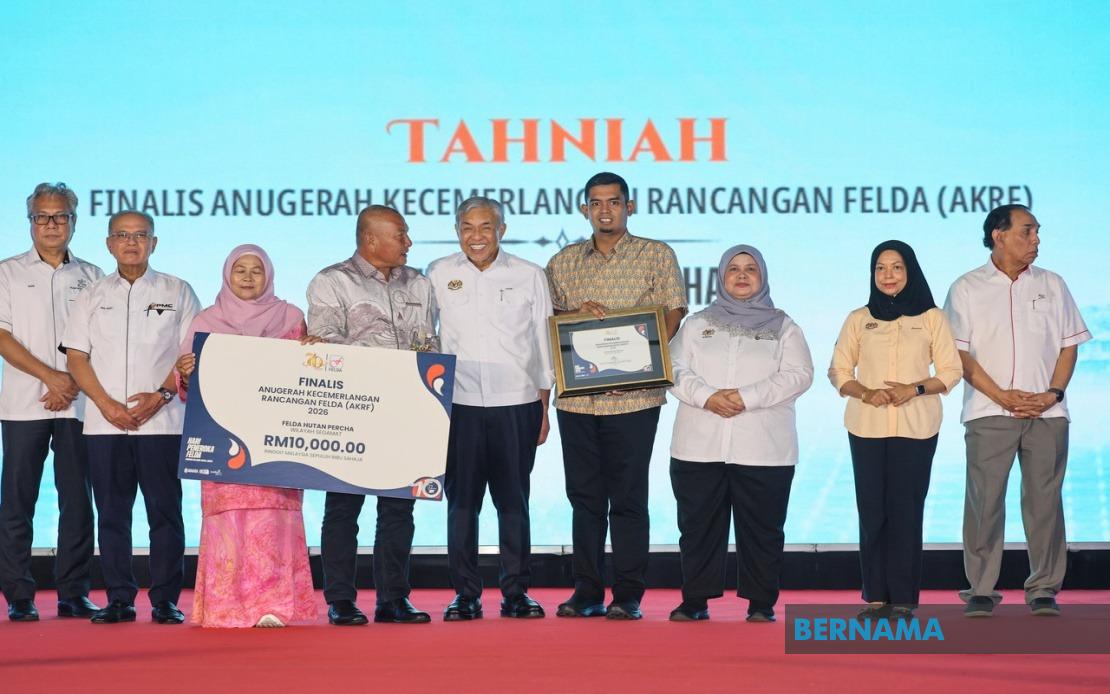
Deputy Prime Minister Datuk Seri Dr Ahmad Zahid Hamidi has articulated a transformative vision for rural development in Malaysia, one that transcends traditional boundaries and positions agricultural and rural entrepreneurship within the broader context of regional and international commerce. Speaking at the World Rural Development Day 2026 celebration at Bandar Tun Razak Stadium in Maran on July 6, Ahmad Zahid, who concurrently serves as Rural and Regional Development Minister, stressed that the conventional approach to rural economies—viewed primarily through a domestic prism—is fundamentally inadequate for the competitive landscape ahead.
The Deputy Prime Minister emphasised that rural entrepreneurs require the strategic confidence and institutional support to venture beyond Malaysia's borders into larger, more lucrative markets across ASEAN and the expanding global halal economy. This reframing represents a significant departure from earlier models that emphasised self-sufficiency within national boundaries. Ahmad Zahid articulated the scale of opportunity available, asserting that Malaysian rural products and brands possess the inherent quality and distinctiveness to achieve international penetration, provided they operate within integrated networks that prioritise cross-border connectivity and supply chain integration rather than treating national boundaries as endpoints.
Central to this strategic recalibration is the National Rural Economy Agenda, which Ahmad Zahid has designated as Malaysia's governing blueprint for the ensuing phase of rural development. The ministry has operationalised this vision through targeted initiatives introduced over the preceding three years, notably the RisSMart and IkonDesa programmes, which function as marketing and distribution platforms enabling rural producers to access wider consumer bases. These schemes have facilitated the emergence of more than 7,000 new rural entrepreneurs, with cascading employment effects that have generated approximately 15,000 jobs and accumulated sales exceeding RM1.77 billion. This trajectory indicates a fundamental shift in ministry strategy away from infrastructure-centric development toward a comprehensive ecosystem approach that cultivates competitive rural enterprises capable of meeting contemporary and future market demands.
The expansion of human capital represents an equally significant dimension of the government's rural development framework. Ahmad Zahid highlighted that nearly 500 Orang Asli students have secured university admission, representing an unprecedented achievement in educational accessibility for indigenous populations. This statistic carries particular relevance for Malaysia's demographic diversity and signals governmental commitment to inclusive development pathways that extend beyond conventional economic metrics to encompass social mobility and knowledge transfer within marginalised communities.
Infrastructural development, while no longer the primary focus, continues to form an essential foundation for rural competitiveness. During the 12th Malaysia Plan period, approximately 5,000 kilometres of rural road networks underwent upgrading, substantially enhancing connectivity and transport efficiency. Concurrently, electricity infrastructure was extended to over 7,000 additional households, whilst clean water supply reached more than 10,000 rural dwellings. The construction and refurbishment programme has delivered nearly 10,000 homes, directly benefiting approximately 40,000 rural residents. These investments collectively address longstanding infrastructure deficits that have historically constrained rural economic participation and rural-urban parity.
The framing of rural development within an international context carries particular implications for Malaysia's positioning within the Southeast Asian region. The ASEAN market represents an integrated economic zone of over 600 million consumers, whilst the global halal economy—valued at over two trillion US dollars—presents a distinctive competitive advantage for Malaysia's Muslim-majority agricultural sector and food production capabilities. By explicitly directing rural entrepreneurs toward these markets, Ahmad Zahid is not merely encouraging export activity but fundamentally reconceptualising rural Malaysia's economic identity from a peripheral domestic sector into a dynamic player within regional value chains and global supply networks.
The World Rural Development Day designation itself merits contextual examination. Proclaimed by the United Nations General Assembly on September 6, 2024, with July 6 designated as the annual observance date to commemorate the establishment of the Centre on Integrated Rural Development for Asia and the Pacific, this global recognition provides institutional scaffolding for Malaysia's rural agenda. The inaugural global celebration occurred on July 6, 2025, with Malaysia formally adopting the observance from 2026 onwards, placing the country among member states actively engaging with this international framework.
For Malaysian policymakers and rural stakeholders, Ahmad Zahid's pronouncements signify a strategic recalibration that demands both institutional adaptation and entrepreneurial mentality shifts. Rural businesses must develop export readiness, quality compliance capabilities, and digital marketing proficiency to compete internationally. The emphasis on halal economy integration offers particular traction given Malaysia's established certification frameworks and brand recognition within Islamic markets across Asia, the Middle East, and North Africa.
The attendance of Pahang Menteri Besar Datuk Seri Wan Rosdy Wan Ismail and Rural and Regional Development Deputy Minister Datuk Rubiah Wang underscores the multi-level governmental commitment to implementing this agenda across state and federal administrative tiers. Effective regionalisation of these initiatives requires coordinated policy implementation that respects state-level variations whilst maintaining national strategic coherence.
The quantifiable achievements cited—7,000 entrepreneurs, 15,000 jobs, RM1.77 billion in sales—provide baseline metrics against which future progress can be assessed. However, the sustainability of these initiatives depends upon continued government commitment, private sector engagement, and crucially, rural entrepreneurs' capacity to navigate the complexities of international commerce, regulatory compliance, and competitive market dynamics beyond Malaysia's protected domestic space.

