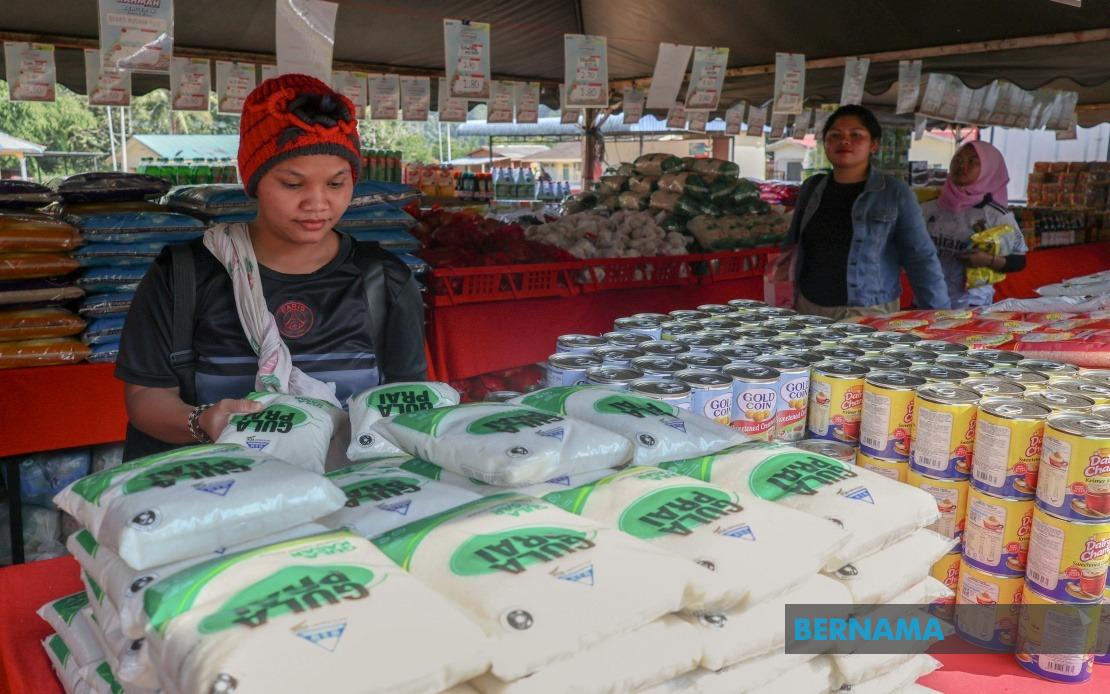
The Domestic Trade and Cost of Living Ministry has highlighted the growing effectiveness of its Essential Goods Distribution Programme in bringing price parity between urban and rural Malaysia, addressing long-standing inequities that have burdened remote communities. Speaking in Parliament this week, KPDN demonstrated measurable progress in stabilising costs for seven categories of controlled items—sugar, wheat flour, packet cooking oil, white rice, liquefied petroleum gas, RON95 petrol, and diesel—across regions previously subjected to severe price premiums due to logistical constraints.
Before the programme's rollout, residents in isolated areas paid substantially more for basic necessities, a burden that compounded the challenges of living far from commercial hubs. The ministry provided concrete examples from Pulau Libaran in Sabah, where LPG cylinder prices have dropped dramatically from RM39 to the government-controlled rate of RM26.60—a reduction of roughly 32 per cent. Similarly, packet cooking oil prices fell from RM3.50 to the regulated price of RM2.50 per packet, representing a 29 per cent decrease. These adjustments reflect the actual cost of administering the subsidy system rather than allowing market forces and distribution challenges to inflate prices in underserved zones.
The scale of the initiative reveals the government's substantial commitment to regional equity. A total allocation of RM250 million for this financial year supports over 1.03 million residents spread across Sabah, Sarawak, Terengganu, Kelantan, Pahang, and Kedah. This distribution spans 212 distinct zones, 828 individual distribution areas, and 1,532 points-of-sale, creating an intricate logistical network designed to ensure that remote communities have reliable access to price-controlled goods. The sheer geographic and administrative complexity underscores why such programmes require dedicated resources and careful coordination across multiple stakeholders.
Sabah alone receives RM107.3 million under this year's allocation, reflecting its vast land area and dispersed population centres. Within Sabah, the programme operates across 78 zones and 228 distribution areas with 587 sales points, reaching approximately 492,566 residents. The Libaran parliamentary constituency, which raised the parliamentary question prompting this disclosure, receives RM1.76 million to service eight distribution areas and nine points-of-sale benefiting 17,061 people. These figures illustrate how the programme tailors its approach to regional demographics and accessibility challenges, with funding weighted towards states facing greater supply-chain difficulties.
Implementing such a vast system requires robust oversight mechanisms to prevent inefficiencies and diversion of subsidised goods. The ministry has established standard operating procedures governing deliveries and created Programme Monitoring and Coordination Committees operating at both federal and state levels. These governance structures serve a dual purpose: they ensure that goods reach intended recipients at controlled prices and they deter smuggling or black-market resale of subsidised items—a persistent problem in similar programmes across the region. Without such controls, subsidies can leak into unintended markets or be captured by middlemen, undermining programme objectives.
Evaluation data suggests the initiative resonates with its target population. The Programme Outcome Evaluation Committee's findings indicate that a majority of surveyed residents believe the scheme has materially improved their cost of living and wish for its continuation. This grassroots validation is significant, as it demonstrates that the programme addresses genuine hardship rather than solving a theoretical problem. Rural and remote communities often feel neglected by urban-focused policymaking, and concrete measures that reduce their living costs carry symbolic weight beyond the direct financial savings.
For Malaysian policymakers, the Essential Goods Distribution Programme represents a deliberate strategy to counter geographic inequality in access to basic necessities. Many Southeast Asian nations face similar urban-rural divides, making Malaysia's approach potentially instructive for regional peers considering comparable interventions. The programme acknowledges that market mechanisms alone cannot fairly serve remote populations where distribution costs are inherently higher and competition is limited, requiring state intervention to achieve equity.
However, sustaining such programmes long-term presents fiscal challenges. The RM250 million annual commitment is substantial, and expansion to additional states or expanded product categories would require budgetary reallocation. Policymakers must weigh the social benefits against opportunity costs and the programme's long-term fiscal sustainability. Additionally, the effectiveness of price controls depends partly on maintaining global commodity prices within reasonable ranges; sharp spikes in sugar, oil, or wheat prices globally could strain the subsidy framework and necessitate either expanded budgets or programme retrenchment.
The programme also touches on broader questions about economic development strategy. Rather than merely subsidising consumption in remote areas, some economists argue for parallel investments in infrastructure, logistics, and local economic development that might reduce dependency on price controls over time. Yet immediate relief through price standardisation addresses pressing needs today, even as longer-term structural solutions develop. The two approaches need not be mutually exclusive, and the Essential Goods Distribution Programme can coexist with infrastructure improvements that eventually normalise access and costs in remote regions.
Looking ahead, the programme's success likely hinges on maintaining political commitment and administrative capacity across election cycles and changes in ministry leadership. Rural constituencies that benefit directly—such as Libaran—may serve as constituencies of support for programme continuation, particularly if residents perceive genuine improvements in their household budgets. Regular reporting of measurable outcomes, as evidenced by this parliamentary disclosure, helps maintain transparency and public confidence in how subsidies are deployed.

