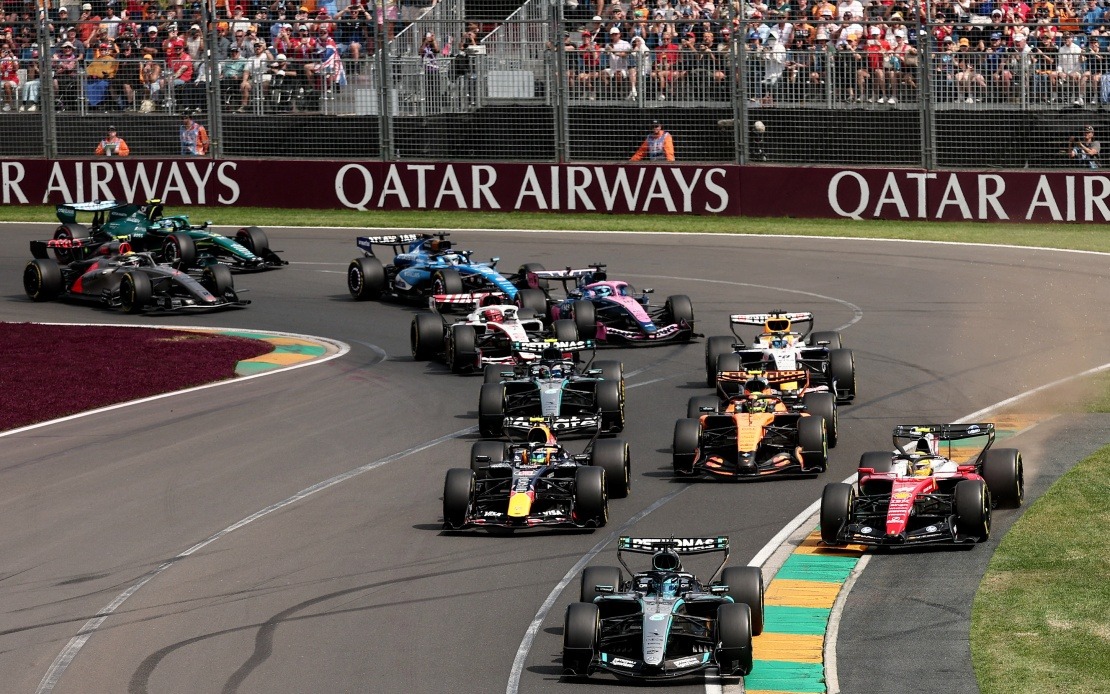
George Russell's world championship aspirations took another damaging blow at Spa-Francorchamps on Sunday when the Mercedes driver was forced to retire from the Belgian Grand Prix following a collision with teammate Lewis Hamilton. The incident compounded what has become an increasingly frustrating season for Russell, who now finds himself trailing Italian teenager Kimi Antonelli by 50 points with just six rounds completed of the championship calendar. Antonelli's commanding sixth victory of the campaign underscores the growing performance gap between Mercedes' two drivers, a disparity that Russell's latest retirement has done little to address.
In an unbroadcast radio transmission that captured the raw emotion of the moment, Russell vented his frustrations at Mercedes over what he identified as a critical battery deployment failure. Speaking with barely contained fury, he questioned the mechanics of the state of battery charge system down the main straight, articulating what he saw as an unacceptable lapse in engineering support. His exasperation extended beyond the immediate technical failure, encompassing the broader pattern of mechanical gremlins that have plagued his weekend at the Belgian circuit and threatened to derail his championship hopes entirely.
The underlying technical problem that contributed to Russell's struggles extended well beyond Sunday's race itself. During qualifying, a deployment malfunction within the Mercedes power unit had already cost him approximately half a second to Antonelli, positioning him behind on the grid from the outset. The issue proved sufficiently perplexing that Mercedes engineers initially attributed the problem to Russell's driving technique, a theory that was subsequently discredited as investigations deepened. This false diagnosis highlighted the complexity of modern Formula 1 power units and the difficulty teams face in identifying systemic issues within such intricate mechanical systems.
Russell's composure deteriorated as the weekend progressed, particularly as he absorbed the reality that engine difficulties during the opening lap had left him vulnerable to the pursuing field. The subsequent collision with Hamilton, rather than resulting from competitive racing incident alone, stemmed partly from this compromised position. His candid admission that he is now "numb to disappointment" following a relentless catalogue of mechanical failures this season revealed the psychological toll that reliability issues exact on elite drivers fighting for championships. The comment suggested not merely frustration but a deeper resignation to circumstances beyond his direct control.
Despite the evident despair in Russell's immediate reaction, the driver expressed a fragile hope that Mercedes could identify and rectify the problem before the following weekend's Hungarian Grand Prix, the final race before the summer break. This modest optimism represented a lifeline in what has become an increasingly bleak championship narrative for the British driver. The Hungaroring, characterised as a circuit less dependent on energy deployment, offered a different diagnostic landscape that might have allowed the issue to persist undetected, making Spa's visibility of the problem a bittersweet discovery.
Mercedes team principal Toto Wolff responded to Russell's on-air outburst with measured sympathy, acknowledging the emotional turbulence that accompanies mechanical failures of this magnitude. Rather than dismissing Russell's frustration as unprofessional, Wolff contextualised it within the extreme pressures that elite Formula 1 drivers experience when technical problems sabotage their race efforts. His comments suggested understanding of the psychological burden that accumulating mechanical issues place on drivers pursuing championship campaigns, a burden that extends beyond simple race outcomes to affect confidence and mental resilience.
Wolff's technical explanation revealed the profound complexity underpinning modern Formula 1 power unit management. The intricate choreography of energy harvesting, deployment strategies, and driver interaction creates numerous potential points of failure, each capable of extracting performance penalties measured in tenths of a second. Mercedes' identification of a specific engine defect that diminished Russell's available energy deployment into turn 18 represented a technical breakthrough, yet one that offered cold comfort to a driver already trailing significantly in the championship standings. Wolff's assessment that this issue accounted for approximately half of the qualifying gap to Antonelli underscored how marginal performance differences, accumulated across multiple mechanical failures, translate into substantial championship deficits.
The Mercedes principal's assertion that the team possessed a "super-strong package" while simultaneously contending with "reliability problems" under new regulations exposed the paradox confronting the operation. High-performance machinery inevitably operates at the engineering margins where failures become more probable. The regulatory environment, with its emphasis on energy recovery and deployment, creates novel failure modes that teams continue to understand and master. Wolff's acknowledgment that such teething problems naturally accompany regulatory changes offered some contextual explanation, though little practical consolation to Russell as his championship challenge deteriorated.
For Malaysian and Southeast Asian motorsport enthusiasts, Russell's predicament illustrates the unforgiving mathematics of Formula 1 competition where technical parity proves as crucial as driver talent. The 50-point deficit, while recoverable in absolute terms, represents a substantial psychological mountain given the mechanical troubles that continue to compromise Mercedes' competitiveness. Antonelli's six victories from ten races suggest a performance advantage that extends beyond isolated failures, raising questions about whether Mercedes' underlying package development has fallen behind the pace-setter in this particular championship cycle.
The broader implications for Mercedes extend beyond Russell's championship viability. The team's traditional status as a championship-contending outfit faces scrutiny if reliability problems persist into the latter stages of the season. Wolff's insistence that the team stands "100 per cent behind" Russell, combined with commitments to resolve technical issues, represents standard team principal rhetoric yet masks concerning questions about the depth of the organisation's engineering responses. The pattern of issues—from initial misdiagnosis to delayed problem identification—suggests systemic challenges in troubleshooting processes that transcend simple mechanical fixes.
Russell's emotional state, oscillating between furious frustration and resigned numbness, provides a window into the psychological toll that chronic mechanical failures inflict on competitors. His acknowledgment of emotional numbness indicated not acceptance but rather exhaustion from repeated disappointment. For a driver of Russell's calibre, confronting a scenario where personal performance cannot overcome technical limitations presents an existential challenge to professional identity and championship ambitions. The question of whether Mercedes can restore his optimism before Budapest becomes as much psychological as technical.
Looking ahead to Hungary, the landscape shifts subtly. The Hungaroring's characteristics—lower energy demands and limited opportunities for energy deployment advantages—create a more level playing field where mechanical excellence becomes less determinative. This shift offers Russell an opportunity to reassess his championship campaign on more forgiving technical terrain. Whether Mercedes' identification of the Spa problem translates into genuine resolution remains the pressing question that will define not merely the Hungarian Grand Prix but potentially Russell's entire campaign trajectory.

