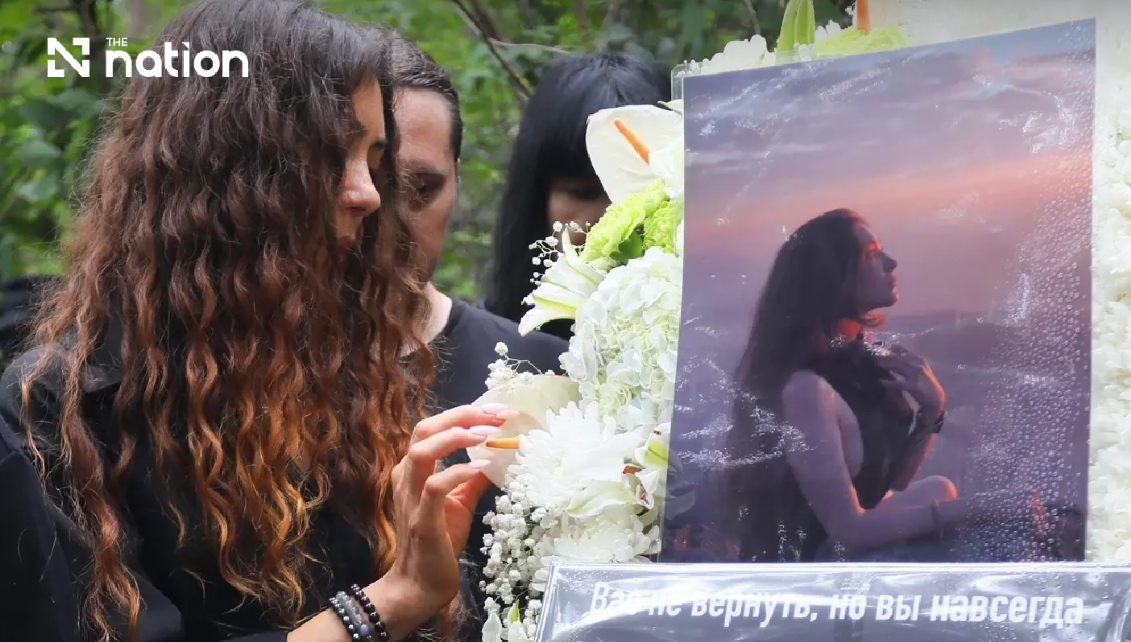
A solemn Buddhist memorial service took place in Chon Buri province on Thursday as the family of Russian siblings Diana and Roman gathered to honour them alongside three members of a Thai family, all victims of an alleged multiple homicide that has captured public attention across Southeast Asia. The ceremony, held at the site in Huai Yai subdistrict where the siblings' remains were discovered, reflected the region's evolving relationship with foreign residents and the complex intersection of international crime and local justice systems that increasingly shape news cycles in Thailand.
Sharina Nazimova, the siblings' mother, presided over the Buddhist ritual performed by monks who chanted prayers dedicating merit to all five victims. The gathering drew Thai and international mourners alongside officials from Chon Buri provincial authorities, police representatives, and civil servants, underscoring the cross-border nature of the case and Thailand's commitment to transparent investigation of crimes involving foreign nationals. The emotional weight of the moment was palpable as attendees stood in silence, their hands joined in the wai gesture, paying their final respects to the deceased in accordance with Thai Buddhist custom.
The choice of flowers at the memorial carried symbolic meaning deeply rooted in Thai culture. White carnations, lilies, and roses were arranged at the site, each bloom representing purity, respect, and the peaceful departure of the deceased. Among these traditional tributes lay a more personal touch: a cup of coffee placed in honour of Diana's favourite beverage. This small gesture, bridging Russian family memory with the formal ceremony, drew an emotional response from mourners and illustrated how grief transcends cultural and geographical boundaries when families face tragedy far from home.
Moments of profound emotion punctuated the service as Nazimova wept while being comforted by relatives, friends, and other attendees. Her gratitude extended beyond the immediate circle of family and towards the broader Thai community that had supported the family throughout their ordeal. She specifically acknowledged the Thai government, police forces, and volunteer workers who had assisted in the investigation and provided compassionate support during the family's darkest hours. Her words resonated particularly given that the siblings, despite their Russian origin, had been raised within the Buddhist faith by their single mother, creating a spiritual and cultural bridge with the Thai public that had mourned their loss.
The investigation that preceded this memorial service exemplified the coordinated law enforcement response that modern transnational crimes demand. Police arrested Thana "Pong" Kerdthong, 43, and Thongchai "Thong" Srinil, 39, on July 31 in Wang Sombun district of Sa Kaeo province following an intensive manhunt. These individuals were identified as the principal suspects in the deaths of Diana and Roman. Investigators revealed a disturbing methodology: the suspects allegedly posed as police officers while encountering the siblings beside a road, subsequently restraining them and transporting them to a wooded area. According to police statements, the apparent motivation for the crime involved theft of the victims' motorcycle, a detail that has troubled many observers given the disproportionate violence allegedly employed.
The investigation expanded in scope and tragedy as police uncovered additional evidence beyond the Russian siblings' case. Following the arrest of the two suspects, authorities excavated a nearby burial site where the remains of three members of a Thai family were discovered, suggesting a pattern of violent criminality rather than an isolated incident. This revelation transformed the investigation from a case involving foreign nationals into a broader examination of potential serial violence within Chon Buri province, raising questions about security practices and community vigilance across the region.
The suspects' accounts of events have proven inconsistent and unreliable, prompting police to conduct thorough verification against forensic evidence and other investigative materials. Their conflicting statements underline the importance of rigorous investigative standards when international cases intersect with Thai justice processes. The deliberate pace of corroborating evidence reflects Thai police commitment to building prosecution cases capable of withstanding scrutiny from both Thai courts and international observers monitoring the case's progression.
The memorial service represented more than a funeral ceremony; it symbolized the final chapter of a family's private grieving process alongside public acknowledgement of tragedy. Relatives, friends, and members of the general public who had followed the case through media coverage gathered to participate in collective remembrance. Their presence demonstrated the emotional investment that communities develop when cases gain prominence and touch upon shared values regarding safety, justice, and human dignity across national borders.
Attendees at the ceremony expressed unified hope that the Thai justice system would pursue accountability with firmness against those ultimately found culpable. This sentiment reflected broader confidence in Thailand's judicial processes despite international scrutiny occasionally directed at the kingdom's legal system. For the bereaved families of all five victims, the path forward remains one of seeking closure through legal proceedings while honouring the memories of those lost through cultural and spiritual practice. The ceremony in Chon Buri served as a visible demonstration that Thai society recognises its responsibility to both its own citizens and to foreign nationals who become victims of crime within its borders, a principle increasingly important as transnational migration and tourism reshape the demographic landscape of Southeast Asian nations.

