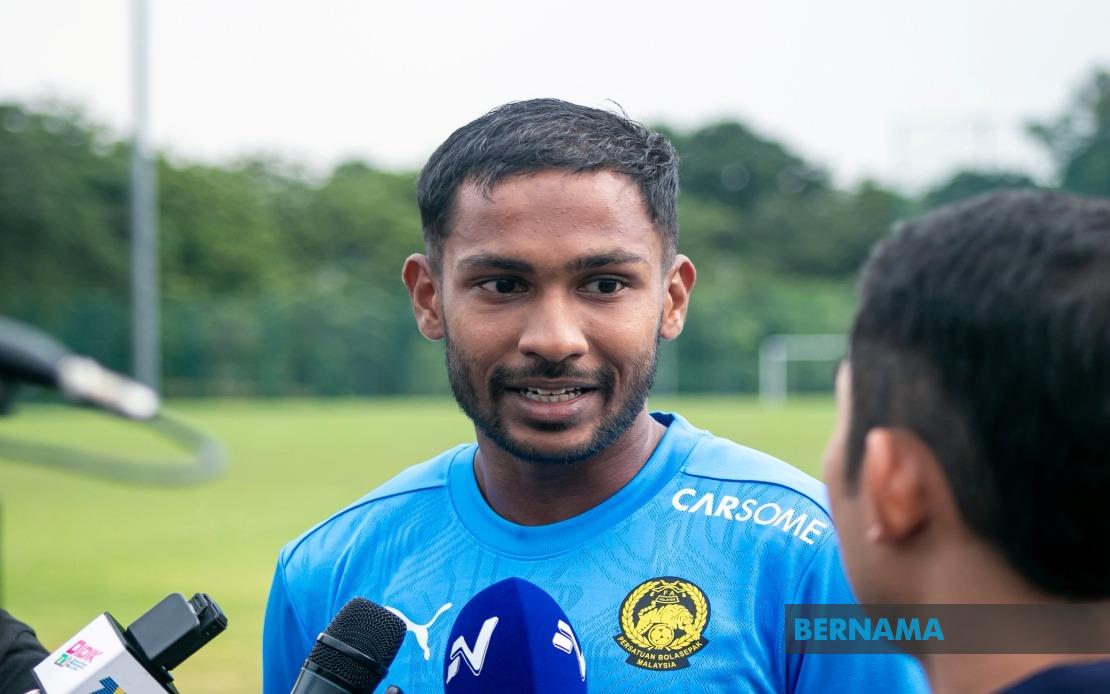
Defender V. Ruventhiran has made an impassioned appeal for Malaysian football fans to unite behind the national team as it prepares for the 2026 Hyundai ASEAN Cup, stressing that supporting the country's footballers transcends individual differences or grievances. Speaking during Harimau Malaya's centralised training camp in Shah Alam on July 17, Ruventhiran emphasised that the squad needs the backing of supporters both at home and away venues throughout the tournament, with the tournament serving as an opportunity for the nation to rally behind a common cause.
The national team faces a challenging opening fixture away against Myanmar at Thuwunna Stadium on July 25, yet Ruventhiran expressed confidence that the "12th man"—a reference to passionate home support—will make a substantial difference when Malaysia hosts matches on domestic soil. He appealed directly to fans to recognise that donning the national colours represents something far greater than club allegiances or temporary frustrations with the team's recent performances. This call reflects a broader concern within Malaysian football circles that stadium attendance has suffered in recent seasons due to various factors, including inconsistent results and occasional public discontent with team management.
The defender's remarks highlight the psychological importance of crowd support in tournament football, particularly in Southeast Asian competitions where the regional rivals are traditionally competitive. Ruventhiran acknowledged the immense pressure the squad faces while simultaneously framing it as a positive force that drives excellence. He noted that the team remains singularly focused on honouring the national badge and channelling competitive pressure into peak performance across all group stage encounters.
Meanwhile, Penang FC midfielder Aliff Haiqal Lokman Hakim Lau has described his inclusion in the national squad as a significant opportunity to turn the page on a difficult period marked by persistent injuries that hindered his club career during the previous campaign. The midfielder expressed genuine gratitude for receiving the call-up, recognising that representing Malaysia remains the pinnacle of any professional footballer's ambitions. His comments suggest a player eager to prove that he has fully recovered and is ready to contribute meaningfully to the national team's tournament objectives.
Aliff's journey to the squad reflects the broader challenge facing Malaysian football—developing depth and managing player fitness across the competitive domestic league and international fixtures. After a struggle-filled season with injuries limiting his appearances and impact, the midfielder views the ASEAN Cup as a platform to demonstrate his renewed fitness and tactical maturity. He emphasised that this tournament coincides with the start of a fresh campaign with Penang FC, creating a synchronicity that allows him to establish new momentum both domestically and internationally.
The midfielder's determination to prove himself echoes a common refrain among athletes returning from significant injury layoffs—the need to re-establish confidence, match fitness, and team cohesion. For Malaysia's midfield depth, having Aliff performing at optimal levels would provide coach Tan Cheng Hoe with additional tactical flexibility, particularly in a tournament format where squad rotation and managing player fatigue across four group stage matches prove critical.
Harimau Malaya's Group B campaign involves a formidable schedule that spans thirteen days and requires the squad to travel across Southeast Asia. Following the Myanmar fixture, the team returns home to face Laos at the Kuala Lumpur Football Stadium in Cheras on July 28, before embarking to Bangkok for a match against Thailand at the Rajamangala Stadium on August 1. The group stage concludes with a home encounter against the Philippines at the Cheras venue on August 8.
This compressed schedule places significant demands on player conditioning and recovery protocols. Teams finishing in the top two of each group advance to the semi-finals, which are structured as two-legged ties scheduled for mid-August. The tournament format emphasises consistency across the group stage, as points accumulated during this phase determine seeding advantages in the knockout rounds. Malaysia's pathway to the championship, which culminates in finals scheduled for August 22 and 26, depends fundamentally on navigating Group B successfully.
The composition of Malaysia's group presents a mixed competitive landscape. Myanmar represents a beatable opponent based on recent head-to-head records, while Laos and the Philippines typically occupy the lower tier of ASEAN football hierarchy. Thailand, conversely, remains a traditional powerhouse and likely to contest for group supremacy. Malaysia's strategy will likely involve maximising points against the lower-ranked opponents while seeking a respectable result or outright victory against the Thais—a scenario that demands tactical discipline and consistent execution.
Ruventhiran's call for fan engagement carries particular resonance in the Malaysian context, where national sporting success generates significant emotional investment. The football fraternity recognises that volatile public sentiment can either energise or demoralise players depending on perceived support levels. By actively encouraging stadium attendance and unified backing, Ruventhiran addresses a practical concern that directly influences performance outcomes in tournament settings.
The defender's message also implicitly acknowledges that Malaysian football continues recovering from periodic credibility crises related to match-fixing allegations and administrative turbulence. Building public trust and rekindling fan enthusiasm requires consistent performances and transparent commitment from playing squads. Ruventhiran's passionate plea represents an effort to channel patriotic sentiment into constructive support that transcends individual disappointments or controversies.
Aliff's narrative arc—from injury-sidelined player to potential tournament contributor—resonates with supporters who appreciate resilience and second chances. His willingness to publicly articulate his gratitude and determination suggests maturity and readiness to assume whatever role the coaching staff assigns. Whether deployed as a defensive midfielder or advanced playmaker, Aliff's availability enhances Malaysia's tactical flexibility during critical tournament moments.
As Malaysia prepares for competitive action, the convergence of Ruventhiran's leadership on fan engagement and Aliff's personal redemption story creates a compelling narrative framework for the national team's campaign. Success at the 2026 Hyundai ASEAN Cup would require precisely the unified effort and individual excellence that both players have articulated. The tournament offers an opportunity for Malaysian football to demonstrate progress and reclaim regional relevance during a pivotal moment for the sport's development within the country.

