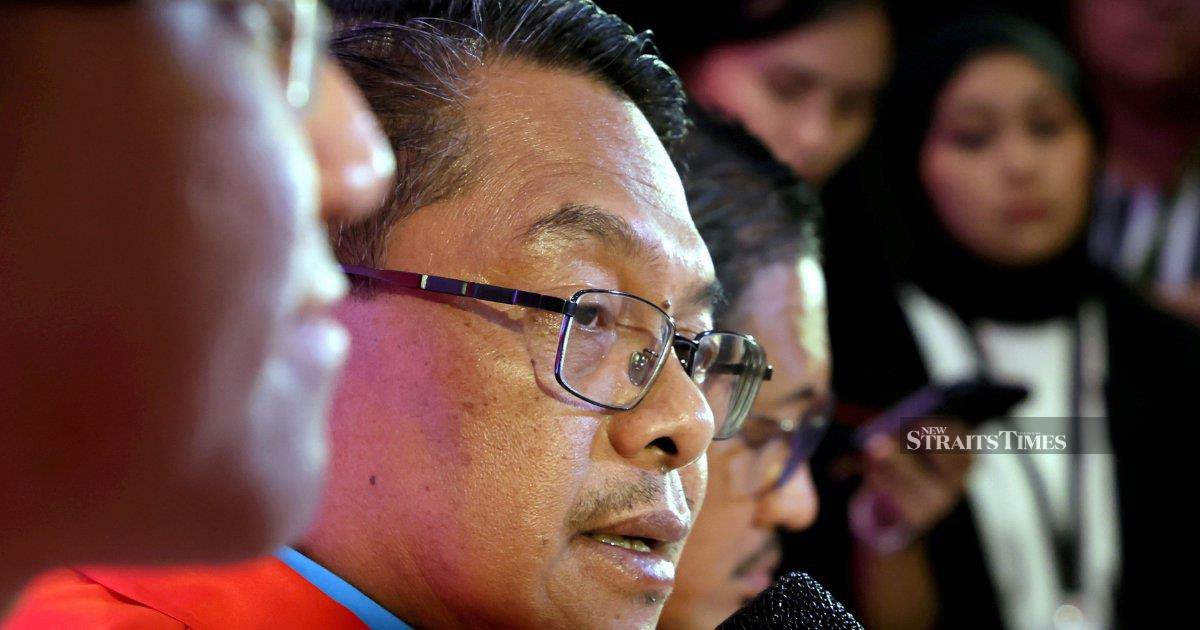
The federal government is continuing to negotiate over a potentially transformative increase in parliamentary representation for Sabah and Sarawak, as these two East Malaysian states press their constitutional claims under the framework established by the Malaysia Agreement 1963. Minister in the Prime Minister's Department (Sabah and Sarawak Affairs) Datuk Mustapha Sakmud confirmed that the proposal to raise the two states' combined share of Parliament seats to 35 per cent remains an active topic within ongoing MA63 talks.
This proposed constitutional arrangement carries significant weight for Malaysia's political architecture. Currently, Sabah and Sarawak together hold a considerably smaller proportion of parliamentary seats relative to their combined population and landmass, reflecting a historical imbalance that has long been contested by state leaders and civil society figures in Peninsular Malaysia's two largest neighbours. The 35 per cent threshold would represent a substantial realignment of power within the federal legislature and would likely reshape coalition dynamics across the country.
The Malaysia Agreement 1963, which formalized the federation of Malaya, Sabah, Sarawak, and Singapore into the modern Malaysian state, contained several special provisions designed to protect the autonomy and interests of the two Borneo states. These provisions have been a source of ongoing tension and negotiation between the federal government in Kuala Lumpur and state governments in Kota Kinabalu and Kuching. Discussions over MA63 implementation have intermittently intensified depending on the political composition of federal administrations and the strength of East Malaysian representation within ruling coalitions.
The timing of this confirmation is noteworthy given the evolving political landscape in Kuala Lumpur. Sabah and Sarawak have historically wielded considerable influence in federal politics, particularly when their elected representatives hold crucial coalition-building roles. The negotiation over parliamentary seats touches on fundamental questions about federal representation, regional equity, and the constitutional balance between the peninsula and Borneo. Any amendment to the number of parliamentary seats allocated to either state would require constitutional changes with significant political and procedural hurdles.
For Malaysian readers and policymakers, this discussion extends beyond mere numerology. The outcome could influence federal-state relations, the viability of future coalition governments, and perceptions of fairness in how different regions share power. An increase to 35 per cent of parliamentary seats would mean roughly 105 to 110 seats out of a potential 222 in the Dewan Rakyat, assuming no corresponding expansion of the overall chamber. This redistribution would necessarily come from Peninsular Malaysian representation, making any agreement inherently contentious within the peninsula's own political circles.
The continuation of MA63 talks under the current government signals an effort to address long-standing grievances while managing the complex coalition politics that sustains federal stability. Previous administrations have treated these negotiations with varying degrees of urgency, reflecting the cyclical nature of East Malaysian leverage in federal politics. The fact that Datuk Mustapha Sakmud, a minister with specific responsibility for East Malaysian affairs, publicly reaffirmed the ongoing status of these discussions suggests the issue remains prioritized within the Prime Minister's office.
Regional observers point out that developments in these negotiations carry implications beyond Malaysia's borders. The principle of equitable federal representation resonates across Southeast Asia, where numerous countries grapple with balancing the interests of diverse regions and populations. Malaysia's approach to resolving internal constitutional disputes through dialogue, rather than confrontation, offers instructive lessons for the region's other federal and decentralized systems.
The practical mechanics of implementing any increase in parliamentary representation would require not only constitutional amendment but also careful consideration of electoral boundaries, campaign finance implications, and the administrative machinery governing elections. The Election Commission would need to undertake substantial work in redistricting any seats transferred to East Malaysia, a process that historically generates controversy and requires extensive public consultation.
Civil society actors in both Sabah and Sarawak have long advocated for enhanced parliamentary representation as a matter of constitutional justice and democratic principle. These groups argue that the current allocation fails to reflect the true population weight of the two states and perpetuates an imbalance established during an earlier era of Malaysian politics. Their engagement in these ongoing discussions adds grassroots pressure to the formal negotiations undertaken by government officials.
The financial implications of any parliamentary reorganization are also worthy of consideration. Enhanced representation might correlate with increased federal allocation formulas, infrastructure investment priorities, and development spending directed toward Sabah and Sarawak. Previous negotiations over MA63 implementation have frequently centered on both constitutional structure and resource distribution, recognizing that these dimensions are intrinsically linked.
Moving forward, observers will watch whether these talks yield concrete progress or remain in prolonged negotiation. The political incentives for reaching agreement exist for multiple parties—East Malaysian states desire their claims validated, while federal governments benefit from demonstrating commitment to constitutional principles and regional harmony. However, the resistance from peninsular interests to seat reallocation may prove formidable, making the trajectory of these discussions difficult to predict without further developments.

