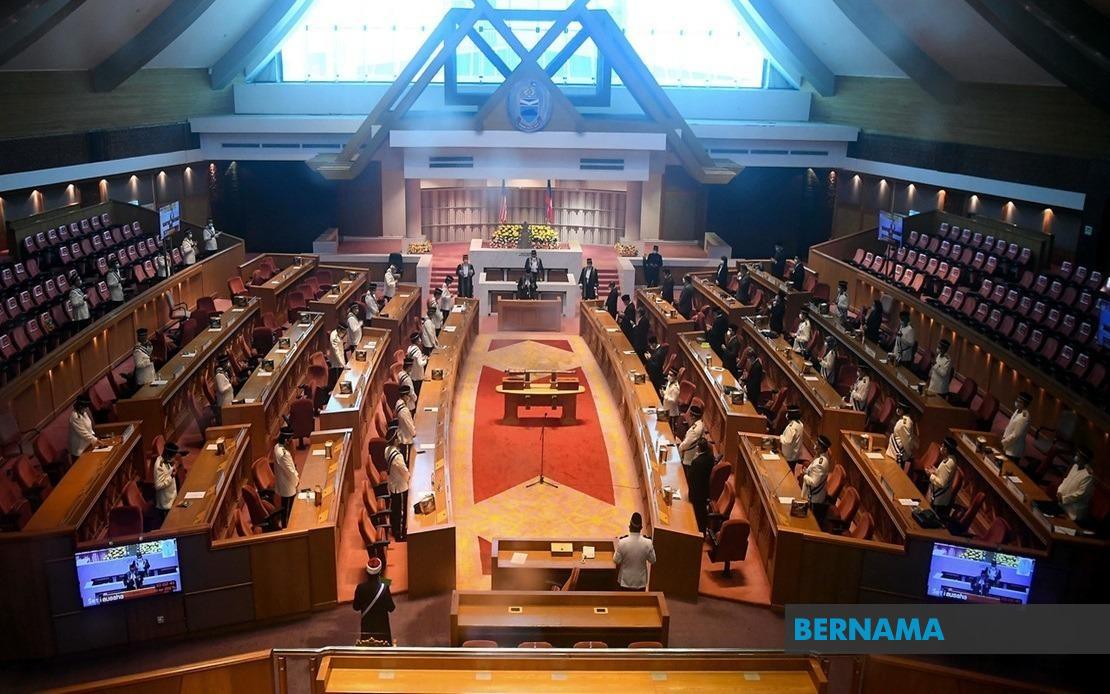
The Sabah State Legislative Assembly has given legislative backing to the Sabah Ports Authority (Amendment) Bill 2026, a procedural adjustment that formalises the reallocation of maritime governance responsibilities within the state administration. The measure, introduced by Deputy Chief Minister III Datuk Ewon Benedick during a sitting presided over by Deputy Speaker Datuk Al Hambra Tun Juhar, cleared its parliamentary hurdles following deliberations among six state representatives. The amendment represents a technical but significant realignment of the administrative machinery governing port operations in one of Malaysia's economically strategic maritime states.
The legislative revision addresses inconsistencies that emerged following Sabah's cabinet restructuring on December 3, 2025, when responsibilities for port administration shifted jurisdictionally from the Ministry of Public Works and Utilities to the Ministry of Industrial Development, Entrepreneurship and Transport. This transfer reflected evolving governance priorities, positioning port management within a broader framework emphasising industrial advancement and economic development rather than infrastructure maintenance alone. Datuk Ewon, who chairs the transport and industrial portfolio, spearheaded the amendment to ensure legislative provisions mirrored this organisational reality.
At the heart of the amendment lies a seemingly technical but operationally crucial modification: the definition of 'Minister' within Section 2 of the original Sabah Ports Authority Enactment 1981 required updating. Previously, the enactment referenced the minister responsible for communications and public works, a designation that no longer aligned with contemporary administrative arrangements. Without this clarification, legal ambiguity could have complicated decision-making authority and institutional accountability regarding port management, procurement, development initiatives, and regulatory oversight. The amendment rectifies this disconnect, ensuring statutory language reflects the actual ministerial responsibility holder.
Datuk Ewon emphasised that this legislative realignment carries no fiscal burden for the state treasury, a reassurance that addresses common parliamentary concerns when restructuring occurs. The amendment does not introduce fresh financial obligations, create new revenue streams, or redistribute budgetary allocations among competing priorities. Instead, it serves as a corrective measure, ensuring that existing financial arrangements, staffing designations, and operational protocols remain intact whilst the administrative umbrella shifts. This approach minimises implementation friction and allows the Sabah Ports Authority to maintain operational continuity despite the supervisory reshuffling.
Crucially, the amendment preserves the institutional independence and functional autonomy of the Sabah Ports Authority itself. The legislative change does not alter the authority's core policies, powers, or operational mandates—it merely clarifies which cabinet minister exercises statutory oversight responsibilities. This distinction matters considerably: port authorities require consistency in their regulatory frameworks and commercial operations to maintain investor confidence and operational efficiency. By limiting the amendment's scope to ministerial definitional clarity, the legislation avoids disrupting port terminal operations, lease arrangements, cargo management protocols, or strategic development initiatives that require stable legal foundations.
The bill incorporates a transitional provision that validates all decisions, approvals, and official actions undertaken by the previously responsible minister in matters concerning port affairs. This backward-looking safeguard prevents legal challenges to administrative decisions made during the inter-regnum between the December 2025 restructuring and the amendment's passage, ensuring that port operations during this transition period retain full legal standing. Such provisions are standard in restructuring legislation but remain essential for maintaining stakeholder confidence and preventing frivolous litigation that could disrupt ongoing projects or commercial arrangements.
For Malaysia's broader maritime and port development landscape, this amendment reflects ongoing efforts across state administrations to align governance structures with development objectives. Sabah, blessed with strategic port infrastructure including Kota Kinabalu and Tawau ports, represents a crucial node in Southeast Asian maritime commerce and regional transhipment networks. Positioning port governance within an industrial development framework rather than a purely infrastructure maintenance context signals state ambitions to leverage these maritime assets for broader economic transformation, potentially facilitating port expansion, attracting maritime industries, and promoting logistics sector growth.
The amendment also illustrates how Malaysian federalism requires continuous legislative housekeeping when states restructure their cabinets. As state administrations adapt their ministerial portfolios to reflect changing political circumstances, electoral outcomes, or policy priorities, supporting legislation must track these shifts to prevent institutional confusion. The Sabah assembly's orderly passage of this amendment demonstrates institutional maturity and parliamentary discipline in executing necessary administrative updates, even when they attract limited public attention.
Regional observers monitoring port governance developments will note that this restructuring elevates port affairs within Sabah's administrative hierarchy by clustering them alongside industrial development responsibilities rather than separating them within public works portfolios. This signals potential policy emphasis on port-led industrialisation, trade facilitation, and maritime sector development as engines of state economic growth. Future port infrastructure investments, regulatory reforms, or commercial arrangements may reflect this reorientation, with implications for regional supply chains, shipping operators, and industries dependent on Sabah's maritime connectivity.
The legislative development also underscores continuities in Malaysian governance during transitional periods. Despite December 2025's cabinet restructuring, the Sabah Ports Authority maintained operational functionality and continued executing its mandate under the previous ministerial arrangement. The amendment now simply formalises what administrative practice had already established, providing the legal precision necessary for institutional clarity and stakeholder confidence. This approach—allowing administrative flexibility before formalising changes through legislative processes—reflects pragmatic governance that balances responsiveness with legal certainty.
Moving forward, this amendment establishes clear statutory authority relationships that should facilitate coordination between port authorities and the state's industrial development initiatives. Alignment between maritime infrastructure stewardship and broader economic development strategies can accelerate collaborative projects, streamline approvals, and foster integrated planning for port modernisation, industrial park development near maritime terminals, and logistics infrastructure advancement. For investors and commercial operators relying on predictable governance frameworks, the amendment's clarification of ministerial responsibilities provides valuable institutional transparency essential for business confidence and long-term planning in Sabah's maritime sector.

