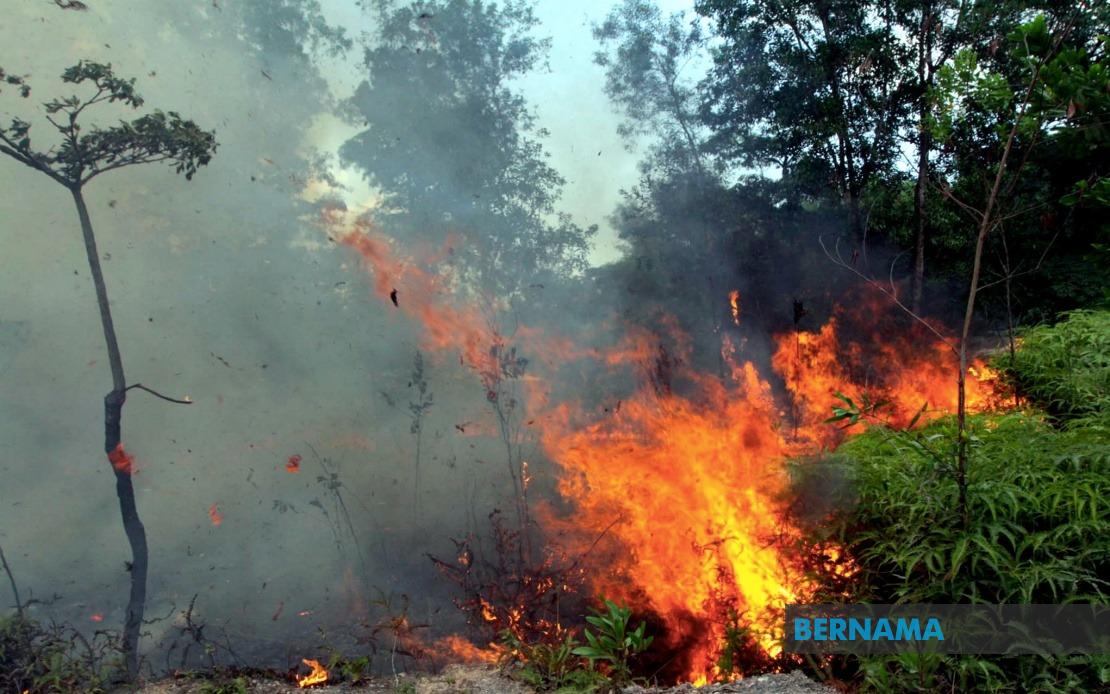
The Sabah Fire and Rescue Department (JBPM) has launched a public appeal to halt all forms of open burning as smoke from forest fires across the border in Kalimantan continues to degrade air quality throughout the state. Director Mohd Pisar Aziz described how atmospheric circulation patterns are funnelling thick smoke from southern and central Borneo towards Sabah, with visible haze already blanketing major population centres including Kota Kinabalu and Kimanis.
Transboundary haze events have become increasingly familiar to Sabah residents, particularly during the dry season when forest fires proliferate across neighbouring Indonesian territory. These recurring episodes underscore the region's environmental vulnerability and the limitations of state-level responses to pollution sources originating beyond national boundaries. The current situation exemplifies how weather systems and geography make Sabah perpetually susceptible to Indonesia's land management challenges, a reality that demands ongoing diplomatic coordination and regional environmental governance frameworks.
Mohd Pisar emphasised that the combination of elevated temperatures and prolonged dry spells significantly heightens fire risk, transforming any combustible material into a potential ignition source. This meteorological context makes the timing of the open-burning ban particularly critical. When atmospheric moisture is depleted and ambient heat accelerates fuel desiccation, even small-scale burning practices by residents can rapidly escalate into major conflagrations that feed into the transboundary pollution cycle. The department's stance reflects recognition that local fire prevention is not merely a matter of property protection but a public health imperative for the entire state.
Current air quality measurements tracked through the Air Pollutant Index Management System reveal that Sabah's condition remains classified as moderate, though readings warrant close monitoring. Kota Kinabalu, the state capital, recorded the highest pollution index at 83, with Politeknik Kota Kinabalu registering 81 and Kimanis at 76. While these figures fall short of hazardous thresholds, the trajectory suggests potential deterioration should haze intensity increase. The distinction between moderate and hazardous categories masks a significant health reality: even moderate pollution imposes measurable respiratory stress on vulnerable populations, a consideration that authorities are keen to highlight.
Mohd Pisar specifically flagged asthma patients, young children, and elderly residents as groups requiring heightened vigilance. These demographic segments face disproportionate health consequences from air pollution exposure, experiencing exacerbated symptoms and potential disease progression at lower pollution concentrations than the general population. Rather than waiting for API readings to reach hazardous levels before issuing health guidance, the department has adopted a precautionary stance, encouraging at-risk individuals to implement protective measures immediately. This proactive approach recognises that cumulative exposure to moderate pollution carries significant health costs, particularly for those with pre-existing respiratory conditions.
The department has identified Keningau and Pitas as areas meeting the formal criteria for open-burning restrictions after recording seven consecutive days without rainfall through August 10. This meteorological threshold reflects the practical reality that without precipitation to suppress dust and particulates, any combustion activity becomes more likely to elevate air pollution. The ban encompasses a comprehensive range of burning activities, including disposal of household rubbish, dried vegetation, garden clippings, and construction debris. Such breadth reflects the understanding that cumulative burning from multiple sources, rather than isolated large fires, often constitutes the primary driver of regional haze during transboundary pollution episodes.
Beyond regulatory enforcement, the JBPM has disseminated detailed guidance on protective behaviours. Residents are counselled to restrict outdoor exposure during peak heat and pollutant accumulation hours between 11 am and 4 pm, maintain adequate hydration to support respiratory health, and utilise face masks in areas with visible haze. These recommendations acknowledge that air quality advisories are effective only when paired with practical guidance that residents can operationalise in daily life. The focus on electrical wiring inspection and careful cigarette disposal reflects the recognition that fire prevention is intrinsically a collective responsibility, requiring coordinated action across household and community scales.
The open-burning restrictions carry legal weight, with violations constituting criminal offences rather than merely administrative infractions. This legal designation underscores state recognition that individual burning decisions generate negative externalities affecting population health and environmental quality far beyond personal property boundaries. In the context of transboundary haze, where regional atmospheric circulation amplifies local pollution sources, the enforcement of open-burning bans serves as a practical mechanism through which Sabah attempts to limit its contribution to a regional problem ultimately rooted in larger economic and land-use patterns across the Indonesian archipelago.
The current episode illustrates a persistent structural challenge for Sabah and Malaysian Borneo more broadly: dependence on cross-border environmental cooperation with limited institutional mechanisms for compelling compliance. While diplomatic channels exist for addressing transboundary environmental issues, enforcement remains constrained by sovereignty principles and the competing development priorities of neighbouring states. For Malaysian policymakers, the recurring haze cycle demonstrates the inadequacy of purely defensive responses and underscores the necessity for engagement with Indonesian counterparts on sustainable land management and fire prevention across shared Bornean ecosystems.
Residents are instructed to report suspected fire activity or suspicious behaviour immediately through emergency channels, with the 999 hotline designated as the primary reporting mechanism. This accessibility to rapid response infrastructure represents an important component of fire management, as early intervention during initial ignition stages can prevent small incidents from expanding into major conflagrations. The public reporting system also serves an information-gathering function, allowing authorities to identify habitual burning practices and target enforcement efforts accordingly.
As transboundary haze events are forecast to become more frequent and intense under projected climate scenarios, Sabah's current experience offers insights into adaptation strategies and governance challenges. The coordination between air quality monitoring systems, health protection protocols, legal enforcement mechanisms, and public communication represents an evolving institutional response to a persistent environmental threat. Yet these defensive adaptations, while necessary, cannot substitute for addressing root causes of regional forest degradation and fire activity across the broader Borneo context.

