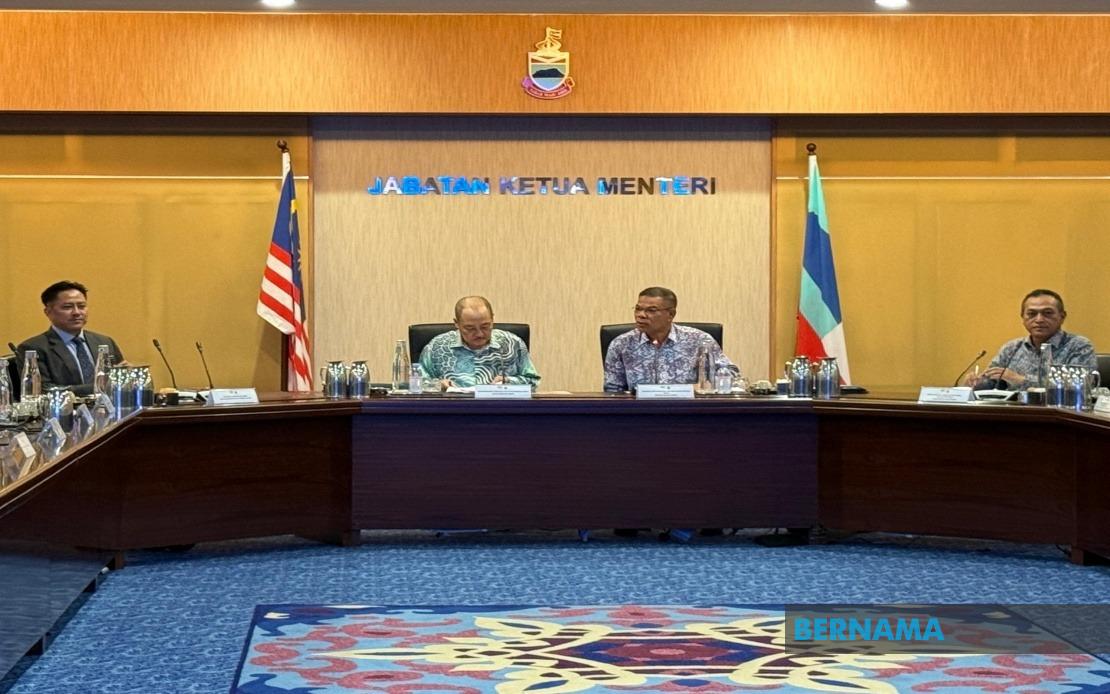
Chief Minister Datuk Seri Hajiji Noor has called for a concerted diplomatic effort to persuade foreign embassies and high commissions operating in Malaysia to revise downward their travel advisories covering Eastern Sabah, arguing that the region's security trajectory warrants a reassessment of international caution levels. Speaking following a high-level security coordination meeting in Kota Kinabalu on August 6, Hajiji underscored that persistent travel warnings—despite measurable improvements in ground safety—continue to dampen international visitor confidence and hamper tourism development along the state's east coast.
The push reflects growing frustration among Sabah's leadership that foreign governments' cautious stance, while perhaps justified in earlier years, no longer reflects current conditions in the region. Hajiji stressed that meaningful dialogue with diplomatic missions regarding concrete security achievements would be instrumental in shifting perceptions and encouraging tourists to visit destinations across Eastern Sabah. The emphasis on communication reflects recognition that travel advisories wield outsized influence over travel decisions, often shaping tourism patterns independent of actual ground conditions.
Central to Sabah's case is the state's accomplishment in maintaining a zero-kidnapping record spanning six years since January 2020. This absence of kidnap-for-ransom incidents—once a defining security concern in the eastern waters—represents a fundamental shift in the operational environment. Hajiji characterised this achievement as significant validation of sustained security operations and the integrated approach adopted by Malaysian authorities across maritime, land, and island-based domains. The milestone reflects not merely statistical improvement but a wholesale transformation in the threat landscape affecting tourism and commerce.
The meeting that prompted Hajiji's statement was co-chaired by Home Minister Datuk Seri Saifuddin Nasution Ismail, underscoring the strategic alignment between Sabah's state administration and the federal government on maritime security governance. This partnership represents a deliberate institutional framework for addressing regional security challenges, with both tiers of government coordinating approach, resource allocation, and diplomatic messaging. The presence of high-ranking officials from the Eastern Sabah Security Command (ESSCOM), security agencies, and state administration reflected the multi-agency coordination required to sustain operational success across one of Malaysia's most strategically sensitive regions.
Hajiji's recent field inspection of six islands within Sabah waters served multiple purposes: direct assessment of security infrastructure readiness, morale-building engagement with frontline personnel, and generation of concrete evidence regarding on-ground conditions. Such visits carry symbolic weight within Malaysian governance structures, signalling executive-level commitment to regional priorities while providing firsthand exposure to operational realities. The inspection reinforced Hajiji's ability to speak authoritatively about security conditions when engaging with federal counterparts and, potentially, when presenting evidence to foreign diplomatic missions.
The acknowledgment of ESSCOM's contributions alongside those of the Royal Malaysia Police, Malaysian Armed Forces, and Maritime Enforcement Agency highlights the complexity of maintaining security across Eastern Sabah's vast maritime expanse and archipelagic terrain. Each institution brings distinct operational capabilities: the police apparatus focuses on land-based law enforcement and intelligence, the military provides kinetic response capacity, maritime agencies patrol territorial waters, and ESSCOM orchestrates integrated operations. The six-year achievement reflects institutional discipline, resource commitment, and tactical innovation across this fragmented security apparatus.
From a tourism and economic development perspective, persistent travel advisories impose measurable costs on Eastern Sabah's growth trajectory. Tourism revenue, employment in hospitality sectors, and broader regional economic integration depend partly on international visitor flows. While some travellers ignore official warnings, many international tourists—particularly from risk-averse markets in developed economies—make travel decisions aligned with government advisory levels. Thus, reducing travel advisory classifications could unlock latent demand for East Coast experiences, translating improved security into tangible economic benefits.
The diplomatic dimension warrants particular attention. Malaysia's relationship with major source markets for tourism—including Australia, Singapore, and various European nations—means that advisory revisions hinge not merely on Sabah's security performance but on how effectively Malaysian diplomatic channels communicate improvements to counterpart governments. This requires sustained engagement, provision of credible evidence, and cultivation of trust between Malaysian security officials and their foreign counterparts. The challenge lies in overcoming institutional conservatism within foreign governments, where travel advisories often persist longer than warranted by actual risk assessments.
Sabah's initiative also situates within broader Southeast Asian patterns of balancing security imperatives with tourism and development objectives. Numerous regions across the archipelago have confronted similar dynamics: real security threats gradually overcome through operations and institutional strengthening, yet lingering advisory stigma deterring tourism and investment. Successful transitions require sustained diplomatic pressure, transparent security communication, and demonstrated commitment to regional stability. Sabah's six-year kidnapping-free record provides legitimate foundation for such diplomatic engagement.
The strategic context encompasses Malaysia's positioning within regional maritime security architecture. Eastern Sabah's importance extends beyond tourism to encompass fisheries, maritime commerce, territorial integrity, and counterterrorism operations. Security enhancements serving defensive purposes simultaneously create conditions for economic engagement. However, advisory reductions must be calibrated: premature revision risks undermining credibility, whilst delayed adjustment perpetuates economic costs. The diplomatic push represents attempt to find optimal timing and messaging for advisory recalibration.
Looking forward, Sabah's diplomatic initiative will likely involve sustained engagement with foreign embassies through official channels, provision of comprehensive security briefings, and potentially coordination with Malaysia's Ministry of Foreign Affairs to convey unified messaging. Success metrics would include measurable shifts in travel advisory classifications and corresponding increases in international visitor arrivals. Conversely, any security setback would undermine diplomatic credibility and reinforce foreign caution. The initiative thus represents both opportunity for economic benefit and risk if security performance falters.

