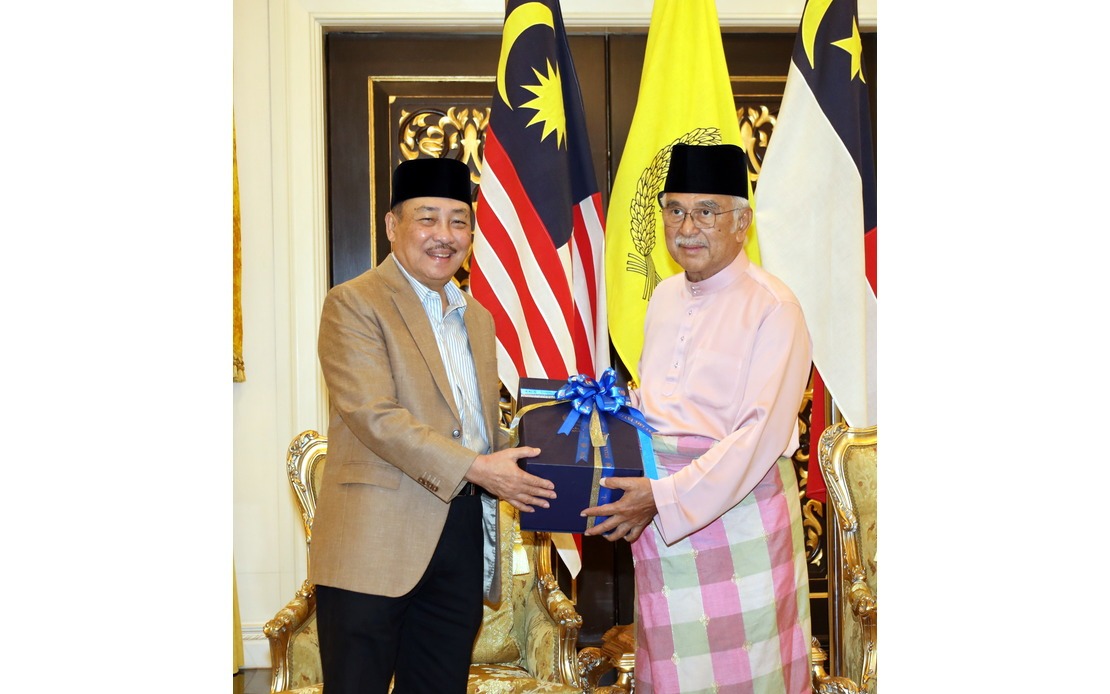
Sabah Chief Minister Datuk Seri Hajiji Noor has undertaken a diplomatic visit to Melaka, meeting with the state's Yang Dipertua Negeri Tun Dr Mohd Ali Mohd Rustam at Istana Melaka in Bukit Beruang. The engagement underscores the importance Malaysia's regional leaders place on fostering closer working relationships across state lines, particularly as the nation navigates complex governance and development challenges that often require inter-state cooperation and coordination.
The delegation arrived at the palace at approximately 3.35 pm and was formally received by Tun Mohd Ali, setting the tone for what officials described as a substantive exchange on matters of shared concern. Such courtesy calls between state leaders serve multiple purposes within Malaysia's federal system: they facilitate informal diplomacy, build personal rapport that can smooth future negotiations, and demonstrate to constituents that their leadership remains engaged with counterparts elsewhere in the country. These visits, while often appearing ceremonial on the surface, frequently lay groundwork for more concrete collaborative efforts.
According to the Sabah Chief Minister's Office, the discussion encompassed various subjects of mutual interest to both Sabah and Melaka, though specific policy areas were not enumerated in official statements. This diplomatic discretion is typical of such high-level meetings, where public pronouncements remain measured until any formal agreements or joint initiatives are ready for broader announcement. The breadth of potential topics could range from economic development and investment cooperation to infrastructure projects, trade facilitation, or coordination on matters of national significance.
The visit functioned as what officials termed "a platform to strengthen ties and exchange views," language that reflects the relationship-building dimension of interstate engagement. For Sabah, a state navigating significant economic diversification efforts and development priorities, connections with other state governments provide opportunities to benchmark practices, share best practices, and explore potential partnerships. Melaka, as a coastal state with historical significance and growing economic importance, similarly benefits from expanded networks across Malaysia's federal system.
Hajiji's delegation included several key ministerial figures whose portfolios suggest the substantive nature of discussions. Sabah Rural Development Minister Datuk Rubin Balang, Agriculture, Fisheries and Food Industry Minister Datuk Jamawi Jaafar, and Nominated Member of the Sabah State Legislative Assembly Datuk Mohd Razali Mohd Razi accompanied the Chief Minister. The inclusion of ministers responsible for rural development and agricultural sectors hints that discussions may have touched on these domains, areas where states often collaborate on policy harmonisation, resource management, and development initiatives.
The presence of the rural development minister is particularly noteworthy, as Sabah has historically relied significantly on its agricultural and primary sectors. Given Melaka's different economic profile as a more urbanised, historically commercial state, discussions between officials overseeing rural development could have focused on comparative approaches to managing rural-urban development balance, infrastructure in less developed areas, or agricultural modernisation strategies. Similarly, the agriculture minister's attendance suggests potential dialogue on food security initiatives, farming practices, or export-related matters that benefit from interstate coordination.
For Southeast Asian context, such inter-state diplomatic engagements within Malaysia reflect broader patterns of regional governments strengthening horizontal relationships alongside their connections with federal authorities. This mirrors trends across ASEAN nations where sub-national units increasingly engage in cross-border and inter-regional cooperation. In Malaysia's case, the federal structure creates natural opportunities for states to develop bilateral relationships that can enhance governance effectiveness and regional development outcomes.
The meeting's conclusion with afternoon tea represents a traditional Malaysian diplomatic custom that reinforces personal relationships between leaders. These informal moments, often overlooked in formal reporting, frequently facilitate candid discussions that complement the more structured portions of official meetings. The hospitality extended by Tun Mohd Ali signals openness to deeper engagement between the two states and provides a gracious atmosphere for continued dialogue.
From a Malaysian political perspective, such visits demonstrate the nation's multi-level governance structure functioning as intended, with state leaders actively engaging each other to advance their respective constituencies' interests while remaining mindful of national cohesion. For Malaysian readers across regions, these interactions underscore that state governments remain active agents in the federation rather than merely implementing federal directives. This inter-state engagement can yield tangible benefits through improved coordination on shared challenges, whether environmental management, economic development, or social programmes.
The timing and formality of the visit suggest that both states value maintaining robust working relationships regardless of broader political developments. In Malaysia's complex political landscape, where party affiliations and federal-state alignments can shift, cultivating these personal and institutional relationships between state leaders provides continuity and ensures that practical governance matters transcend partisan considerations. Such visits, therefore, contribute to Malaysia's political stability by reinforcing the professional networks that keep the federation functioning smoothly across jurisdictional boundaries.
Looking forward, this engagement may presage deeper collaboration between Sabah and Melaka on specific initiatives. Infrastructure projects, educational exchanges, trade missions, or joint development programmes often emerge from the groundwork laid during courtesy calls. For Malaysian businesses and civil society, improved state-level relationships can translate into easier cross-state operations, better information sharing, and more coordinated approaches to common challenges. The visit thus carries implications extending well beyond the ceremonial aspects that dominate initial reporting.

