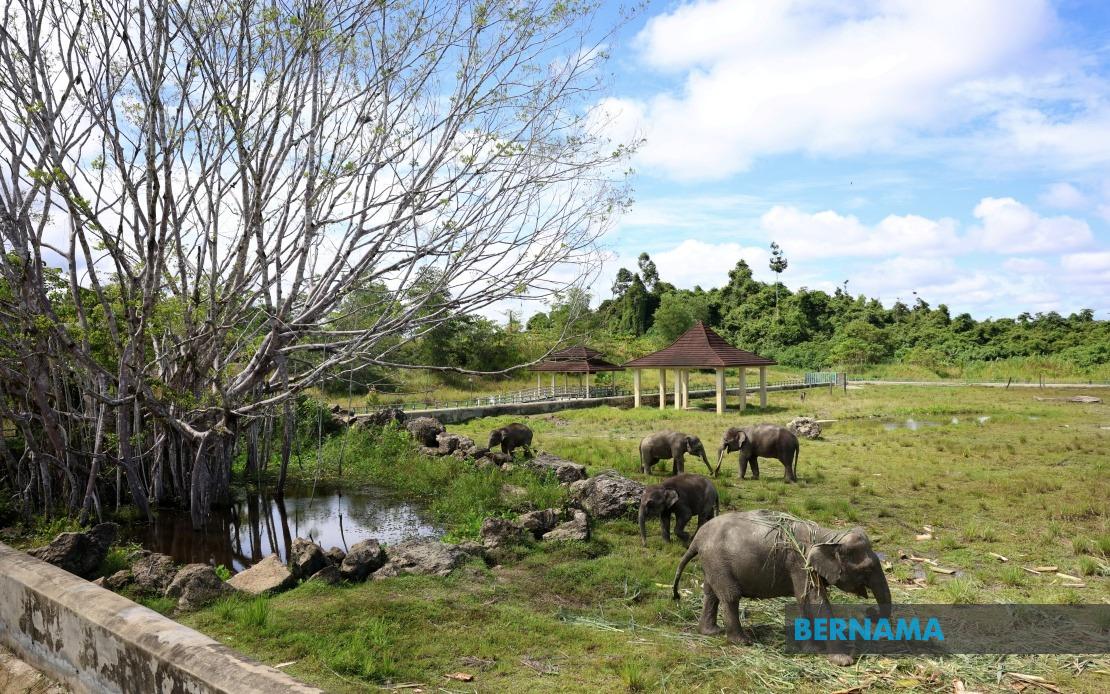
The Sabah state government is actively exploring the viability of establishing an elephant sanctuary in Tawau as a potential blueprint for managing human-wildlife encounters across the state. Datuk Dr Andi Md Shamsureezal, the Assistant Minister of Tourism, Culture and Environment, outlined the initiative during proceedings in the Sabah State Legislative Assembly, signalling that expansion hinges on the pilot project's demonstrated effectiveness in curbing conflicts between wild animals and local communities.
The sanctuary concept represents a strategic pivot in how Sabah addresses the persistent problem of wildlife encroaching on agricultural and residential areas. Rather than rushing into a state-wide rollout, state officials are adopting a cautious, evidence-based approach by collaborating closely with the Sabah Wildlife Department and other relevant agencies to evaluate whether the model can genuinely reduce the frequency and severity of encounters that threaten both human livelihoods and animal welfare. This measured stance reflects growing recognition that wildlife management requires careful planning rather than reactive responses.
The proposal originated from legislative members seeking solutions to the mounting damage inflicted by wild animals on crops and farming communities. Datuk Seri Mohd Shafie Apdal, representing the Warisan coalition, advocated for designating protected areas where wildlife could roam freely while simultaneously creating tourism opportunities—a dual-purpose approach that could generate economic benefits while protecting animals. Such integrated strategies are increasingly popular in Southeast Asia as governments seek sustainable ways to coexist with wildlife rather than simply eliminating problem animals.
The sanctuary model addresses a fundamental gap in current wildlife management practices. For years, authorities have relied heavily on capturing and relocating problem animals, a tactic that Dr Andi acknowledged merely displaces conflicts without resolving underlying causes. When elephants, wild boars, monkeys, and other species are removed from one area, they inevitably create new tensions elsewhere, perpetuating a cycle of temporary fixes that consume resources without achieving lasting peace between humans and animals.
Instead, the government is implementing a multifaceted approach grounded in ecological science and community engagement. Ranger teams composed of local residents now patrol conflict zones, providing immediate assistance and gathering crucial data on wildlife behaviour patterns. This grassroots involvement is particularly significant because farmers and villagers possess intimate knowledge of their landscapes and animal movements, making them invaluable partners in designing interventions that reflect on-the-ground realities rather than abstract policy proposals.
Technology is playing an increasingly important role in monitoring and prediction systems. The Sabah Wildlife Department has begun outfitting selected elephants with satellite collars that transmit real-time location data to communities at risk, enabling people to take protective measures before dangerous encounters occur. Early warning systems represent a significant advancement over traditional methods, shifting the advantage from surprise attacks to informed preparedness. Similar initiatives are gaining traction across Southeast Asia as governments recognise that technology can mediate human-wildlife conflicts more humanely and effectively.
The state government is also tailoring interventions to match the specific ecological and behavioural characteristics of different species. Wild boar control, for example, operates under strict legal guidelines supplemented by risk assessments and resident complaints, ensuring that culling is proportionate and justified. Monkey population management in designated areas aims simultaneously to reduce disease transmission risks and safeguard public safety—acknowledging that wildlife management often requires balancing multiple competing concerns rather than pursuing single objectives.
For Malaysia's broader wildlife conservation agenda, the Tawau model carries significant implications. Sabah has long struggled with habitat loss driven by logging, palm oil cultivation, and infrastructure development, creating friction zones where wildlife increasingly ventures into human settlements searching for food. A functioning sanctuary could serve as both a refuge for displaced animals and a demonstration site for sustainable coexistence strategies that other Malaysian states might emulate. Tourism revenues generated by the facility could also provide financial justification for conservation, making environmental protection economically attractive to stakeholders traditionally oriented toward extractive industries.
The proposed sanctuary aligns with Malaysia's international conservation commitments and the government's stated priority of balancing development with environmental stewardship. Regional neighbours including Indonesia and Thailand have experimented with sanctuary-based approaches to manage elephant populations and human conflict, offering comparative models from which Sabah can learn. The state's willingness to study these precedents before committing substantial resources demonstrates professional governance and respect for evidence-based decision-making.
Success in Tawau would validate a conservation philosophy increasingly embraced across Southeast Asia: that protecting wildlife and supporting human communities are not mutually exclusive goals but complementary objectives achievable through intelligent, well-resourced programmes. Expansion to other Sabah districts would signal confidence in the model's transferability and likely trigger interest from neighbouring Indonesian Kalimantan and other Southeast Asian jurisdictions facing analogous challenges. The initiative thus represents more than local wildlife management—it embodies an emerging regional consensus that sustainable development requires creative solutions that accommodate both human prosperity and animal survival in shared landscapes.

