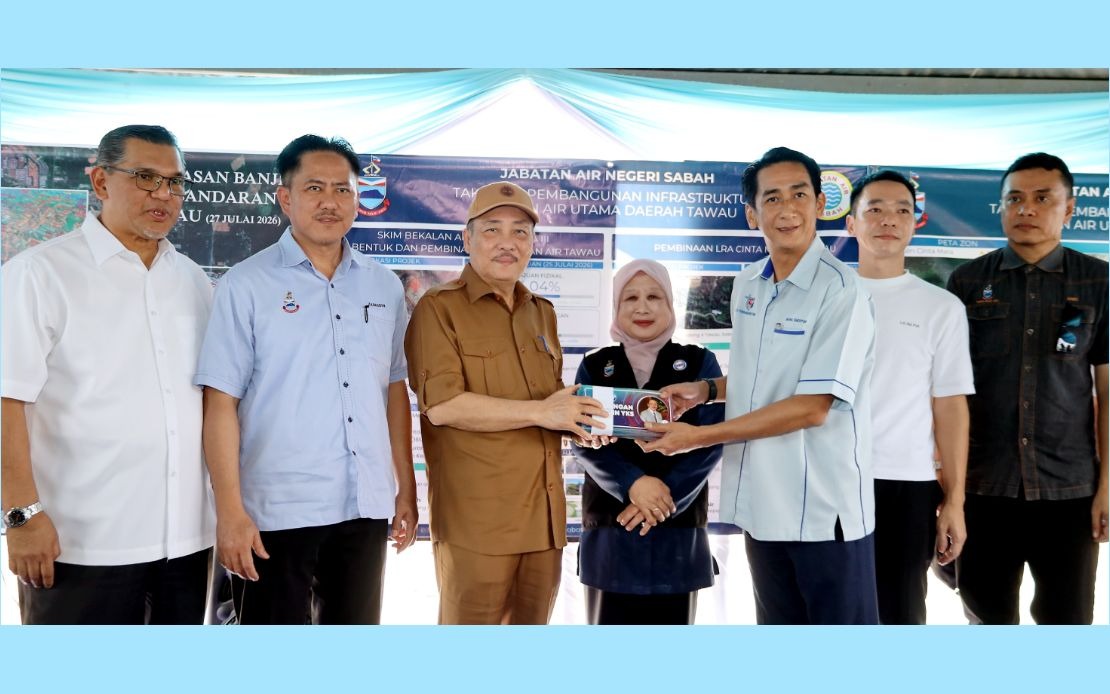
Sabah Chief Minister Datuk Seri Hajiji has channelled RM30,600 in disaster relief funds through Yayasan Kebajikan Sabah to support families devastated by the Tawau floods that struck the district on July 25. The Tawau Municipal Council president Mohd Shoffian Mohd Said received the donation on behalf of the affected community, marking one of the first formal assistance packages extended to those dealing with the aftermath of the natural disaster.
The relief package targets 102 heads of household across Tawau, with each family receiving RM300 as immediate financial support. While modest in individual allocation, the distribution represents a focused response aimed at alleviating the most pressing financial strains faced by flood survivors during the critical early recovery period. The assistance is particularly significant given that many families in affected areas face compounding challenges including damaged homes, lost possessions, and disrupted livelihoods.
The July 25 flooding event in Tawau was severe enough to require large-scale evacuation operations, with 362 people moved to emergency shelter at Dewan Serbaguna Kompleks Sukan Tawau. This scale of displacement underscores the intensity of the flooding and the broader community impact that extended well beyond the 102 households receiving direct assistance. The fact that such a significant number required temporary relocation highlights the vulnerability of Tawau's low-lying residential areas to seasonal weather patterns and the region's drainage infrastructure challenges.
In his statement, Hajiji took the opportunity to publicly acknowledge the coordinated disaster response mounted by multiple government agencies and security forces. The recognition extended to personnel from the Civil Defence Force, Royal Malaysia Police, Fire and Rescue Department, and the Health Ministry, alongside members of the Tawau disaster management committee and other supporting organizations. This broad acknowledgement reflects the reality that effective disaster response requires seamless coordination across numerous agencies with different operational mandates.
The Chief Minister's emphasis on agency cooperation carries particular weight for Southeast Asian disaster management contexts. Tawau and similar communities in East Malaysia face recurring flood threats due to geographic and climatic factors, necessitating institutionalized inter-agency protocols that can be rapidly activated. The success of evacuation operations that moved 362 people safely suggests that existing coordination frameworks in Sabah are functioning reasonably well, though questions remain about preventive infrastructure investments and early warning systems.
For Malaysian readers familiar with disaster relief mechanisms, the RM300 per household figure likely reflects the tiered nature of government assistance programmes, which typically consist of immediate emergency aid followed by longer-term reconstruction support. This initial payment may be accompanied by additional assistance from federal sources, state disaster funds, or other charitable organizations, though the statement does not indicate what supplementary support might be forthcoming. The gap between initial relief and full recovery can extend months or years, placing considerable burden on affected families and local economies.
Tawau's recurring vulnerability to flooding presents ongoing policy challenges for Sabah's state government. The district experiences seasonal rainfall patterns and geographic constraints that make it particularly susceptible to waterlogging and flash floods. Infrastructure development priorities, including improved drainage systems, flood barriers, and water management facilities, remain critical issues for regional development planning. The frequency and severity of such incidents suggest that purely reactive relief measures, while necessary, must be complemented by substantial preventive infrastructure investments.
The disaster response framework demonstrated in Tawau offers insights relevant to other flood-prone regions across Malaysia and Southeast Asia. As climate variability and extreme weather events increase in frequency, the ability to mobilize resources quickly, coordinate multiple agencies effectively, and deliver targeted assistance becomes increasingly important. The evacuation of over 360 people with minimal reported casualties suggests that existing emergency protocols are reasonably effective, though constant refinement and resource allocation remain necessary.
From a broader governance perspective, public acknowledgement of agency contributions during disaster response serves multiple functions. It recognizes frontline personnel whose work often goes unnoticed, reinforces inter-agency relationships crucial for future coordinated efforts, and demonstrates to affected communities that government structures take their safety and recovery seriously. In a region where natural disasters occur with regularity, maintaining these institutional relationships and public confidence in response mechanisms remains vital for social cohesion and community resilience.
The Tawau situation also underscores the importance of localized relief distribution mechanisms. By working through municipal authorities like the Tawau Municipal Council, state foundations ensure that assistance reaches intended beneficiaries through trusted local structures rather than centralized bureaucratic channels that can introduce delays and inefficiencies. This approach acknowledges that those closest to affected communities often understand needs and circumstances better than distant administrative centers, making community-based distribution more effective and responsive to local conditions.

