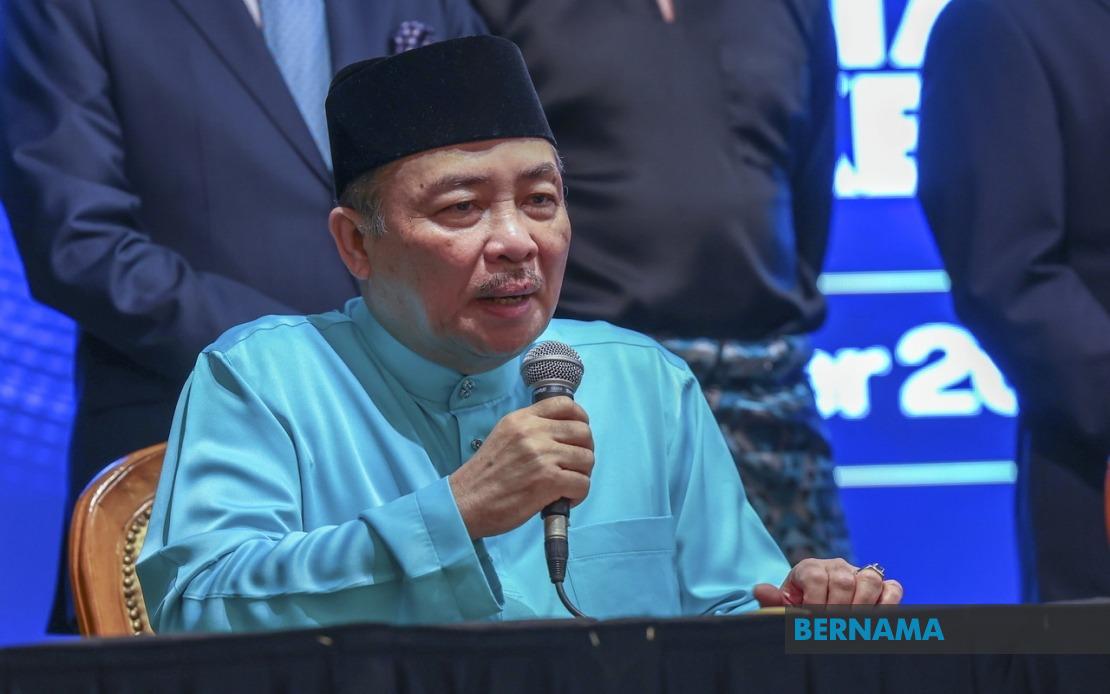
Sabah's government has committed more than RM100 million in public funds this year specifically for its state scholarship scheme, a move that Chief Minister Datuk Seri Hajiji Noor argues demonstrates the state's determination to expand educational access for talented young people. The allocation will enable the Sabah State Government Scholarship (BKNS) programme to sustain support for current scholarship holders while simultaneously extending awards to 2,182 newly qualified students. This dual approach reflects a strategic attempt to broaden the pool of educated talent without withdrawing support from those already benefiting from state assistance.
The latest funding announcement reveals that the BKNS scheme now supports a cumulative total of 13,389 students across various educational levels and institutions. This substantial figure underscores the programme's significance as a flagship social mobility initiative in East Malaysia's largest state. By maintaining and expanding this investment stream, Sabah's leadership appears intent on signalling that education remains a centrepiece of the state's development agenda, particularly given the region's ongoing economic transitions and the premium employers increasingly place on qualified personnel.
Hajiji emphasised that priority coursework within the scholarship framework concentrates on Science, Technology, Engineering and Mathematics (STEM) disciplines. This curricular emphasis mirrors a global trend among developing economies seeking to build competitive advantages in knowledge-intensive sectors. For Southeast Asia more broadly, Sabah's strategic focus on STEM aligns with regional efforts to develop homegrown expertise rather than relying on imported technical talent, a challenge that has constrained growth in several neighbouring economies.
The Chief Minister framed education investment as foundational to sustainable state development, arguing that human capital formation directly determines a region's long-term competitive position and economic resilience. This philosophy suggests policymakers view scholarship expenditure not merely as social welfare but as productive investment yielding returns through taxation, entrepreneurship and sectoral advancement. The rhetorical emphasis on creating skilled, informed and enterprising graduates reflects awareness that Sabah's resource-dependent economy requires diversification supported by educated workforces capable of driving innovation.
Beyond the BKNS umbrella, Sabah has introduced fourteen supplementary education assistance programmes since 2021, a proliferation of targeted schemes indicating recognition that direct scholarship coverage alone cannot address the multifaceted barriers students face. These complementary initiatives include the one-time Higher Education Institution Registration Cash Assistance (BUDI), which helps students manage upfront institutional fees; the Special Examination Cash Assistance (BAKTI) designed to support test preparation and certification costs; the Ihsan Computer Assistance (BAIK) programme, which acknowledges the technological infrastructure gap affecting rural and low-income families; the Sabah Student Flight Ticket Assistance (GRS-SUBFLY) scheme tackling transport costs for students pursuing tertiary education on mainland Malaysia; and the State Higher Education Student Contribution (SENTOSA) targeting enrolment fees at higher institutions.
Taken collectively, these fourteen programmes suggest policymakers have identified and attempted to address specific friction points within the educational pipeline. The existence of multiple targeted schemes indicates that a single blanket scholarship programme cannot capture the complexity of barriers students encounter. By creating modular assistance pathways, Sabah's government aims to provide contextualised support addressing particular challenges whether related to technology access, examination preparation, geographic dislocation or institutional registration. This granular approach reflects more sophisticated understanding of how educational inequality operates beyond simple funding gaps.
Hajiji explicitly linked these initiatives to rising cost-of-living pressures and climbing education expenses, framing state support as a direct response to economic headwinds affecting families. This positioning is particularly relevant in Malaysian context, where affordability concerns have generated sustained political attention. For Sabah specifically, where income disparities between urban centres and rural areas remain pronounced, such assistance programmes serve as critical equalising mechanisms. Without these subsidies, talented students from lower-income households would face systematic exclusion from tertiary education, perpetuating generational disadvantage and wasting human potential.
The Chief Minister directed aspiring scholars toward what he termed strategic fields likely to drive future Sabah development, specifically identifying the oil, gas and energy sectors alongside Technical and Vocational Education and Training (TVET) pathways and Artificial Intelligence (AI). This prescriptive guidance reveals state preferences about graduate specialisation and reveals assumptions about Sabah's economic trajectory. The emphasis on hydrocarbon sectors reflects the state's historical resource base, though the inclusion of AI and TVET suggests recognition that long-term competitiveness requires workforce evolution beyond traditional extractive industries. TVET inclusion is particularly significant, as Southeast Asian economies have increasingly recognised that vocational qualification provides viable and economically valuable alternatives to traditional university routes, reducing pressure on tertiary institutions while building skilled technical workforces.
The AI emphasis warrants particular attention for Malaysian readers. As artificial intelligence technologies reshape labour markets across Southeast Asia, ensuring that Sabah and Malaysian talent develops AI capabilities domestically becomes strategically important. Scholarship prioritisation around emerging technologies prevents brain drain whereby students study AI abroad and remain there professionally, instead building local expertise ecosystems. For Malaysia's broader ambitions to position itself as a regional technology hub, Sabah's scholarship redirection toward AI signals decentralised awareness that digital capability must extend beyond Klang Valley and established technology clusters.
Hajiji's framing of education as foundational to state progress reflects sustained political commitment across administrations in Sabah, where multiple Chief Ministers have emphasised education's role in development narratives. However, the translation of rhetorical commitment into sustained funding requires consistent budget allocation amid competing priorities. The RM100 million plus commitment this year provides concrete evidence of resource backing, though longitudinal analysis of education funding trajectories would reveal whether such investments represent genuine expansion or merely maintenance of real spending power amid inflation.
For Malaysian policymakers in other states, Sabah's multi-programme scholarship architecture offers relevant lessons. The combination of universal scholarship support with targeted supplementary assistance appears more effective than single-scheme approaches because it acknowledges diverse student circumstances. States considering education investment expansion might examine Sabah's modular design, potentially adapting specific components like the student flight ticket assistance or computer equipment support to their own contexts and geographic challenges.
Looking forward, the sustainability of Sabah's education commitment depends on maintaining revenue streams and political will across government transitions. The state's resource-dependent economy faces medium-term pressures as global energy transitions accelerate, potentially constraining future government budgets. Embedding education funding in structural budget allocations rather than annual discretionary spending becomes increasingly important for programme continuity. For students and families currently benefiting from BKNS and supplementary schemes, securing long-term funding visibility would reduce educational planning uncertainty and encourage sustained academic investment.

