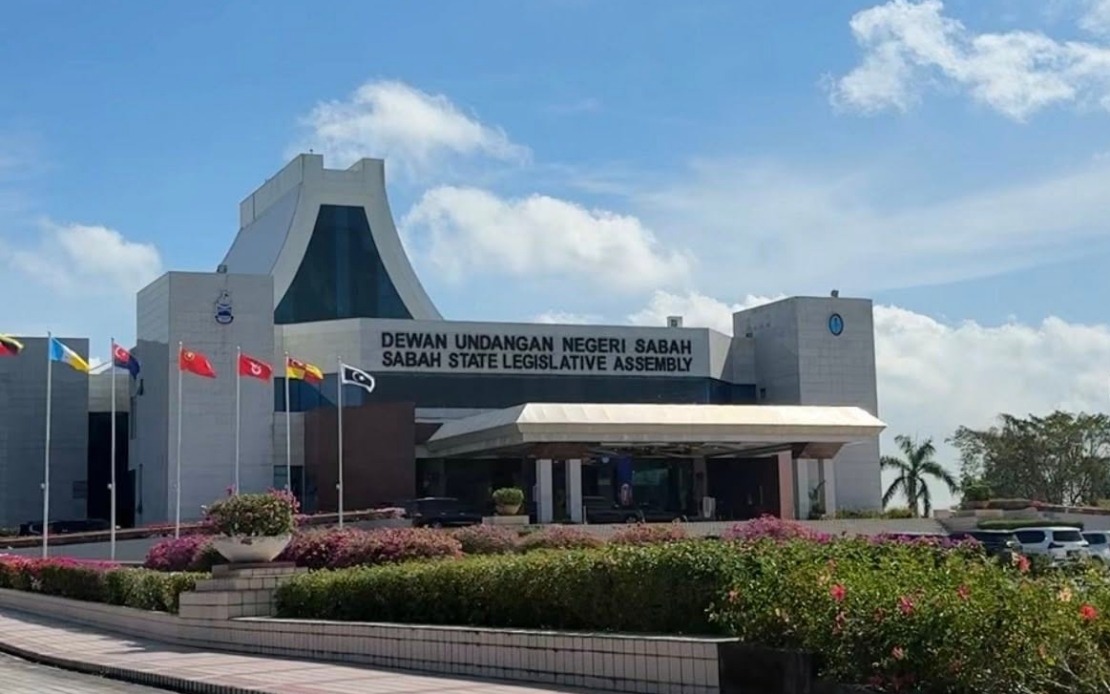
The Sabah Legislative Assembly has approved two significant pieces of legislation that will reshape how the state handles Islamic inheritance matters and indigenous dispute resolution. On July 22, lawmakers passed the Muslim Succession Bill 2026 and the Native Courts Bill 2026, both championed by Sabah Local Government and Housing Minister Datuk Dr Mohd Arifin Arif, who oversees the Islamic Affairs portfolio. The dual legislative achievement signals the state government's determination to modernise its legal systems while addressing long-standing gaps in estate administration and customary justice.
The Muslim Succession Bill 2026 emerged as a watershed moment for Islamic jurisprudence in Malaysia. This legislation represents the first enactment in the country specifically designed to govern Muslim estate administration under the exclusive jurisdiction and powers of Syariah Courts. Previously, Muslim succession matters operated within a less cohesive framework, often dependent on federal guidelines or individual state practices that lacked uniform systematic regulation. The new bill responds to a critical administrative void by establishing clear protocols for how Muslim-owned assets pass to heirs according to Islamic law, addressing what government officials characterised as a pressing need for modernisation across Malaysia's Islamic legal infrastructure.
The legislative debate preceding the Muslim Succession Bill's passage involved five assemblymen presenting arguments before Assembly Speaker Datuk Seri M Kadzim Yahya. The deliberations reflected substantive engagement with the bill's complexities, suggesting lawmakers grappled with practical implementation questions and potential unintended consequences. The measure passed following this considered discussion, indicating cross-party consensus on the legislation's fundamental merits despite any reservations about specific provisions or enforcement mechanisms.
Minister Mohd Arifin articulated four core policy objectives underpinning the Muslim Succession Bill's architecture. First, the legislation aims to introduce systematic legal governance over Muslim inheritance, replacing ad-hoc arrangements with standardised procedures. Second, it prioritises protecting the rights and financial interests of all potential heirs and estate claimants, creating safeguards against disputes or wrongful disinheritance. Third, the bill seeks to align estate administration with Syariah principles, ensuring religious compliance while facilitating orderly asset distribution. Fourth, it strengthens enforcement mechanisms to prevent estate assets from disappearing, being concealed, transferred illegally, or administered without authorisation—a concern that reflects real-world problems where deceased Muslim individuals' assets have occasionally been misappropriated or mismanaged due to weak oversight structures.
The Native Courts Bill 2026 underwent similarly rigorous parliamentary scrutiny, with 12 assemblymen debating its provisions before Deputy Speaker Datuk Richard Wong We Kong. This bill addresses a distinctly Sabahan concern: modernising the state's customary justice system for indigenous communities without eroding the cultural foundations underlying native law. The existing Native Courts legislation had remained substantially unchanged since 1992, meaning it had operated for over three decades without major reforms. For more than thirty years, the legal framework governing indigenous dispute resolution had remained frozen despite significant evolution in Sabah's society, economy, and judicial institutions.
Sabah's native population comprises the Kadazan-Dusun, Bajau, Murut, and numerous other ethnolinguistic groups, each maintaining distinct customary practices and dispute-resolution traditions. The new Native Courts Bill recognises that modernisation must proceed carefully, respecting indigenous identity and customary roots while rendering the system responsive to contemporary expectations. The legislation restructures the hierarchical organisation of native courts by establishing three-tier architecture: Native District Courts handling routine matters, Native High Courts addressing appeals and complex cases, and a Native Court of Appeal providing final recourse. This graduated structure mirrors Malaysia's general judicial system, potentially improving procedural consistency and legal clarity for indigenous litigants.
A particularly innovative component addresses judicial appointments. Previously, judges within native courts were often selected based on administrative positions or seniority within government structures, an approach that frequently resulted in judicial appointments divorced from actual legal knowledge or capability. The reformed system introduces a Native Judicial Appointments Advisory Committee responsible for assessing candidates and recommending appointments based on transparency, merit, formal qualifications, practical experience in customary law, and demonstrated integrity. This professionalisation reflects broader international trends toward merit-based judicial selection, acknowledging that indigenous justice systems require bench officers genuinely versed in customary jurisprudence rather than merely senior administrators.
The implications of both bills extend beyond Sabah's immediate borders. As Malaysia's most ethnically diverse state with significant Muslim populations and substantial indigenous communities, Sabah's legislative innovations often presage reforms elsewhere in the federation. The Muslim Succession Bill's framework could influence how other states reconsider their own Islamic estate administration procedures. Peninsula-based policymakers may examine whether Sabah's systematic approach offers lessons for federal Islamic legal architecture. Similarly, Sabah's restructured native courts model provides a template that Sarawak, which faces comparable challenges governing indigenous dispute resolution, might consider adopting or adapting.
For the broader Southeast Asian context, these bills reflect ongoing efforts within Malaysia to reconcile multiple legal systems—Islamic law, customary indigenous jurisprudence, and common law inheritance frameworks—within an increasingly complex society. The legislative approach demonstrates that systematic codification and structural reform need not undermine cultural particularity or religious authenticity. By establishing clear procedures for Muslim estate administration while simultaneously modernising indigenous courts, Sabah demonstrates that legal development and cultural preservation operate on compatible rather than contradictory trajectories, offering potential lessons for other plural societies navigating similar tensions.
The Muslim Succession Bill's emphasis on preventing asset concealment and misappropriation addresses practical governance problems that have occasionally surfaced in Malaysian Muslim estate administration, where weak supervision has sometimes enabled fraud or improper asset disposition. Strengthening enforcement represents the legislation's most ambitious component, requiring Syariah Courts to develop monitoring capacity and regulatory protocols ensuring deceased Muslims' estates are managed transparently and in accordance with Islamic inheritance principles. This enforcement dimension carries particular significance for protecting vulnerable heirs, particularly widows and minor children who may lack resources to pursue legal remedies if their inheritance rights are violated through administrative malfeasance.
The two bills collectively represent Sabah's attempt to address specific governance gaps identified through decades of legal practice and administrative experience. Rather than wholesale importation of external models, the legislation reflects considered assessment of what the state's unique demographic composition, judicial infrastructure, and cultural landscape require. The considerable legislative debate preceding both bills' passage underscores that contemporary Malaysian parliamentarians approach such measures with genuine deliberation rather than perfunctory rubber-stamping, a development that strengthens the legitimacy and potential effectiveness of these reformed legal frameworks.

