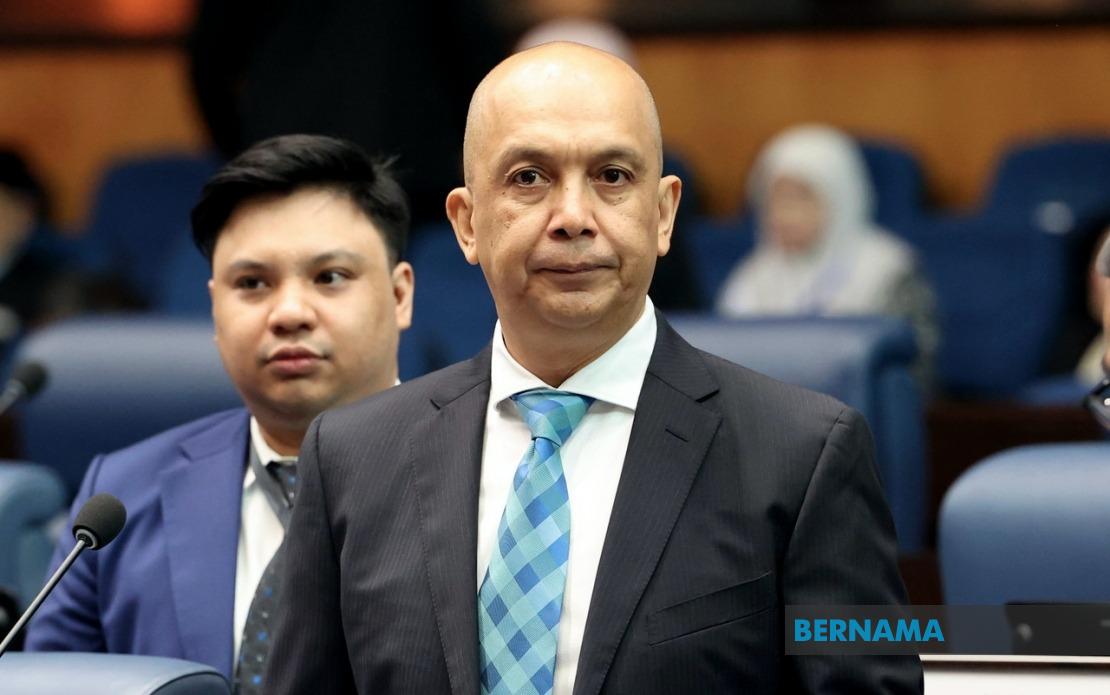
Sabah's state government has moved to accelerate disbursement of federal financial assistance, having received RM600 million in interim special grant funds on June 12 and now formally requesting that the outstanding RM900 million be released within the current financial year. The push underscores ongoing negotiations between the state and federal authorities over long-standing revenue disputes that have defined state-federal relations in Malaysia's eastern region for decades.
Speaking in the state assembly on July 20, Assistant Finance Minister II Datuk Mohd Ishak Ayub made clear that while Sabah had accepted the interim payment, this acceptance carried important caveats. The state, he emphasized, was not relinquishing its constitutional position or conceding that RM1.5 billion represents the final figure it should receive. Rather, Sabah views this tranche as a preliminary settlement pending resolution of deeper disputes about its rightful allocation under federal law.
The constitutional foundation of Sabah's claim rests on Articles 112C and 112D of the Federal Constitution, which establish the state's entitlement to a specific share of federal revenues. Critically, Datuk Mohd Ishak reiterated that Sabah maintains its demand for full implementation of the 40 per cent formula enshrined in these constitutional provisions. This formula has become shorthand for Sabah's broader assertion that it has been systematically underfunded relative to its constitutional guarantees, a grievance that cuts across party lines and has gained traction during recent political administrations.
The interim grant announcement itself represents a recalibration of federal policy toward the state. Prime Minister Datuk Seri Anwar Ibrahim first disclosed plans to increase interim payments during Kaamatan Festival celebrations on May 30, signalling a deliberate effort to address Sabah's fiscal concerns at a symbolically important moment. The subsequent correspondence between federal and state governments—occurring on June 9, 19, and 26—suggests intensive negotiations around both the quantum and timing of these funds, reflecting the political sensitivity of revenue arrangements affecting one of Malaysia's largest states by land area.
For Malaysian policymakers and observers, Sabah's push carries wider significance. The state's revenue disputes have historically complicated federal-state fiscal relations and occasionally threatened to destabilize coalition politics. By securing partial disbursement now while positioning itself to claim the remainder before year-end, Sabah's leadership is attempting to demonstrate tangible progress to constituents while maintaining pressure on Putrajaya. Success in securing the full RM1.5 billion—and eventual recognition of the 40 per cent formula—would establish a precedent that could reshape how other states approach their own fiscal negotiations.
The grant dispute also illuminates broader questions about fiscal federalism in Malaysia. States like Sabah argue they contribute disproportionately to federal coffers through natural resource revenues, particularly petroleum and timber royalties, yet receive comparatively limited returns through grant allocations and development spending. The interim grant, while substantial, falls short of what constitutional interpretation would yield if the 40 per cent formula were consistently applied. Sabah's insistence on this formula therefore represents not merely a revenue dispute but a constitutional interpretation dispute with long-term implications for how federal resources are distributed across the federation.
Simultaneously, the state assembly heard updates on welfare assistance programmes, providing insight into how improved federal allocations might be deployed at the state level. Assistant Minister of Women, Health and People's Wellbeing Datuk Rina Jainal confirmed that Sabah intends to maintain monthly welfare payments within the RM200 to RM350 bracket, contingent on the state's fiscal position improving. She noted that the Poverty Line Income threshold used to determine eligibility had been adjusted upward from RM1,198 in 2025 to RM1,236 in the current year, effectively expanding the pool of households qualifying for assistance. Any further increases in welfare rates, she indicated, would require corresponding improvements in state finances or federal budget adjustments announced by the Prime Minister during budget presentations in Parliament.
This welfare framework reveals how revenue decisions at the federal level cascade into social policy at the state level. Sabah's ability to enhance welfare coverage—important given the state's development disparities relative to peninsular regions—depends materially on securing sustained federal funding. The interim grant, viewed through this lens, becomes not merely a fiscal transfer but a mechanism affecting the material welfare of Sabah's residents. Conversely, the state's welfare constraints underscore why the revenue dispute matters so acutely to Sabah's political leadership and electorate.
The timeline for disbursing the remaining RM900 million remains uncertain, though Sabah's formal request before year-end suggests the state is seeking clarity and commitment rather than indefinite delay. From a regional Southeast Asian perspective, the dispute reflects challenges common to federal systems navigating resource distribution between centre and constituent states. How Malaysia resolves Sabah's claims may influence other federalism questions across the region and within Malaysia itself, particularly as states increasingly assert claims based on natural resource contributions and historical agreements.
Looking forward, the critical variable is whether federal and state negotiators can bridge remaining gaps and establish a durable framework for revenue sharing that both honours constitutional provisions and addresses fiscal sustainability concerns. The interim grant represents progress but leaves fundamental questions unresolved. Sabah's persistence in pressing for the 40 per cent formula suggests this matter will remain a fixture of state-federal relations, with implications extending well beyond Kota Kinabalu's corridors of power.

