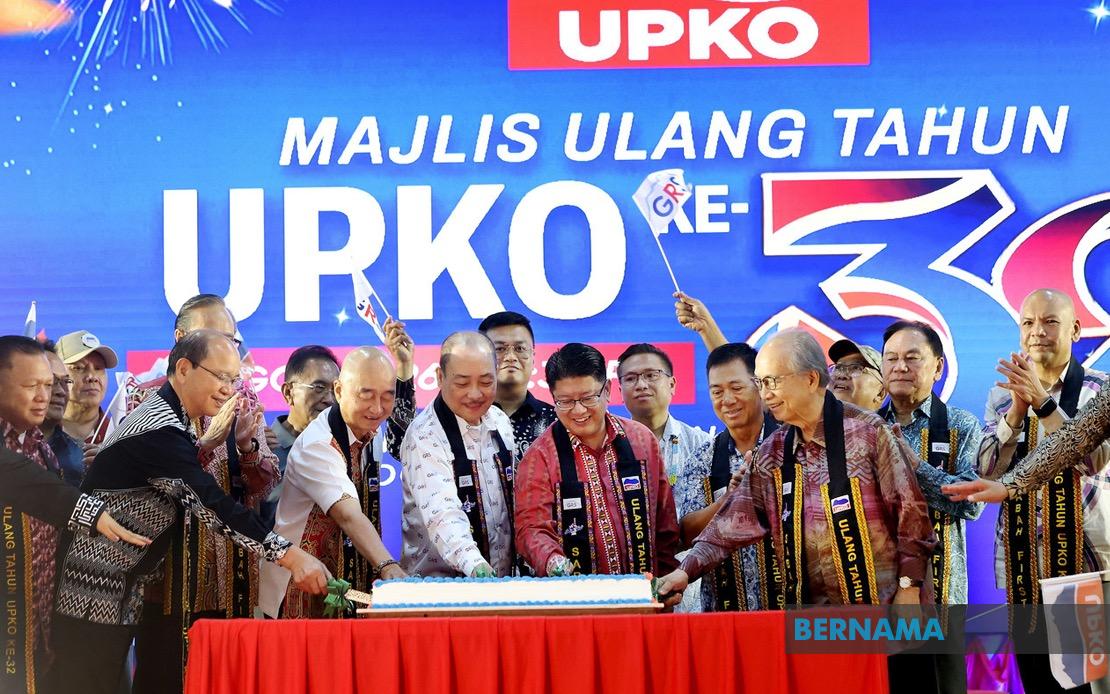
Sabah's Chief Minister Datuk Seri Hajiji Noor has pledged that all financial disbursements from the Federal Government will serve the interests of the state's population through a comprehensive package of incentives, assistance schemes and infrastructure development. Speaking at the 32nd anniversary celebration of the United Progressive Kinabalu Organisation (UPKO) and the opening of the 17th UPKO Triennial Delegates Conference in Kota Kinabalu, Hajiji outlined the state administration's commitment to translating federal transfers into tangible benefits for Sabahans.
The announcement comes on the heels of an upward revision to the interim special grant, which now stands at RM1.5 billion annually. This represents a significant boost to Sabah's development capacity, and the Chief Minister has signalled that these additional resources will be deployed strategically across multiple sectors critical to the state's prosperity. The elevation of funding levels reflects broader recognition within the federal administration of Sabah's development needs and its role as a strategic economic region within Malaysia.
Prime Minister Datuk Seri Anwar Ibrahim's decision to enhance the interim payment has been welcomed by the Sabah administration as an affirmation of the state's importance within the national framework. The state government's development agenda centres on critical infrastructure improvements that directly impact daily living standards. Priority areas include the expansion of road networks with improved paving standards and the construction of concrete bridges designed to enhance connectivity across both urban and rural areas. Simultaneously, efforts to upgrade water supply and electricity infrastructure across the state represent a foundational commitment to ensuring equitable access to essential services.
Beyond traditional infrastructure investments, the Chief Minister emphasised the government's focus on housing initiatives through the Rumah Mesra Sabah Maju Jaya programme, which aims to provide affordable accommodation for eligible residents. The SYUKUR programme, designed to deliver targeted assistance to the rakyat, represents another avenue through which federal revenue will benefit communities directly. These initiatives reflect a deliberate strategy to address both structural development gaps and immediate welfare needs simultaneously.
The financial trajectory of Sabah's revenue generation demonstrates the state's economic performance and fiscal management capacity. Annual collections have been maintained at a consistent RM7 billion level since 2022, establishing a stable baseline for government operations and service delivery. The Chief Minister's projection that collections will reach RM8 billion in the current year suggests growing economic activity and improved tax compliance within the state. This upward momentum in revenue generation provides additional fiscal flexibility for the administration to pursue its development objectives independently of federal transfers.
Sabah's economic resilience has proven notable given the volatile global environment and various domestic challenges that have confronted the broader Malaysian economy. The state's diversified economic base, spanning resource extraction, agriculture, tourism and increasingly service sectors, has enabled it to absorb external shocks while maintaining growth trajectories. This demonstrated capacity for economic stability has enhanced Sabah's attractiveness as an investment destination, positioning it competitively within Southeast Asia's investment landscape.
The federal grant disbursement process has proceeded in phases, with Sabah having received RM600 million of the RM1.5 billion total payment in June, with the remainder expected through continued instalments. This staged approach to fund distribution allows the state administration to sequence project implementation and manage cash flow requirements across the fiscal year. The advance receipt of substantial funds has enabled the state government to commence priority projects without undue delays while maintaining budgetary discipline.
The strategic repositioning of federal resources toward state-level welfare and development programmes reflects evolving federalism in Malaysia, where states are increasingly empowered to determine development priorities aligned with local conditions and community preferences. This approach acknowledges that regional variations in geography, demographics and economic structures necessitate tailored solutions rather than uniform national templates. Sabah's distinctive profile as a large, resource-rich state with dispersed population centres justifies substantial infrastructure investment in connectivity and service delivery.
The Chief Minister's repeated emphasis that all federal revenue will be channelled back to the people underscores an understanding that legitimacy of government rests on demonstrable returns to constituents. This public commitment creates accountability mechanisms whereby the administration must demonstrate visible outcomes from federal transfers, whether through completed road projects, improved service quality or expanded assistance programmes. Such transparency regarding fund utilisation strengthens public confidence in government stewardship of resources.
For Malaysian investors and businesses operating in Sabah, the commitment to sustained development expenditure and revenue growth carries positive implications for market expansion and infrastructure reliability. Improved transportation networks, reliable utilities and housing availability enhance the business environment and worker productivity. The state government's proactive stance on leveraging federal funds for strategic purposes signals competent administration capable of executing large-scale projects and maintaining policy consistency.
Looking ahead, the trajectory established through the enhanced interim special grant and the state's own revenue growth suggests Sabah is entering a phase of accelerated development. The convergence of increased federal allocations with growing state revenue provides a dual engine for progress. This expanded fiscal capacity, when deployed according to the Chief Minister's stated priorities, should translate into improved quality of life metrics across Sabah and enhanced economic competitiveness within the regional context.

