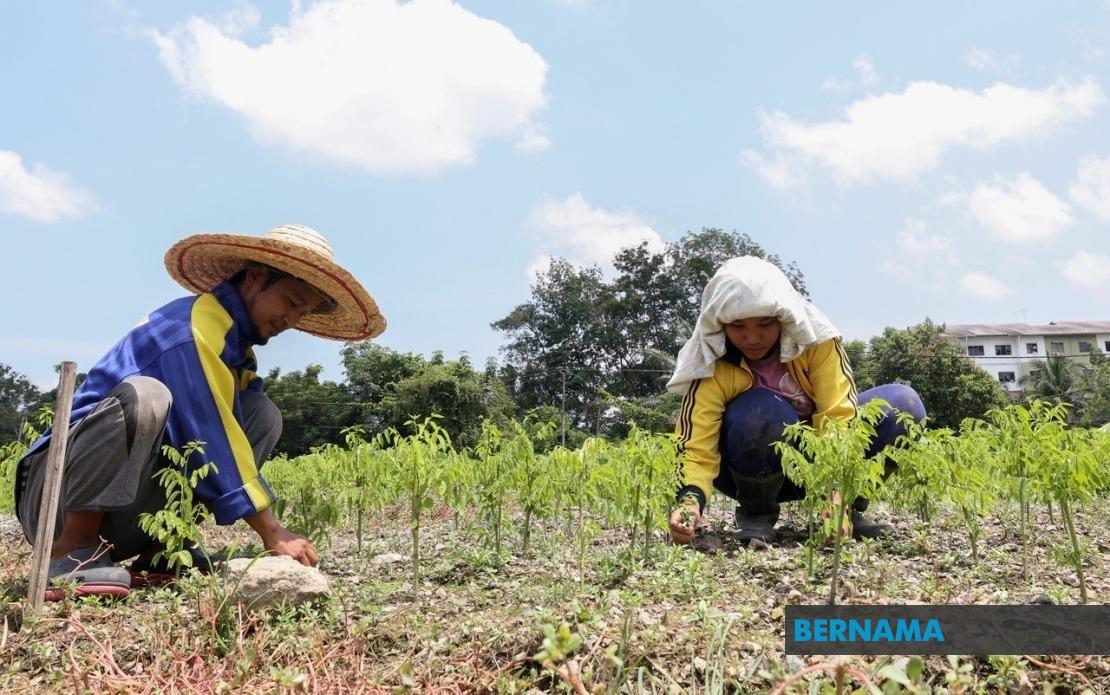
Malaysia's agricultural heartland is grappling with a significant production crisis as a prolonged heat wave sweeps across 17 regions nationwide, with Sandakan and four other Sabah locations bearing the brunt of extreme temperatures. The Malaysian Meteorological Department issued a Level 1 hot weather alert this week, signalling cautionary conditions when daily maximum temperatures consistently reach between 35 and 37 degrees Celsius for three or more consecutive days. The combination of geographical distribution—spanning 11 areas across Peninsular Malaysia, five in Sabah, and one in Sarawak—underscores the severity and nationwide scope of the phenomenon, though the impact on East Malaysian farming communities has proven particularly acute.
Farmers and horticultural operators in affected zones are confronting an unprecedented squeeze on productivity and resource management. Vegetable grower Firyanus Salamba, 33, who operates a farm in Batu 7, Sandakan, has become emblematic of the struggle facing small-scale agricultural producers in the region. His account reveals the operational demands imposed by extreme heat: crops such as okra, sweet shoots and mustard greens now require triple-daily watering cycles—morning, afternoon and evening—compared to the conventional single watering during typical weather patterns. This escalation in irrigation frequency represents both a labour-intensive burden and a substantial increase in input costs, straining the already-thin margins characterising smallholder farming in Sabah.
Despite implementing intensive water management protocols, agricultural output continues to contract markedly. The productivity decline proves most dramatic in heat-sensitive crops, particularly chilli plants, which demonstrate extremely poor resilience under such extreme climatic conditions. Farmers report that even with thrice-daily irrigation, survival rates plummet and yields collapse. The economic implications extend beyond mere production volume; the cost of additional water, labour to manage increased watering schedules, and potential crop loss represents a compounding financial pressure that threatens the viability of smallholder operations throughout the affected regions.
The floriculture sector faces an equally challenging situation, as operators managing flowering plants and ornamental nurseries have adopted comparable adaptive measures. Industry survey findings document that nursery operators now routinely water flowering plants at minimum twice daily to arrest the wilting and mortality induced by extreme heat conditions. The ornamental horticulture market, which supplies both domestic demand and regional export channels, faces a particularly time-sensitive crisis; flower crops cannot tolerate significant yield reductions or quality degradation without losing market viability. Unlike staple vegetable crops that farmers might replant if losses occur, high-value decorative plants represent sunk costs that cannot be easily recovered if temperatures cause mass plant death.
The geographic distribution of affected areas reveals important patterns about Malaysia's environmental vulnerability. Peninsular Malaysia accounts for the majority of flagged locations, with Perak hosting four regions: Larut and Matang, Kuala Kangsar, Kampar and Batang Padang. Pahang similarly has four affected areas: Kuantan, Raub, Temerloh and Pekan. Selangor reports two zones—Hulu Selangor and Gombak—whilst Kelantan registers one region at Kuala Krai. This concentration in resource-rich states suggests that agricultural zones with historically significant production output face particular pressure, amplifying the potential nationwide food security implications.
Sabah's situation deserves distinct analytical attention, as five regions under alert status represent a substantial proportion of the state's agricultural capacity. Telupid, Tenom, Sandakan, Pitas and Beluran span diverse agroecological zones, from lowland coastal regions to interior plateau areas. The simultaneous heat stress across these geographically disparate zones indicates that the weather phenomenon transcends localised conditions, reflecting broader climatic pressures. Sandakan, with its significant vegetable and agro-horticultural base, faces particular vulnerability given established trade relationships and supply dependencies throughout East Malaysia. Meanwhile, Sarawak reports one affected region at Marudi, suggesting the heat wave's eastern reach continues to expand across Borneo.
The Level 1 alert classification, whilst the lowest formal temperature warning category, carries substantive implications for agricultural planning and resource allocation. The meteorological threshold—consistently reaching 35 to 37 degrees Celsius over multiple days—represents a stress condition exceeding the thermal tolerance range of numerous tropical crop species, despite Malaysia's typically hot climate. This distinction suggests that current temperature patterns exceed even the locally-adapted resilience of regional farming systems, indicating genuine climatic anomaly rather than routine seasonal variation.
The broader policy challenge extends beyond immediate crop loss quantification to encompass longer-term agricultural sustainability and food security architecture. Farmers lack substantial capacity to independently manage such widespread, simultaneous weather extremes through conventional adaptation; irrigation infrastructure, whilst essential, depends on water availability that itself may become strained under sustained heat conditions. The simultaneous impact across both Peninsula and Borneo regions, affecting diverse crop types and production systems, suggests that agricultural supply chains could experience disruptions affecting consumer food prices and market availability in coming weeks.
The episode underscores Southeast Asia's particular vulnerability to climate volatility, as equatorial and tropical agricultural systems typically operate at temperatures approaching or exceeding crop thermal limits. Malaysia's position as a net food importer for numerous staple products means that domestic production disruptions directly threaten national food security and consumer welfare. The heat wave's impact on vegetable, chilli and ornamental crops affects both daily household supply chains and income sources for tens of thousands of farming families concentrated in the affected zones.
For policymakers and agricultural administrators, the crisis demands immediate responses across multiple dimensions. Water resource management becomes critically urgent; ensuring adequate irrigation supply whilst managing competing demands from urban consumption and industrial users requires coordinated planning. Extension services should prioritise technical guidance on heat-stress mitigation techniques beyond simple irrigation intensification. Simultaneously, government consideration of financial support mechanisms—whether through crop insurance provisions, temporary input subsidies or emergency relief—merits urgent evaluation, particularly for smallholder producers lacking financial reserves to absorb substantial production losses.

