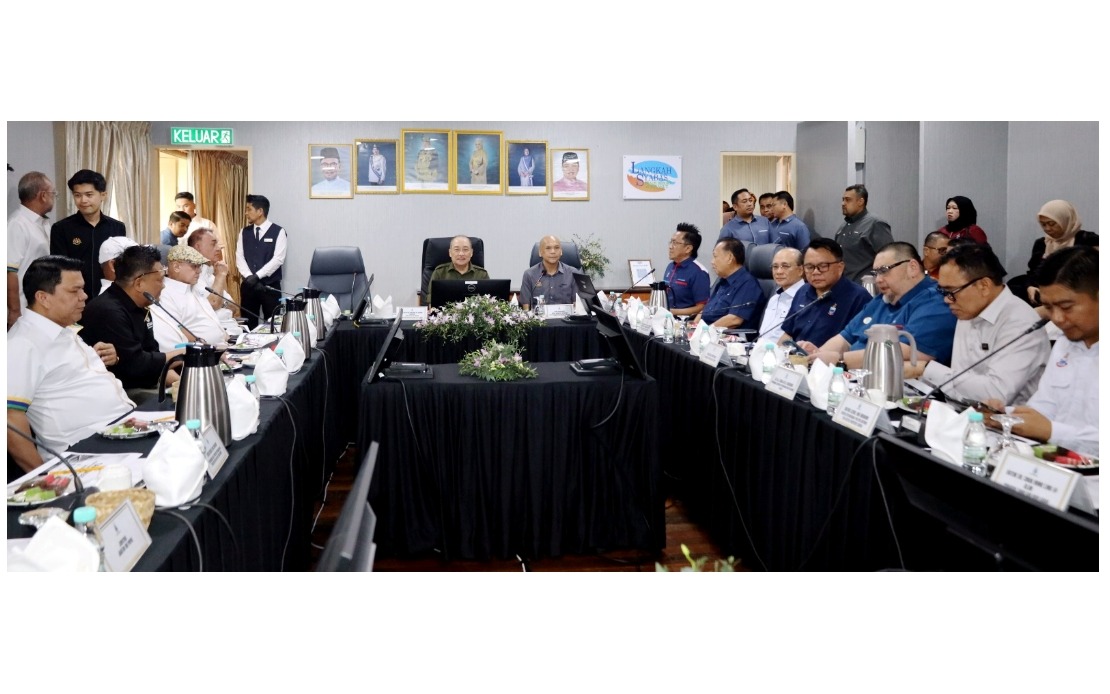
Persistent water shortages plaguing the districts of Papar, Putatan, and Kimanis in Sabah are expected to ease significantly within months, following the imminent completion of two major infrastructure projects that the state government has prioritised to tackle this long-standing supply crisis. Chief Minister Datuk Seri Hajiji Noor provided an optimistic assessment during a project briefing held in Papar on July 28, stating that the Kogopon Water Treatment Plant and the Kabang Raw Water Intake facility should commence operations by November and August respectively, marking what could be a turning point for communities that have endured repeated water rationing and supply interruptions.
The Kogopon Water Treatment Plant represents the centrepiece of Sabah's water infrastructure expansion, with a capacity of 80 million litres daily and a total investment of RM365.9 million. According to State Water Department director Chee Chun Chieh, the facility is scheduled to begin supplying water by the end of November, though full completion of all associated systems is targeted for 2028. This phased approach suggests that initial water distributions should reach consumers within four months, providing relief to households and businesses that have experienced inconsistent supply patterns. The scale of this plant underscores the magnitude of demand that has outpaced existing infrastructure capacity in these increasingly developed coastal areas.
Complementing the Kogopon facility is the Kabang Raw Water Intake plant, already 90 per cent constructed and formally scheduled for commissioning by September. This RM39.73 million project is strategically positioned further upstream along the Papar river, a crucial geographical advantage that addresses one of the region's most persistent technical challenges. The facility will dramatically increase intake capacity from the current nine million litres daily to 30 million litres daily, thereby substantially reducing the operational strain on the existing water supply network and creating considerable redundancy to handle peak demand periods without relying on emergency measures.
Beyond the quantitative increase in capacity, the Kabang intake addresses a fundamental water quality issue that has plagued the sector for years. The existing Limbahau plant frequently contends with salinity intrusion during dry seasons and periods of reduced river flow, rendering supplies unsuitable for treatment without additional expense and effort. By drawing from a higher elevation and greater distance upstream from the river mouth, the new facility will significantly mitigate saltwater contamination risks and provide cleaner raw water that requires less intensive treatment, thereby reducing operational costs while improving supply reliability. This technical solution reflects a learning-based approach to infrastructure design that acknowledges past limitations.
Chief Minister Hajiji Noor characterised water shortages as a legacy issue inherited by the current administration, emphasising the government's commitment to resolving what has become a defining challenge for resident satisfaction and economic development in affected areas. His statement carries political weight, as the water crisis has long been a source of public frustration and criticism. By setting concrete completion timelines and directing senior officials to intensify monitoring efforts, the Chief Minister is attempting to demonstrate proactive governance and accountability. He further instructed the State Water Department to implement immediate relief measures, including deployment of water trucks to affected communities, acknowledging that final infrastructure completion remains months away.
The implications for Papar, Putatan, and Kimanis extend beyond residential convenience. These districts include significant commercial and industrial zones, and unreliable water supply constrains business operations, manufacturing capacity, and investor confidence. Hotels, food processing facilities, and construction projects all require guaranteed water availability, and the chronic shortages have created a competitive disadvantage compared to other Malaysian regions with robust infrastructure. The completion of these two projects should therefore unlock economic potential that has been constrained by basic utility limitations, potentially attracting additional investment and supporting job creation.
From a broader Southeast Asian perspective, Sabah's infrastructure challenges reflect a pattern common across rapidly developing regions where population growth and economic expansion have outpaced planned utility infrastructure. Many Southeast Asian states face similar dilemmas of balancing immediate demand with long-term capital investment. The Sabah government's approach—combining large-scale treatment and intake capacity with quality improvements through upstream sourcing—offers a replicable model for regional counterparts confronting analogous situations. The timeline and investment levels provide useful benchmarks for other jurisdictions planning comparable projects.
The RM405.63 million combined investment in these two facilities represents substantial public commitment to infrastructure development. For context, this investment level demonstrates the financial priority the Sabah government has assigned to resolving water supply deficiencies, even as competing demands exist for healthcare, education, and transportation infrastructure. The financing and execution of these projects will test project management capabilities and procurement efficiency, with successful completion strengthening the government's credibility for future major infrastructure initiatives.
Monitoring of the two projects will be critical, as Hajiji's explicit directive to the State Water Department reflects awareness that previous water infrastructure projects in Malaysia have experienced delays and cost overruns. By establishing senior-level oversight and demanding regular progress updates, the administration is attempting to prevent recurrence of such problems. The specific mention of proactive water tank distribution to affected areas indicates interim crisis management planning should commissioning experience further delays, a pragmatic acknowledgment of worst-case scenarios.
Once operational, these facilities will establish new baseline capacity for the three districts, yet long-term planning should anticipate continued population growth and economic expansion that may eventually strain even these enlarged systems. Sustainable water security requires not only current infrastructure completion but also forward-looking planning for future demand, water recycling systems, and climate resilience strategies. The completion of the Kogopon and Kabang projects should therefore be viewed as a necessary milestone rather than a final solution to regional water security challenges.

