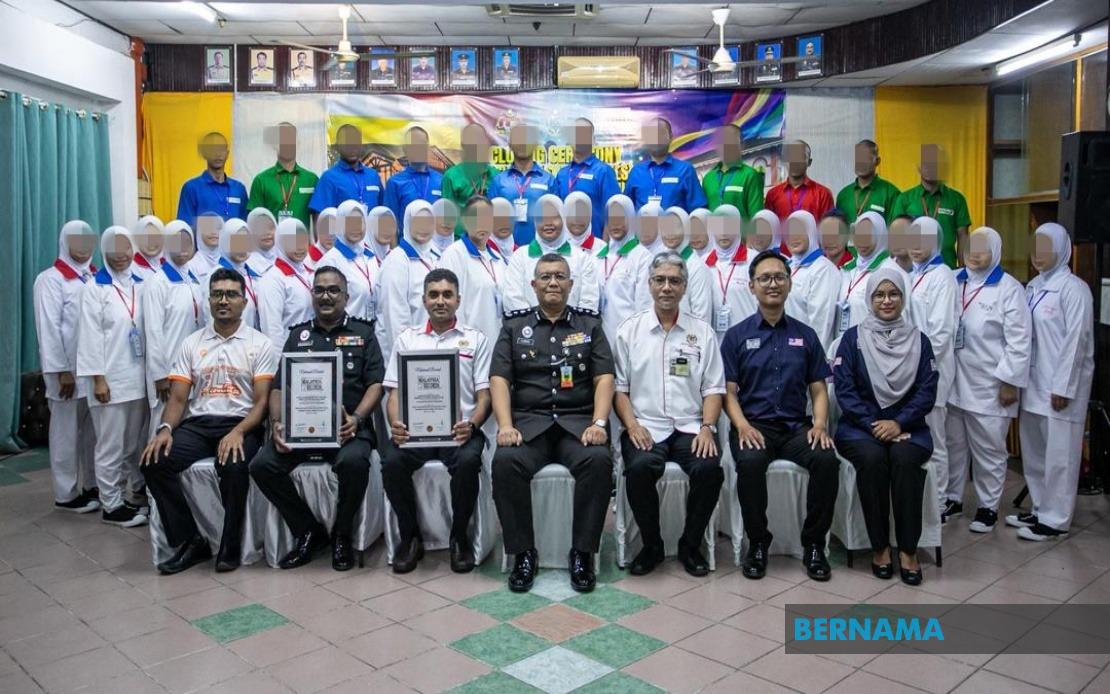
Home Minister Datuk Seri Saifuddin Nasution Ismail has publicly commended the Malaysian Prisons Department for achieving a significant milestone, with the Batu Gajah Correctional Centre earning recognition from the Malaysia Book of Records through an ambitious Basic Life Support and Automated External Defibrillator training programme that trained 42 inmates in emergency medical response techniques.
The recognition represents a notable shift in how Malaysia's correctional system measures success, moving beyond traditional security and custody metrics towards quantifiable rehabilitation outcomes. The achievement underscores a broader governmental strategy to demonstrate that prisons can function as genuine transformation centres rather than purely punitive institutions, a messaging priority for the Ministry of Home Affairs under Saifuddin's stewardship.
According to Saifuddin's statement posted on social media, the initiative embodies a fundamental philosophical reorientation within Malaysia's prison system. Rather than viewing incarceration solely as punishment for criminal behaviour, the department now positions correctional facilities as environments where individuals can acquire practical skills, rebuild damaged self-worth, and prepare for successful reintegration into civilian society. This conceptual framework aligns with international best practices in criminal justice reform, where evidence increasingly demonstrates that skill development and rehabilitation programmes reduce recidivism rates and lower long-term incarceration costs.
The Basic Life Support and Automated External Defibrillator training course represents a particularly strategic choice for rehabilitation programming. These life-saving techniques translate directly into employment opportunities within healthcare settings, security services, and hospitality industries that increasingly require staff to possess emergency response certifications. For incarcerated individuals facing substantial barriers to employment upon release, such credentials provide tangible competitive advantages and demonstrate to prospective employers a commitment to personal development and community contribution.
Beyond the immediate practical skills, Saifuddin emphasized that programmes of this calibre instil humanitarian values alongside technical competence. The Home Minister specifically highlighted that participants acquire discipline, responsibility, and self-confidence through structured training environments where success is measurable and achievement is publicly recognized. For inmates who may have experienced social marginalization or institutional failures throughout their lives, such positive recognition creates psychological anchors for behavioural change and future prosocial orientation.
The Malaysia Book of Records recognition itself carries symbolic weight within Malaysia's correctional context. By framing the initiative as a record-breaking achievement worthy of national documentation, the government elevates rehabilitation programming from routine institutional activity to celebrated institutional accomplishment. This public validation may encourage both correctional staff to invest greater effort in similar programmes and other facilities to develop competing initiatives, thereby creating competitive momentum for rehabilitation innovation across the prison estate.
Saifuddin's emphasis that the ultimate departmental goal is ensuring returning individuals possess skills, values, and confidence to contribute positively to their families, communities, and the broader nation reflects a victim-centric framing of criminal justice reform. Rather than focusing exclusively on the interests of incarcerated persons, this articulation acknowledges that successful rehabilitation directly benefits society by reducing the likelihood of reoffending and enabling former inmates to support rather than burden their communities. This rhetorical strategy helps position rehabilitation investment as economically rational public policy rather than charitable sentiment.
The broader context of this announcement matters significantly for Malaysian stakeholders. Prison overcrowding remains a persistent challenge across Southeast Asia, with Malaysian facilities consistently operating above designed capacity. Investment in rehabilitation programmes that demonstrably reduce recidivism becomes increasingly cost-effective as populations grow. Every offender who successfully rehabilitates and avoids reoffending represents a reduction in demand for expensive prison bed space and associated security infrastructure.
Moreover, the emphasis on rehabilitation aligns with Malaysia's commitments under various international human rights frameworks and ASEAN principles concerning criminal justice standards. Demonstrating that correctional facilities prioritize human dignity and development alongside security positions Malaysia favourably within regional and international governance conversations about prison standards and accountability.
Saifuddin's call for expanded replication of high-impact programmes suggests the government views this Batu Gajah initiative as a potential template for systematic scaling across the prison network. If implementation accelerates, Malaysian prisons could emerge as regional leaders in rehabilitation-focused programming, potentially influencing approaches in other Southeast Asian jurisdictions facing similar incarceration challenges and rehabilitation imperatives.
The recognition also carries implications for staff morale and institutional culture within Malaysian prisons. Celebrating achievements in rehabilitation and skill development may gradually shift the occupational identity of correctional officers from custodians focused on containment towards educators and facilitators invested in human transformation. This cultural reorientation, though challenging to achieve at scale, ultimately determines whether rehabilitation remains aspirational policy rhetoric or becomes embedded institutional practice.
As Malaysia continues navigating questions about criminal justice system effectiveness and social reintegration outcomes, initiatives like the Batu Gajah programme provide concrete evidence that transformation is possible when institutions commit resources and leadership attention to rehabilitation missions. Whether such successes can be replicated systematically across the broader prison estate remains the critical question shaping Malaysia's correctional future.

