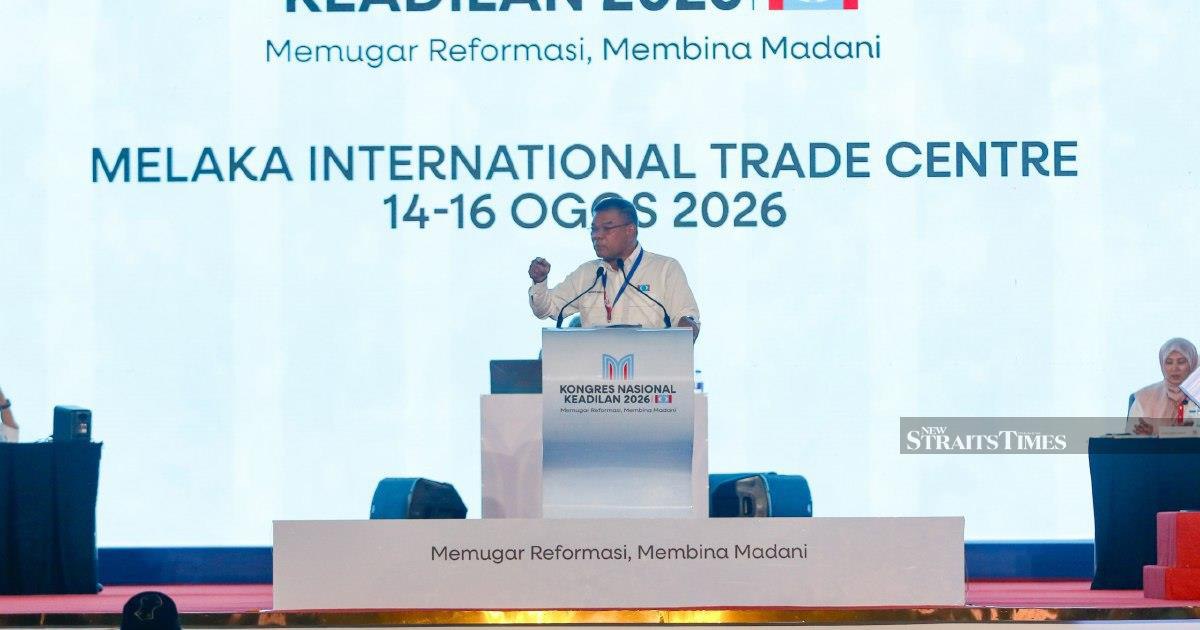
Datuk Seri Saifuddin Nasution Ismail, the People's Justice Party's (PKR) vice-president, has made a compelling case that Malaysia's fight against graft should be anchored in ethical governance rather than become entangled with communal or religious sensitivities. Speaking in Ayer Keroh, Saifuddin articulated a vision of anti-corruption efforts that transcends the divisive fault lines that have historically fragmented Malaysian society. His remarks reflect a broader recognition within the ruling coalition that corruption, as a systemic challenge, demands a unified national response divorced from the polarizing narratives that often dominate domestic discourse.
The distinction Saifuddin draws between framing corruption as a governance failure versus a vehicle for communal grievances carries profound implications for how Malaysia approaches institutional reform. When anti-corruption campaigns are weaponized along racial or religious lines, they risk delegitimizing legitimate oversight mechanisms and transforming anti-graft institutions into perceived extensions of partisan political competition. By contrast, presenting corruption as a fundamental breach of public trust—one that harms all Malaysians regardless of ethnicity or faith—grounds the anti-corruption agenda in universal principles of accountability and institutional integrity. This approach potentially builds broader political coalitions and public support for reform measures that might otherwise struggle to gain traction when filtered through communal identity matrices.
Saifuddin's positioning reflects wider challenges facing Malaysia's governance architecture. The country has invested significantly in anti-corruption infrastructure, including the Malaysian Anti-Corruption Commission (MACC), yet public confidence in these institutions has fluctuated amid perceptions that enforcement is selective or politically motivated. When prominent cases become entangled with narratives about racial or religious victimization, they risk undermining the impartiality and effectiveness of investigative and prosecutorial processes. The PKR vice-president's call for moral clarity suggests recognition that sustainable institutional strength requires separation of corruption investigations from the zero-sum identity politics that characterize much of contemporary Malaysian political contestation.
The stakes of this framing are particularly acute given Malaysia's history of using communal narratives to mobilize political support. In environments where racial or religious appeals carry electoral weight, there exists persistent temptation for political actors to instrumentalize anti-corruption campaigns as proxies for communal competition. This dynamic can distort both investigative priorities and public perception of enforcement evenhandedness. A governance-centered approach, as Saifuddin advocates, potentially creates space for anti-corruption work to proceed on technical and legal merits rather than being constantly refracted through the lens of intercommunal relations, which have become increasingly fraught in recent years.
For Malaysian business and civil society, Saifuddin's intervention carries practical significance. Companies and institutional actors require confidence that corruption investigations will be pursued consistently and transparently, without regard to the ethnic or religious composition of those implicated. International investors monitoring Malaysia's governance trajectory similarly factor assessments of institutional impartiality into their decisions about capital deployment. When anti-corruption efforts become ensnared in identity politics, both domestic actors and external observers face elevated uncertainty about the evenhandedness of the system, potentially dampening investment and institutional development.
The emphasis on moral governance also resonates with broader regional conversations about corruption and institutional development. Across Southeast Asia, countries have grappled with balancing anti-corruption imperatives against social cohesion, yet Malaysia's particular demographic composition and political history create distinctive challenges. Saifuddin's framing suggests that genuine institutional strength—the kind that attracts international confidence and sustains public legitimacy—flows from principles that transcend communal boundaries. This positioning may also subtly signal to international observers that Malaysia's ruling coalition is committed to governance frameworks not beholden to particularistic ethnic or religious interests.
Within PKR and the broader Pakatan Harapan coalition, Saifuddin's remarks likely serve multiple strategic purposes. They stake out higher ground on institutional governance while implicitly critiquing how opposition actors or previous administrations may have politicized anti-corruption mechanisms. They also reinforce party messaging that the current government represents a break from practices where governance institutions were perceived as serving narrow political interests. By elevating the anti-corruption conversation to a plane of universal moral principles, Saifuddin positions his party within mainstream governance norms advocated by international development institutions and institutional reform advocates.
The practical implementation of this principle remains complex. Translating a commitment to morality-based governance into institutional practice requires sustained political will, sufficient autonomy for investigative agencies, and mechanisms that insulate enforcement from partisan capture. Previous administrations have encountered difficulty sustaining such separation, particularly when investigations touched politically sensitive figures. Whether the current coalition can maintain the kind of institutional distance Saifuddin is advocating will constitute a crucial test of whether his rhetoric translates into substantive reform.
Saifuddin's intervention also reflects understanding that Malaysia's long-term development and international standing depend on governance credibility. Countries with perceived institutional partiality struggle to retain talent, attract investment, and maintain public confidence in state capacity. By articulating an unambiguous commitment to governance-based rather than identity-based anti-corruption frameworks, Saifuddin is positioning Malaysia within global best practices while addressing a distinctively Malaysian governance challenge. The extent to which his call resonates across the political spectrum and translates into institutional practice will largely determine whether Malaysia can establish corruption-fighting mechanisms genuinely grounded in principle rather than partisan calculation.

