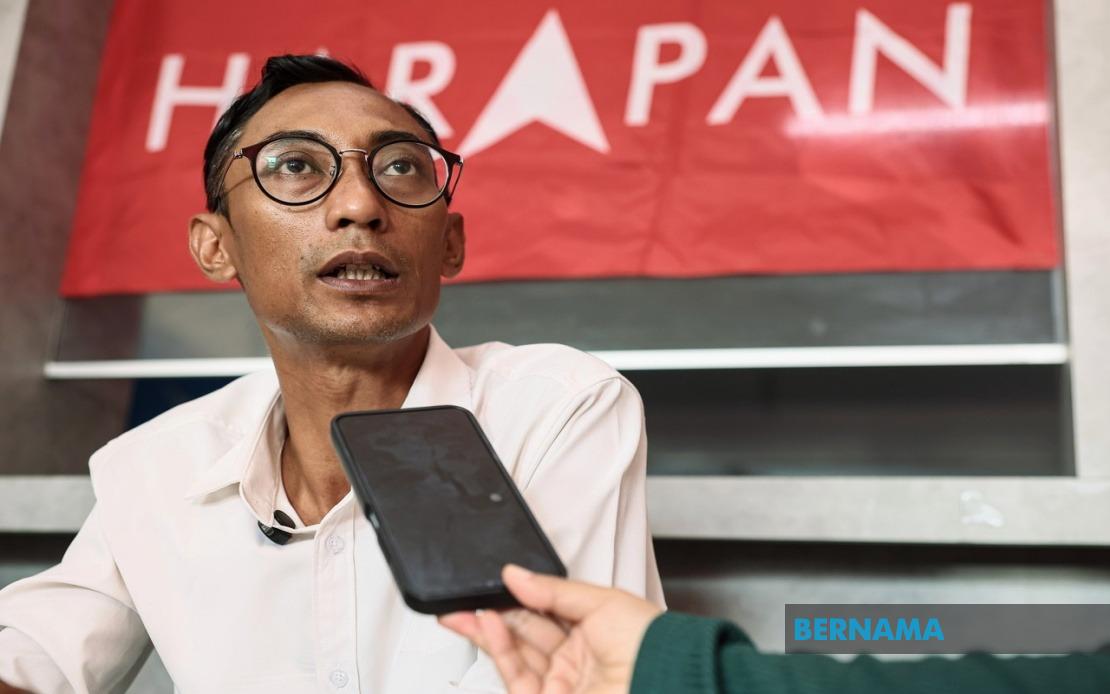
Saiful Nizam Samat, the Pakatan Harapan contender for Johor's Endau state seat, is anchoring his electoral campaign on a straightforward but strategically focused proposition: creating a direct communication channel between his constituents and Putrajaya. Branded as 'Suara Endau ke Putrajaya' (Endau's Voice to Putrajaya), the mission reflects a calculated attempt to differentiate his candidacy from rivals by emphasizing federal-level coordination rather than state-level populism, an unusual positioning in local elections that underscores the interconnected nature of modern Malaysian governance.
The logic behind this approach is pragmatic. Saiful Nizam argues that by aligning Endau's representation with the federal government—currently led by a coalition that includes Pakatan Harapan—development initiatives and resource allocation can be expedited through smoother bureaucratic channels. Where a state representative might struggle to secure federal backing for infrastructure projects or developmental programmes, a legislator perceived as an extension of the national ruling coalition can theoretically navigate ministries and federal agencies with fewer obstacles. This reasoning has resonated enough with early voters that Saiful Nizam reports receiving encouraging feedback across generational divides during the campaign's opening week.
The Endau contest shapes up as a competitive four-way race. Saiful Nizam faces Alwiyah Talib, the Barisan Nasional incumbent seeking a third consecutive term, alongside Perikatan Nasional's Hasnul Hakimi Hussien and Jati Awang representing Parti Orang Asli Malaysia (ASLI). The presence of ASLI is particularly significant given that Orang Asli communities form a notable constituency segment in Endau, though their historical voting patterns have favoured established coalitions over niche parties. Saiful Nizam's acknowledgment that Orang Asli settlements will receive special campaign attention suggests recognition that minority indigenous votes could prove decisive in a splintered field.
Alwiyah Talib's incumbency advantage remains substantial. Two previous electoral victories demonstrate voter familiarity and an established grassroots organization, traditional assets that typically prove resilient in state elections. The two-term factor also means she has a tangible record of service upon which to campaign—or against which critics can point, depending on local sentiment regarding development outcomes and service delivery in the Endau constituency. Saiful Nizam has pointedly chosen not to emphasize his opponent's tenure, instead redirecting focus toward his own machinery's strength and the realism of his policy commitments, a strategy that implicitly concedes Alwiyah's institutional advantages.
The campaign methodology reflects contemporary Malaysian electoral practice. Rather than relying solely on traditional door-to-door canvassing and ceramah gatherings, Saiful Nizam's team has integrated digital platforms alongside conventional outreach. This dual approach acknowledges that while older voters still respond to traditional campaigning, younger constituents—particularly critical in determining electoral outcomes in urban and semi-urban areas—consume political information primarily through social media and online channels. The creation of a specially composed theme song designed to be catchy and light-hearted further demonstrates adaptation to modern voter engagement, using cultural products to build emotional rather than purely rational connections with the electorate.
A distinctive feature of this campaign is its explicit appeal to diaspora voters. Saiful Nizam has publicly called on Endau residents living outside the constituency—whether in Singapore, the Klang Valley, or other regions—to return home specifically to vote. This outreach acknowledges a reality familiar to many Malaysian constituencies: significant population segments with residential ties to a state seat but occupational or familial reasons for living elsewhere. Mobilizing these transient voters requires advance planning, explicit messaging, and confidence that absentee residents retain sufficient emotional or practical investment in their home constituency to undertake travel. The specificity of mentioning Singapore and the Klang Valley suggests these are known concentration points for Endau-origin workers.
The timing of the Johor state election itself carries broader political significance. Scheduled for July 11, the contest arrives against a backdrop of national-level power-sharing arrangements between Pakatan Harapan and Barisan Nasional at the federal level, an unprecedented configuration that has created complex electoral dynamics at state and local levels. Voters in Endau must navigate whether to reward federal-level cooperation by voting PH, maintain traditional Barisan loyalty, support Perikatan Nasional's oppositional stance, or cast protest votes toward ASLI. Saiful Nizam's emphasis on federal alignment represents an attempt to frame the election as a choice about effective governance coordination rather than ideological preference, which may appeal to pragmatically-minded voters less concerned with partisan identity than with concrete outcomes.
The early voting period scheduled for July 7, two days before the general polling, provides flexibility for voters with scheduling constraints or mobility limitations. This staggered voting arrangement has become standard in Malaysian elections and typically benefits organized campaigns with robust voter identification systems. Saiful Nizam's confidence in his campaign machinery suggests his team possesses detailed voter rolls and targeted mobilization capacity, essential for securing early votes where turnout is typically lower but more easily predictable and controllable.
Endau's demographic composition merits consideration. The constituency encompasses both established towns and more rural areas, including significant Orang Asli settlements. This geographical and ethnic diversity means campaign messages must resonate across different community needs and political priorities. Urban voters may prioritize infrastructure, employment opportunities, and connectivity with Kuala Lumpur or Singapore. Orang Asli communities historically prioritize land security, educational access, and healthcare provision—concerns that often require federal-level intervention through the Ministry of Indigenous Peoples' Affairs or specific development programmes. Rural Malay-Muslim voters may focus on religious facilities, agricultural support, and traditional governance recognition. Saiful Nizam's strategy of emphasizing federal coordination theoretically addresses this diversity, as federal agencies hold greater resources than state governments for addressing cross-cutting concerns.
The campaign's final week represents a critical consolidation period. With polling day just Saturday away, Saiful Nizam's team will intensify ground-level efforts to convert undecided voters and ensure committed supporters actually cast ballots. The emphasis on 'realistic commitments' rather than grandiose promises suggests a campaign philosophy prioritizing credibility over spectacular pledges—a potentially smart positioning if early voter feedback indicates electorate skepticism toward traditional vote-buying rhetoric. Whether this mature approach mobilizes sufficient enthusiasm among younger voters accustomed to more dynamic campaigning remains an open question.
For Malaysian observers and Southeast Asian regional analysts, the Endau contest exemplifies how state-level elections now operate within complex multilayered governance frameworks. Saiful Nizam's 'Voice to Putrajaya' mission represents an evolution in how local candidates frame their value propositions: not as autonomous state-level actors, but as optimally positioned conduits between communities and federal authority. If successful, this approach could reshape how other candidates across Malaysia frame their campaigns in future state elections, placing greater emphasis on federal-level relationships and bureaucratic access than traditional parochial or ideological appeals.

