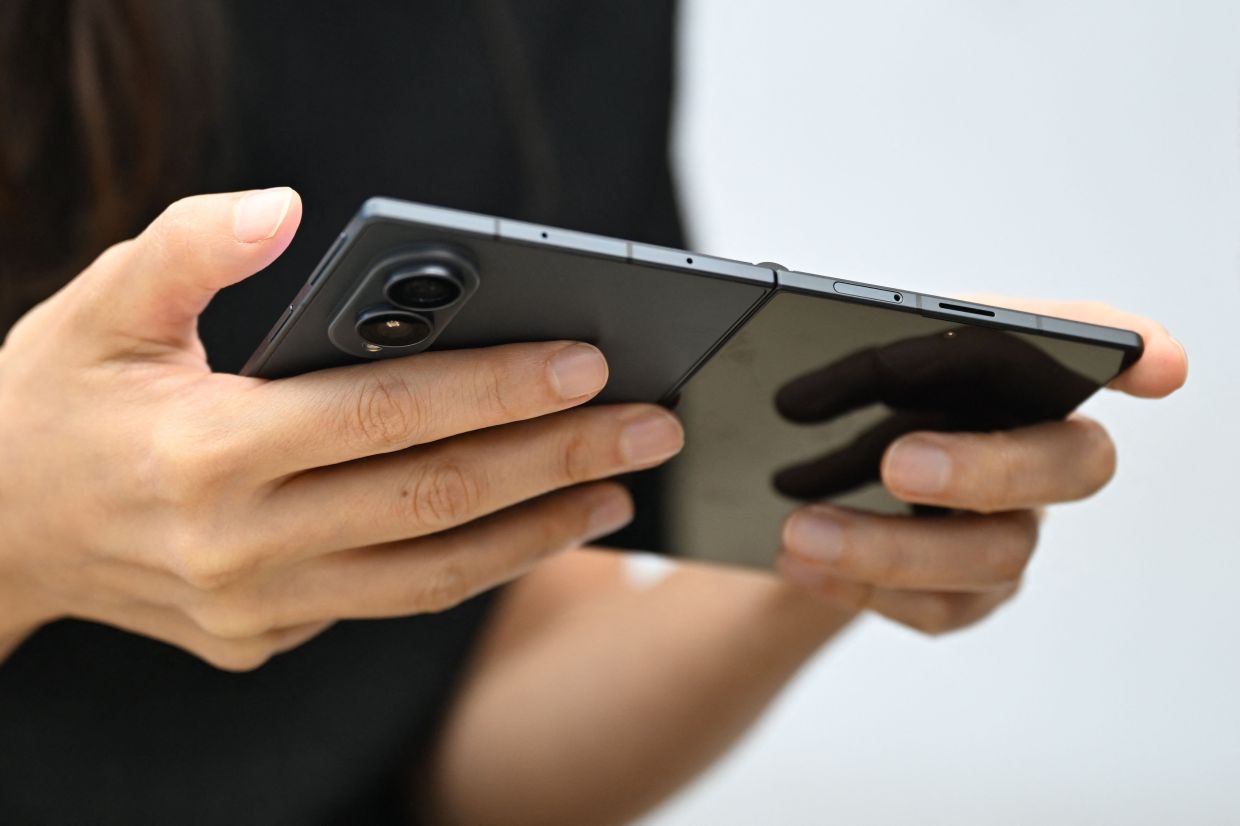
Samsung Electronics Co's latest foldable smartphone, the Galaxy Z Fold 8, exemplifies an emerging design philosophy in the premium mobile space: abandoning the tall, narrow silhouettes that have dominated handset design for nearly two decades in favour of a compact, landscape-oriented form that resembles a closed passport. This departure from convention represents more than incremental refinement—it reflects a fundamental rethink about how consumers interact with foldable technology. The device, beginning shipment August 7 with a starting price of US$1,900 (approximately RM7,299 locally), arrives at a pivotal moment for the category, just weeks before Apple Inc unveils its first folding iPhone using an identical aesthetic approach.
The passport-style proportions are not entirely novel. Alphabet Inc's Google explored similar dimensions with its original Pixel Fold before reversing course to pursue a taller configuration. Chinese manufacturers Oppo and Huawei Technologies Co have already shipped comparable wide foldables across select markets. Yet the impending convergence of Samsung's latest offering with Apple's forthcoming entry points toward a broader industry realignment. When two companies controlling roughly three-quarters of the global smartphone market synchronously embrace the same design language, market momentum inevitably follows. US consumers, and by extension international audiences including those in Southeast Asia, are witnessing the crystallisation of what was previously experimental into mainstream product strategy.
Handling Samsung's device reveals the intentionality behind its proportions. At 201 grams with dimensions of approximately 4.9 inches in height when folded, the Z Fold 8 feels genuinely different from contemporary flagships. The 5.5-inch outer screen remains manageable for single-handed navigation without excessive thumb stretching—a practical advantage over larger devices such as the Galaxy S26 Ultra or iPhone 17 Pro Max, where users frequently lose grip security or develop fatigue during extended sessions. This ergonomic consideration, often overlooked in specification sheets, influences daily usability more substantially than marginal processor improvements or incremental camera enhancements.
Yet the design compromise becomes apparent through extended usage. The outer display's 10:16 aspect ratio sacrifices vertical information density, a trade-off that manifestly impacts productivity workflows. Email clients display noticeably fewer messages simultaneously—Gmail shows five subject lines compared to ten on an iPhone 17 Pro Max. Samsung's home screen grid caps at four application columns rather than five, and window previews in the multitasking switcher shrink to problematic proportions for users with reduced vision. These constraints prove negligible for video consumption or casual browsing but create friction for professionals who conduct substantial work on smartphones. The configuration essentially segments the market: those prioritising portability and entertainment gain advantages whilst productivity-focused users lose functional real estate on the device they consult throughout the day.
Samsung's response to these limitations lies in the expansive 7.6-inch inner display, which transforms when rotated to vertical orientation. Content that appeared cramped on the outer screen—TikTok videos, Instagram feeds—becomes immersive and natural. The experience resembles reading physical books more closely than traditional tall-format smartphones. Critically, the Z Fold 8's reduced weight eliminates hand fatigue that plagued earlier iterations, enabling genuine extended usage without discomfort. Photo browsing represents another standout application, as smartphone cameras capture 4:3 images that automatically fill the entire inner display, creating an experience superior to any non-folding device for sharing vacation photography or reviewing recent shots.
The hardware presents notable aesthetic refinement coupled with functional quirks. Samsung adopted conservative colour palettes following the saturated blue offered with last year's Z Fold 7, delivering devices that feel materially robust and unfold with satisfying mechanical feedback. The spring-loaded hinge differentiates this generation by eliminating the ability to position the device in tent mode at arbitrary angles, a regression some users will lament. More problematic is the rear camera array's placement, which creates a pronounced wobble when the phone rests on tables—a stability issue that cases theoretically address but which remained unresolved during early testing.
Camera capabilities present interesting compromises. The Z Fold 8 incorporates primary and ultrawide lenses but omits telephoto functionality, surrendering optical zoom capabilities that Samsung's computational photography typically leverages effectively for portrait work, subject separation, and background blurring. This absence becomes more conspicuous given Apple's expected dual-camera approach on its forthcoming folding iPhone, potentially offering a hardware upgrade path next year for users valuing long-focal-length reach. For a device marketed toward premium segments, this omission represents a strategic decision requiring justification beyond cost reduction.
Video consumption, ostensibly the driving use case for the passport form factor, delivers less dramatic advantages than marketing narratives suggest. The inner display accommodates pinch-to-zoom interactions that enlarge content beyond any non-folding phone's capacity, though side-by-side comparisons with the iPhone 17 Pro Max or Galaxy S26 Ultra reveal less dramatic size differences than anticipated for contemporary films. The reduced black bars above and below video content provide marginal benefits. Realising the entertainment potential requires the larger variant Samsung discontinued—the Galaxy Z TriFold—whose increased dimensions would sacrifice portability. The manufacturer's apparent consideration of discontinuing the tall, narrow Ultra model in favour of dual sizes within the passport orientation merits serious evaluation, as such a strategy would better address consumer segmentation between those seeking versatile compactness and those requiring genuine do-everything functionality.
Samsung projects this redesigned form factor will comprise approximately one-third of US foldable sales, indicating substantial internal confidence despite acknowledged trade-offs. The South Korean conglomerate's strategy aligns with Apple's broader iPhone reinvention timeline, which encompasses last year's Pro and Pro Max overhauls plus the iPhone Air thin variant, with a separate product revamp planned for 2027 commemorating two decades since the original device's introduction. For Malaysian and Southeast Asian markets specifically, these developments carry particular significance as regional manufacturers and carriers assess which design philosophies resonate across different consumer segments and usage patterns.
The fundamental market question remains unresolved: whether the passport orientation genuinely addresses unmet consumer needs or represents a circular trend destined for cyclical reversal. Large-format smartphones command lower price points and superior information density, likely retaining appeal among email-intensive professionals and social media enthusiasts. Yet the Z Fold 8 possesses undeniable novelty—a quality largely absent from contemporary smartphone releases where marginal camera improvements or artificial intelligence implementations inspire minimal consumer enthusiasm. After iterative refinements across multiple generations, foldable technology finally generates excitement through form factor innovation rather than incremental specification enhancement. Whether this represents the sustainable future of premium smartphones or merely a compelling detour in design evolution depends ultimately on consumer behaviour over coming quarters.

