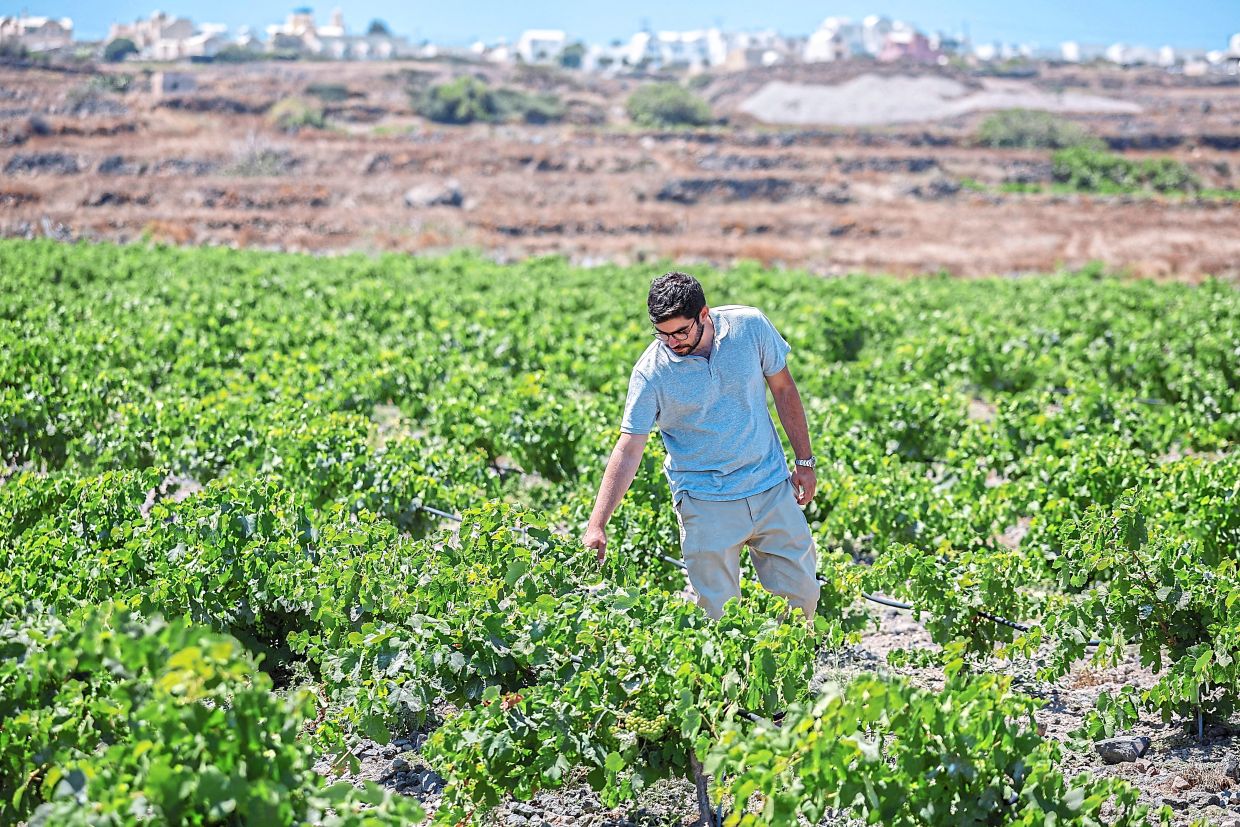
The iconic vineyards of Santorini face an unprecedented existential challenge as climate change reshapes the Mediterranean's agricultural landscape. Winemaker Yiannis Boutaris, the sixth-generation proprietor of Domaine Sigalas winery (now part of the Kir-Yianni family portfolio), recently stood amid dying grapevines that encapsulate the island's mounting crisis—a century-old "kouloura" vine, trained into a protective basket shape to shield grapes from the island's punishing summer heat, finally succumbed after 90 years of productive life. This symbolic loss reflects a far broader agricultural calamity: the period from 2023 to 2025 has witnessed unprecedented low rainfall and scorching temperatures that have simultaneously inflated grape prices, decimated wine yields, and sparked genuine alarm over the island's freshwater viability.
The stress on Santorini's wine sector exemplifies a mounting resource competition across Greece as temperatures climb and precipitation patterns destabilize. During peak tourist season, when millions of visitors flood Mediterranean islands, agricultural producers, hospitality operators, and resort proprietors engage in increasingly fraught negotiations over finite water resources. This competition has become particularly acute on islands like Santorini, where tourism infrastructure and wine production have historically coexisted. The situation grows more complex when considering pricing dynamics: while Santorini grapes command premium valuations due to the island's prestigious terroir, northern Greek regions produce comparable fruit at substantially lower costs—roughly €0.80 per kilogram compared to the inflated island rates—creating economic pressure on Santorini producers to sustain operations despite elevated production expenses.
The climatic data underlying these concerns is sobering. Stefanos Koundouras, a viticulture specialist at Aristotle University in Thessaloniki, characterizes the 2023-2024 period as unprecedented, with temperatures reaching their highest levels in six decades. This trajectory extends beyond Santorini's immediate challenges; Koundouras warns that sustained warming and desiccation threaten wine production viability across the Mediterranean basin and potentially throughout continental Europe. Already, producers report observable degradation in wine quality and the distinctive sensory characteristics that define regional expressions—the very attributes commanding premium market positioning.
Confronted by this reality, Boutaris and fellow producers are implementing experimental adaptations that blur the lines between tradition and necessity. Domaine Sigalas is collaborating with municipal authorities and scientific institutions on a pilot initiative drawing wastewater from residential and hotel sources for vineyard irrigation. This approach mirrors practices established in California's wine regions, offering theoretical advantages over energy-intensive desalination infrastructure in terms of both sustainability metrics and operational economics. Simultaneously, Boutaris is experimenting with restructured vine spacing, transitioning from scattered traditional arrangements to organized rows that facilitate more precise irrigation delivery and resource optimization.
Among the more sophisticated technological interventions gaining traction is atmospheric water harvesting—a process that captures ambient moisture using hydrogel media, then liberates captured water through heat derived from solar panel installations. This innovation represents a particularly compelling adaptation for island environments where conventional freshwater procurement remains constrained, though questions persist regarding scalability and cost-effectiveness across broader vineyard holdings. The methodology embodies the broader adaptation imperative: winemakers must fundamentally reconceptualize their operational frameworks while attempting to preserve the cultural and qualitative dimensions that have defined their products for generations.
Yiannis Papaeconomou, managing six-year-old vines within the same stressed ecosystem, is pursuing parallel adaptive strategies. His approach incorporates subsurface irrigation systems that deliver moisture directly to root zones rather than overhead application, thereby minimizing evaporative losses. He has also implemented modified trellising configurations that optimize water delivery efficiency and reduce plant water stress during peak summer months. These interventions reflect a sector-wide recognition that incremental adjustments to existing practices will prove insufficient; rather, fundamental reimagining of cultivation methodologies has become operationally imperative.
The broader context underlying these adaptations speaks to transformative shifts in Mediterranean agriculture driven by anthropogenic climate change. Boutaris articulates a philosophical stance that captures the winemakers' collective predicament: maintaining commitment to viticultural heritage while acknowledging that sustainability demands structural innovation. This framing moves beyond simple technological deployment; it represents a negotiation between preservation of identity and acknowledgment of ecological realities. The Santorini wine sector—long synonymous with distinctive volcanic terroir producing premium wines—faces the uncomfortable reality that terroir advantages become moot if the fundamental natural resources enabling agriculture become unreliable or exhausted.
The implications extend beyond Greece's borders. Santorini's experience presages challenges confronting wine regions throughout the Mediterranean periphery and into central Europe as warming accelerates and precipitation becomes increasingly erratic. Established wine-producing regions that have built centuries of reputation and economic positioning around specific geographical characteristics now confront scenarios where those defining features shift fundamentally. The adaptation strategies emerging from Santorini—wastewater recycling, atmospheric water harvesting, modified cultivation geometries—likely represent the emerging playbook for European wine regions attempting to maintain productivity and quality standards amid climatic disruption.
For Malaysian and Southeast Asian observers, Santorini's predicament offers instructive lessons regarding climate adaptation in agriculture-dependent economies. Many tropical and subtropical regions across Southeast Asia depend substantially on agriculture for employment, export earnings, and food security. While monsoon patterns differ markedly from Mediterranean climates, the fundamental challenge—securing adequate freshwater for irrigation amid unpredictable precipitation and rising temperatures—resonates across the region. The experimental frameworks being tested on Santorini, particularly wastewater treatment and recycling for agricultural use, may offer transferable models for adaptation in water-stressed South and Southeast Asian contexts.
The wine industry's adaptive capacity also illuminates broader questions about economic resilience in sectors built upon narrowly defined environmental conditions. As climate volatility increases, industries dependent upon specific regional characteristics—whether wine production, tea cultivation, or specialty crop production—face mounting pressure to either relocate, fundamentally transform their product offerings, or invest substantially in technological mitigation. These choices invariably entail financial, cultural, and social dimensions extending far beyond agricultural productivity metrics. Santorini's winemakers are not simply solving technical irrigation problems; they are navigating the preservation of cultural identity, economic viability, and environmental stewardship within an increasingly constrained resource environment.

