Sabah's ambitious expansion of the Sapangar Bay Container Port has progressed to nearly two-thirds completion, with state authorities confirming that the project should be fully operational by October 2027. The delay from its original schedule stems primarily from difficulties in sourcing suitable sand for land reclamation works, a challenge that reveals the complexities involved in major port infrastructure development in the region.
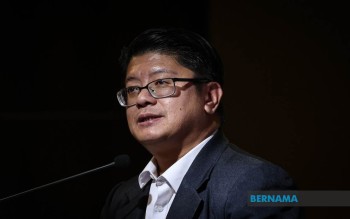
Datuk Ewon Benedick, Sabah's Deputy Chief Minister III and Minister of Industrial Development, Entrepreneurship and Transport, elaborated on the logistical nightmare that has hampered progress. The sand required for the expansion must be extracted from sources approximately ten kilometres away from the port site. Once extracted, the material must undergo an intensive cleaning process to meet strict specification requirements before being transported back another ten kilometres for placement in the reclamation area. This double-handling and processing cycle has created bottlenecks that have extended the project timeline beyond initial projections.
The main contractor for the expansion, the WCT-CCCC consortium, has been collaborating with state officials to address implementation challenges and accelerate progress toward the revised completion date. During recent high-level meetings, the consortium outlined its commitment to the project's success and provided reassurance regarding interim measures. Notably, the contractor has pledged to hand over at least 1.6 hectares of the developing port facility for use as a temporary container storage yard while full expansion work continues. This interim solution addresses immediate congestion issues while the broader infrastructure development proceeds.
The expansion project takes on greater significance given surging activity at the port. Sapangar has witnessed a noticeable increase in direct shipping services connecting Sabah directly to foreign ports, bypassing traditional regional hubs. This reflects growing confidence among international shippers in the state's capacity and accessibility. The expansion in direct services is underpinned by rising investment and export-oriented manufacturing activity throughout Sabah's industrial zones. Companies operating in these facilities are increasingly relying on the port for international market access, creating healthy demand for expanded container handling capacity.
However, growth in shipping services has simultaneously exposed capacity constraints at the existing facility. Congestion during peak periods has become more frequent, highlighting the urgency of completing the expansion works. The increased vessel traffic and container volumes demonstrate that Sabah's economy is generating significant trade flows, a positive development that nonetheless requires corresponding infrastructure investment to accommodate seamlessly.
State authorities are pursuing complementary measures to enhance overall port efficiency beyond the physical expansion itself. The Sabah government has submitted an application to the Royal Malaysian Customs Department requesting that Sapangar Bay Container Port be gazetted for 24-hour operations. Extended operating hours would significantly improve throughput capacity by allowing continuous container handling, reducing vessel waiting times, and enabling around-the-clock cargo movement. However, this decision remains pending with federal customs authorities.
Ewon emphasized that addressing port congestion requires a holistic approach encompassing the broader logistics ecosystem surrounding Sapangar. The port does not operate in isolation; its effectiveness depends on supporting infrastructure including container depots, freight forwarding facilities, and logistics companies operating at full capacity. For the port to function optimally around the clock, these ancillary services must also extend their operational hours. The minister indicated that government agencies are engaging with industry associations and stakeholders to coordinate this ecosystem-wide transition toward night-time operations.
Further signalling the state government's commitment to port infrastructure modernisation, two additional quay cranes are currently being installed at Tawau Port, a secondary facility serving Sabah's eastern coast. These cranes are anticipated to commence operations in early August, expanding the container handling capacity at that location and providing greater geographic distribution of port services across the state. Tawau Port serves a distinct hinterland and growing industrial base, making the equipment upgrade strategically important for regional cargo distribution.
The Sabah administration is undertaking a comprehensive review of its Port Master Plan, signalling a broader reassessment of the state's maritime infrastructure strategy. This review process will incorporate extensive stakeholder engagement involving State Legislative Assembly representatives, port operators, and industry associations. Such consultation ensures that infrastructure development aligns with actual business requirements and regional economic trends. The Port Master Plan reassessment may identify additional capacity requirements or opportunities for infrastructure investment beyond the current Sapangar expansion project.
For Malaysian policymakers and regional observers, the Sapangar expansion represents a significant test of project execution capability and federal-state coordination. The sand supply logistics challenge underscores how apparently straightforward infrastructure projects can encounter unanticipated bottlenecks when dealing with environmental and sourcing constraints. The revised October 2027 timeline provides a more realistic completion target, though continued focus on managing supply chains and maintaining contractor performance will remain essential. Successful completion of this expansion would meaningfully enhance Sabah's competitive position for capturing regional shipping traffic and supporting the state's export-oriented industrial development, ultimately contributing to Malaysia's broader economic growth objectives.

