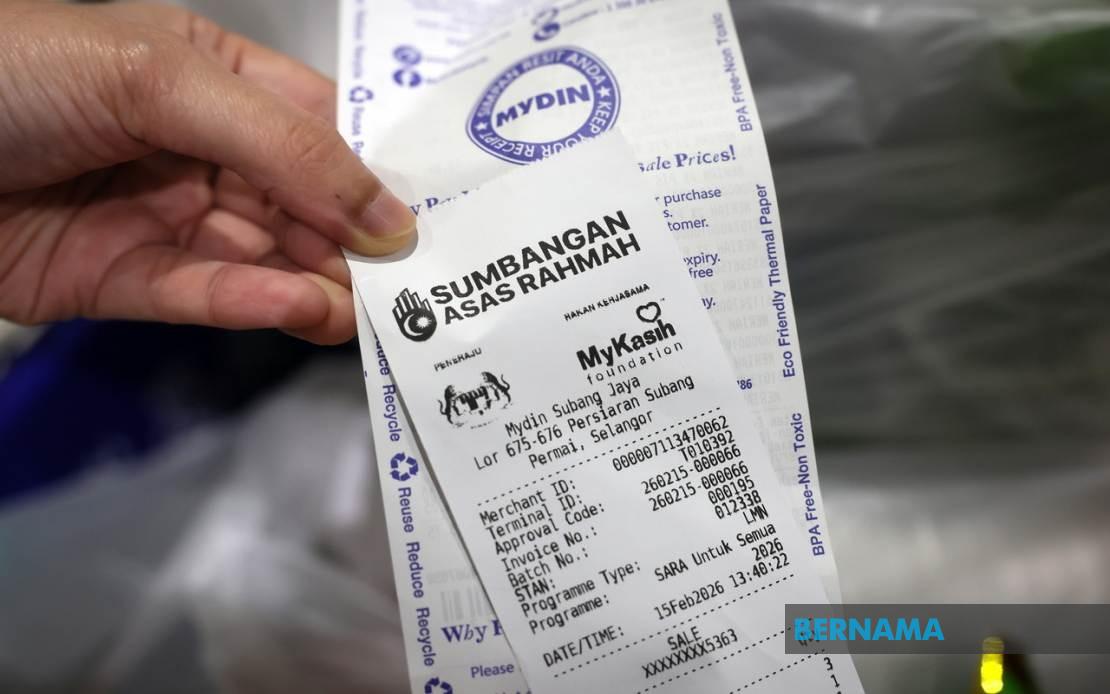
Malaysia's Sumbangan Asas Rahmah (SARA) programme has demonstrated remarkable public engagement, with the Ministry of Finance reporting a 99 per cent uptake rate among the nearly nine million Sumbangan Tunai Rahmah (STR) recipients who access the scheme monthly. The strong participation translates into RM3.45 billion in actual transactions conducted so far this year, indicating that the government's targeted cash assistance is translating effectively into consumer spending across the economy.
The ministry disclosed these figures in a parliamentary reply to Datuk Aminolhuda Hassan (PH-Sri Ganding), who sought details on key performance indicators for both the STR and SARA programmes. The emphasis on spending data reflects a deliberate government strategy to measure social welfare effectiveness not merely by distribution volumes but by the real economic activity generated when assistance reaches vulnerable households. This approach allows policymakers to assess whether aid programmes are genuinely alleviating cost-of-living pressures for low- and middle-income Malaysians rather than simply transferring funds without sustained impact.
The broader SARA Untuk Semua initiative has extended the programme's reach significantly further, with approximately 22 million people, representing 87 per cent of all eligible recipients, having generated over RM1.77 billion in local market transactions. This expansion demonstrates the government's commitment to widening the social safety net beyond the core STR recipient group, acknowledging that cost-of-living challenges affect a broader swath of the population than the most economically vulnerable alone. The scale of participation among this extended group underscores public confidence in the scheme and suggests that accessibility and trust in the government's implementation remain high.
SARA operates as a cashless assistance mechanism delivered through MyKad credits, fundamentally different from traditional cash handouts in its design and targeting capabilities. Recipients can redeem their credits at registered SARA Rakan Niaga outlets for goods across 15 essential categories, encompassing basic food items, personal care products, household cleaning supplies, and medicines. This categorical restriction serves a dual purpose: it directs spending toward necessities while preventing expenditure on non-essential goods, and it creates a transparent audit trail enabling the government to monitor programme efficacy in real time. The cashless nature also facilitates detailed transaction tracking, allowing officials to understand spending patterns, identify any implementation gaps, and adjust the programme as economic conditions evolve.
The Ministry of Finance emphasized that the tracking capability embedded within SARA's design constitutes a significant advantage in programme administration. By maintaining visibility over how recipients spend their assistance and ensuring that aid reaches intended beneficiaries for their stated purposes, the government can respond more dynamically to emerging needs or implementation issues. This data-driven approach represents an evolution in social safety net design, moving beyond passive distribution toward active programme management informed by real-time expenditure information. For policymakers across Southeast Asia watching Malaysia's approach, this model offers lessons in combining welfare provision with accountability and administrative efficiency.
The government's budgetary commitment to these programmes reflects their perceived importance in addressing household financial stress. Allocations for STR and SARA combined have increased substantially to RM15 billion in 2026, up from RM10 billion in 2024, signalling a 50 per cent expansion over two years. This trajectory indicates that the government views targeted cash assistance as a strategic response to persistent cost-of-living pressures, particularly as inflation and economic adjustments continue affecting household purchasing power. The scaling-up also suggests confidence in the programme's design and implementation, with officials willing to commit growing resources based on demonstrated effectiveness metrics.
The timing and scope of this budget increase carry significance for Malaysian households facing sustained pressure from rising food prices, utility costs, and general living expenses. Middle-income earners, increasingly squeezed by inflation eroding wage gains, represent a particular focus for SARA expansion, reflecting recognition that cost-of-living challenges extend well beyond the poorest households. The programme's evolution from basic cash transfers toward categorical assistance with tracking capabilities reflects a maturing approach to welfare that balances compassion with fiscal responsibility and programme accountability.
For Malaysian consumers and the wider economy, the RM3.45 billion in SARA transactions represents genuine stimulus flowing through local commercial channels. When recipients spend assistance credits at registered outlets, they inject demand into neighbourhood shops, neighbourhood sundry stores, pharmacies, and food retailers. This spending generates immediate economic activity, supports employment in retail and distribution sectors, and potentially encourages small business operators to stock inventory in anticipation of assistance-driven demand. The multiplier effects extend beyond direct transactions as retailers replenish stock, suppliers deliver goods, and businesses maintain staffing levels to meet the anticipated and actual demand.
The government's commitment to continuous monitoring reflects acknowledgment that social safety nets require ongoing attention and adjustment. Rising living costs do not follow a predictable trajectory, and household needs evolve as economic circumstances change. By pledging to maintain oversight over aid flows and ensure support reaches those most in need, officials signal that SARA is not a static programme but rather a living policy instrument subject to refinement. This adaptive approach is particularly important in Malaysia's context, where regional economic integration, commodity price volatility, and employment structure changes create an unstable cost-of-living environment requiring flexible policy responses.
The strong uptake rates and transaction volumes reported by the Ministry of Finance also suggest public trust in programme administration and confidence that assistance will be delivered reliably. In many developing economies, similar programmes suffer from implementation challenges, delayed disbursements, or beneficiary confusion about eligibility and usage. Malaysia's 99 per cent uptake among monthly STR recipients and 87 per cent participation in the broader SARA Untuk Semua scheme indicate that beneficiaries understand how to access their assistance and perceive the process as straightforward and reliable. This administrative effectiveness represents a foundation upon which further programme expansion can build.
Looking ahead, the data disclosed by the Ministry of Finance provides a compelling case study for regional policymakers considering targeted cash assistance as a cost-of-living response tool. The combination of strong uptake, substantial transaction volumes, and expanding government commitment demonstrates that well-designed programmes can reach their intended beneficiaries and generate measurable economic effects. As Malaysia continues adjusting its social safety net in response to evolving economic conditions, the SARA programme's performance metrics will likely inform ongoing policy discussions about the optimal balance between universal support and targeted assistance.

