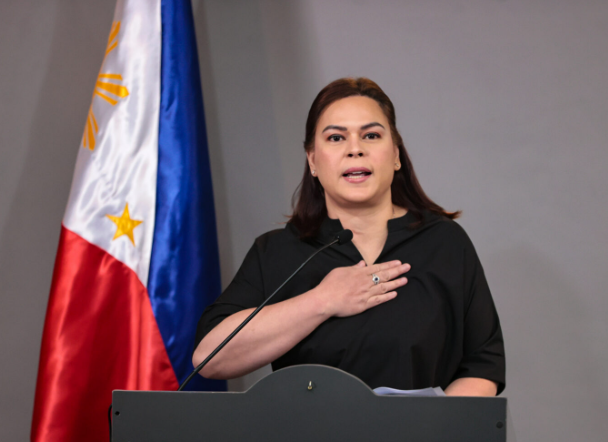
Vice President Sara Duterte has seized on a major religious gathering along Epifanio de los Santos Avenue to articulate growing public frustration with the administration of President Ferdinand Marcos Jr, framing the demonstration as a tangible expression of the sentiment she claims to have voiced consistently since the start of 2024. In remarks delivered on Tuesday, June 30, Duterte characterised the Marcos government as fundamentally defined by poor governance and an inability to grapple effectively with the most pressing challenges confronting ordinary Filipinos.
Thousands of members from the Iglesia ni Cristo (INC), one of the Philippines' most influential religious organisations, descended on the major thoroughfare to protest what they characterised as selective application of the law and distortion of legal processes. The mobilisation was triggered by the filing of a plunder complaint against Senator Rodante Marcoleta, whom the INC has long supported. The timing of this massive religious demonstration provided Duterte with a platform to amplify her critique of the Marcos presidency, though she refrained from explicitly endorsing the INC's specific grievances.
Duterte's intervention reflects the increasingly fractious political environment in the Philippines, where the Vice President has become one of the Marcos administration's most prominent critics despite occupying the second-highest office in the land. Her comments underscore a deepening rift within the executive branch itself, a tension that has grown more acute since she distanced herself from Marcos earlier this year and subsequently faced impeachment proceedings. The Vice President's readiness to interpret a religiously-motivated rally as vindication of her broader political position demonstrates how polarised the country has become.
Central to Duterte's indictment is her assertion that the Marcos government has proven detached from the material suffering afflicting millions of Filipinos. She highlighted the confluence of economic pressures bearing down on ordinary households—surging prices for basic commodities, precarious employment conditions, and the relentless climb in the cost of everyday necessities. Rather than confronting these difficulties with substantive policy responses, Duterte contended that the administration has opted instead to constrain legitimate criticism through a apparatus of state accountability that she characterised as selectively applied and politically motivated.
For Malaysian and broader Southeast Asian readers, this dynamic carries particular significance as it illustrates how economic grievances can catalyse political realignment in the region. The Philippines, despite its rapid economic growth, has struggled to translate macroeconomic gains into tangible improvements in household purchasing power and job quality—challenges that resonate across Southeast Asia as inflation and cost-of-living pressures persist following the pandemic and geopolitical disruptions. Duterte's invocation of public suffering on these grounds taps into anxieties that transcend the Philippine context.
Duterte further escalated her rhetoric by accusing the Marcos administration of cultivating an oppressive political environment through the weaponisation of accountability mechanisms. She suggested that officials critical of presidential policy, those questioning alleged corrupt practices, and individuals raising allegations against Marcos himself face implicit or explicit intimidation. These accusations, she argued, strike at the foundations of democratic expression, meaningful oversight, and the space for legitimate political contestation that ought to characterise democratic governance.
The Vice President's characterisation of governmental responses to dissent as fundamentally anti-democratic represents a significant escalation in her public posture. She moved beyond specific policy critiques to question the moral character of the President himself, arguing that his failures of leadership have fostered a political climate marked by increasing coercion. According to her interpretation, a government that answers criticism through intimidation rather than substantive rebuttal betrays its constitutional commitment to protect democratic institutions rather than undermine them.
Duterte reframed the underlying conflict as transcending partisan electoral politics, instead positioning it as a contest over the integrity of the state and the future trajectory of a nation burdened by economic hardship. This rhetorical move attempts to elevate her critique beyond accusations of personal political vendettas, claiming instead that the stakes involve fundamental questions about national honour and the collective welfare of the Filipino people. By appealing to broader principles of governance and national interest, she seeks to lend gravitas to what remains, at its core, a personalised conflict between two powerful political figures.
These developments unfold against the backdrop of Duterte's ongoing impeachment trial, which the Senate Impeachment Court will commence on July 6. The House of Representatives voted to impeach her on charges including alleged threats directed toward the President and his wife, unexplained accumulation of personal wealth, and misappropriation of confidential funds. Rather than retreating from public view, Duterte has instead used the period before her trial to maintain a high media profile and continue attacking the administration, a strategy that reflects both her political resilience and the degree to which impeachment has failed to silence her.
The convergence of the INC rally, Duterte's political offensive, and the looming impeachment trial suggests the Philippine political system faces a period of considerable turbulence. The ability of a major religious organisation to mobilise tens of thousands of followers, combined with the Vice President's willingness to position herself as an avatar of public discontent, indicates that dissatisfaction with the Marcos administration extends beyond isolated pockets of opposition. Whether this translates into sustained political pressure that reshapes governance priorities or governance coalitions remains to be determined, but the scale of mobilisation evident on Edsa serves as a barometer of underlying currents of frustration.
For observers across Southeast Asia, the Philippine situation illuminates the vulnerabilities of even nominally stable administrations when economic hardship, perceptions of governance failure, and institutional tensions converge. The region's leaders confront similar pressures from cost-of-living crises and public expectations for responsive governance; the manner in which the Marcos administration navigates this moment may offer instructive lessons—both positive and cautionary—for policymakers elsewhere wrestling with comparable challenges.

