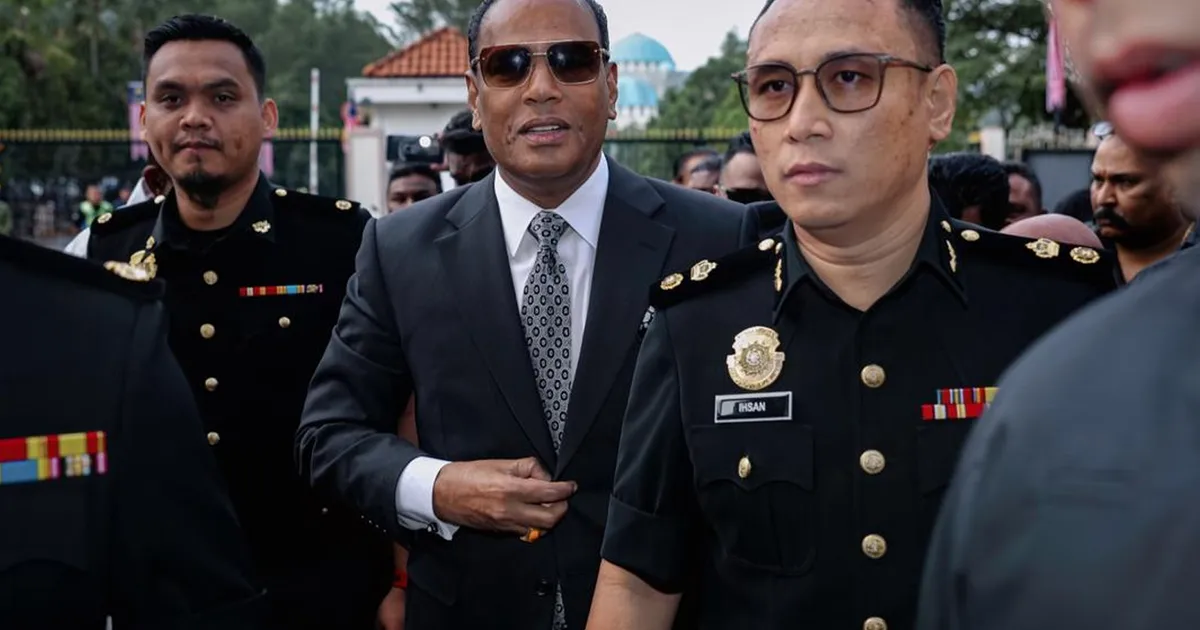
Former human resources minister Saravanan arrived at the Kuala Lumpur courts complex on Tuesday morning at approximately 8:25am, presenting a composed public appearance as he made his way through the courthouse entrance. The ex-politician was dressed formally for the court visit, maintaining a dignified demeanor as onlookers and media personnel gathered to document his arrival.
The timing of the morning visit suggests a scheduled court appearance, with the early hour typical of Malaysian court proceedings that often begin at or before 9am. Saravanan's presence at the capital's main judicial complex marks another significant moment in what has been a challenging period for the former government minister, whose tenure overseeing Malaysia's human resources portfolio represented a notable chapter in recent administrative history.
The decision to appear in formal business attire carries symbolic weight in Malaysian courtroom culture, where presentation and decorum often signal respect for the judicial process. Such appearances frequently attract media attention, particularly when involving political figures of Saravanan's profile, as the public and press corps maintain keen interest in proceedings involving former government officials.
For Malaysian legal observers and political analysts, court appearances by former ministers represent important accountability moments within the nation's institutional framework. The judiciary's ability to process cases involving individuals who previously held executive authority serves as a barometer for the independence and integrity of Malaysia's legal system, a matter of particular significance given the country's complex political landscape and recent history of government transitions.
Saravanan's background as human resources minister placed him at the helm of policy decisions affecting employment standards, worker protections, and labour market regulations that influence millions of Malaysian employees. The jurisdiction and scope of that portfolio meant his administrative decisions touched workplaces across both public and private sectors nationwide, establishing a substantial public interest in matters involving his conduct during that period.
The attendance at court proceedings continues a pattern of legal engagement that has become increasingly visible among Malaysian political figures in recent years. This trend reflects broader societal and institutional developments whereby former government officials face scrutiny and legal accountability mechanisms that, while long established in law, have seen more active enforcement and public visibility than in earlier decades.
Court appearances by political personalities generate significant media coverage in Malaysia, where traditional news outlets and online platforms maintain extensive reporting on such developments. The public documentation of formal proceedings serves important transparency functions, allowing citizens to monitor judicial processes and maintain awareness of how their legal system handles cases involving those who previously wielded governmental authority.
The composition and conduct of Malaysia's judiciary remains a topic of considerable national discussion. Cases involving former ministers provide concrete test cases for evaluating the operational effectiveness of the courts, the consistency of legal processes, and the commitment of the judicial system to applying legal standards impartially regardless of a defendant's previous position or political connections.
For the broader Southeast Asian region, Malaysia's handling of cases involving former government officials carries relevance to discussions about institutional development and the rule of law across the region. Neighbouring countries and international observers frequently monitor how established democracies like Malaysia manage legal accountability for political figures, viewing such proceedings as indicators of institutional health and democratic maturity.
The visual documentation of Saravanan's arrival—his formal appearance and composed demeanor—has become standard practice in Malaysian courthouse reporting. Photographs and video recordings of such moments are quickly disseminated through news channels and social media, shaping public perception and maintaining the accessibility of judicial proceedings to citizens who cannot attend in person.
Pending the outcome of the court proceedings, Saravanan's public visibility will likely continue as his case progresses through Malaysia's legal system. Each subsequent appearance, ruling, or development will undoubtedly attract similar media attention, contributing to the ongoing national conversation about governance, accountability, and institutional processes that define contemporary Malaysian democracy.

