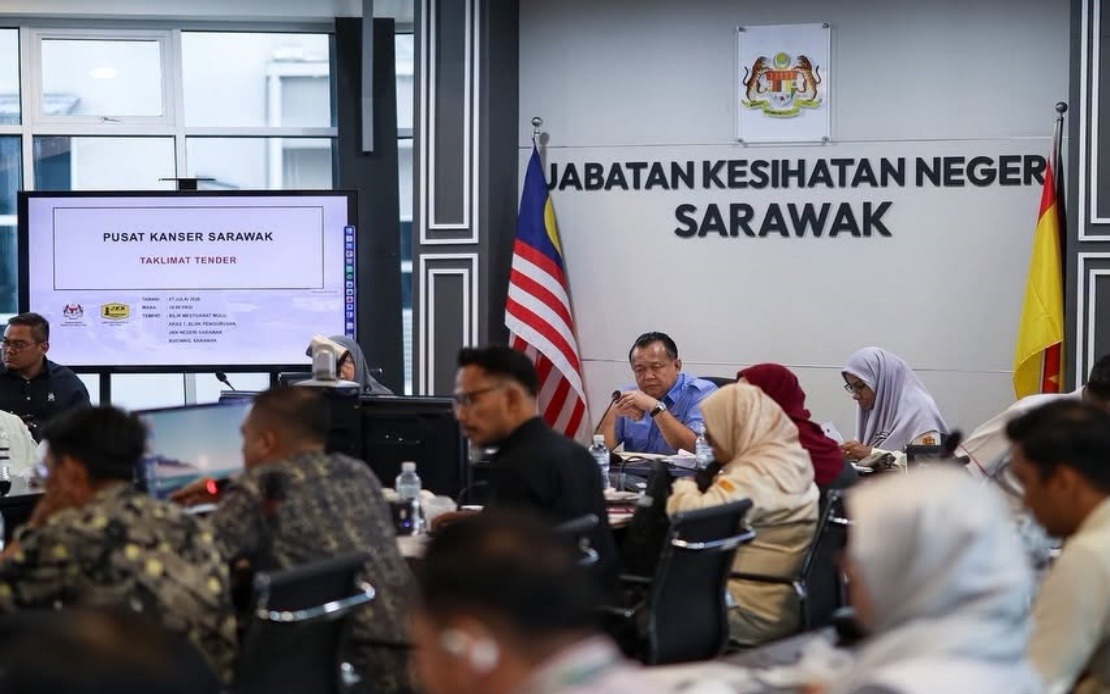
Sarawak's ambitious cancer care initiative is moving into its critical implementation phase, with Works Minister Datuk Seri Alexander Nanta Linggi confirming that construction of the Sarawak Cancer Centre will commence in January 2027 following the formal issuance of a Letter of Acceptance to the winning contractor. The pronouncement marks a significant milestone for the state's healthcare infrastructure development and reflects growing investment in specialised medical facilities across East Malaysia.
The project has progressed through preliminary stages and now stands at the design-and-build tender phase, where ten construction firms have already navigated the pre-qualification hurdles and attended detailed project briefings. These contractors are currently preparing comprehensive proposals that will form the basis of formal evaluation by the state government. The three-month window allocated for proposal submission underscores the complexity of the undertaking, which demands intricate coordination between engineering expertise and healthcare facility specifications.
Once the evaluation framework concludes its assessment of submitted bids, officials anticipate issuing the Letter of Acceptance by early January 2027, creating the legal framework for design and construction activities to proceed. The selected contractor will operate under a compressed timeline of 60 months to complete both design finalisation and full construction, a schedule that requires sophisticated project management and coordinated workflows. Following physical completion, a two-year Defects Liability Period will commence, during which the contractor remains responsible for remedying any structural or systems failures that emerge during the facility's initial operational phase.
The cancer centre's architectural and operational blueprint must satisfy stringent requirements established by Malaysia's Health Ministry while incorporating contemporary healthcare design principles that enhance patient experience and clinical efficiency. The facility will occupy a 10.9-hectare parcel in Kota Samarahan, positioned adjacent to the existing Sarawak Heart Centre, creating a specialised medical campus that consolidates advanced treatment capabilities. This geographical clustering offers operational synergies, allowing shared ancillary services, specialist cross-referrals, and integrated emergency response protocols that benefit patients requiring multi-disciplinary interventions.
The centre will function as a comprehensive cancer treatment hub, equipped with 310 beds and delivering both outpatient consultations and inpatient admission services. This capacity positioning reflects projections of cancer incidence across Sarawak's population and anticipates demand from patients across the broader East Malaysian region who currently require interstate referrals for advanced oncological care. The facility's dual service model accommodates both intensive inpatient treatments requiring extended hospitalisation and high-volume outpatient chemotherapy, radiation therapy, and diagnostic imaging sessions that characterise modern cancer medicine.
Financial parameters for the undertaking have stabilised at an anticipated cost exceeding RM1 billion, positioning it among Malaysia's most substantial healthcare infrastructure investments in recent years. The Sarawak state government has committed RM1 billion in initial funding, with arrangements established for subsequent reimbursement through mechanisms aligned with the agreed implementation framework. This financing structure reflects cost-sharing philosophies common in major Malaysian healthcare development projects, where state contributions are subsequently recovered through federal health budgets or project-specific allocations.
The cancer centre initiative aligns with broader Southeast Asian healthcare trends demonstrating expanding regional demand for specialised treatment facilities capable of managing the rising prevalence of malignant diseases. Sarawak's investment positions the state as a tertiary care destination within East Malaysia, potentially reducing outward patient migration to peninsular facilities and generating local economic activity through healthcare employment and related service industries. For Malaysian patients generally, the facility represents an incremental expansion of publicly-funded cancer treatment capacity, addressing longstanding waiting lists and geographic accessibility constraints that have characterised oncological care distribution across the federation.
The project timeline extending to late 2031 or early 2032 for full operational readiness reflects realistic construction schedules for facilities of comparable complexity and scale in the Malaysian context. Weather patterns, supply chain considerations specific to Sarawak's geography, and the specialised engineering requirements for medical facilities can extend project durations beyond initial estimates, though the 60-month allocation appears calibrated to accommodate such contingencies. Early 2027 commencement represents a critical juncture that will establish momentum for sustained construction activity across the projected completion window.
Integration of the cancer centre into Sarawak's broader health system requires concurrent development of clinical protocols, specialist recruitment, nursing workforce training, and diagnostic equipment procurement that extend beyond the construction timeline. State health authorities must commence planning for staffing structures, residency training programmes for oncology specialists, and partnerships with academic institutions to establish the human capital foundations necessary for delivering world-class cancer care. These preparatory activities typically commence during construction phases, ensuring seamless transition from physical completion to clinical operations.
The facility's establishment will enhance Malaysia's capacity to manage cancer patients domestically, reducing reliance on cross-border referrals to Singapore and other regional medical hubs. For patients across Sarawak and neighbouring territories, the centre will eliminate protracted travel for cancer consultations and treatments, improving health outcomes through reduced treatment delays and enhancing quality of life by enabling family support systems to remain proximate during intensive therapies. The initiative demonstrates Malaysian state governments' commitment to healthcare self-sufficiency and contemporary medical excellence in resource-constrained environments.

