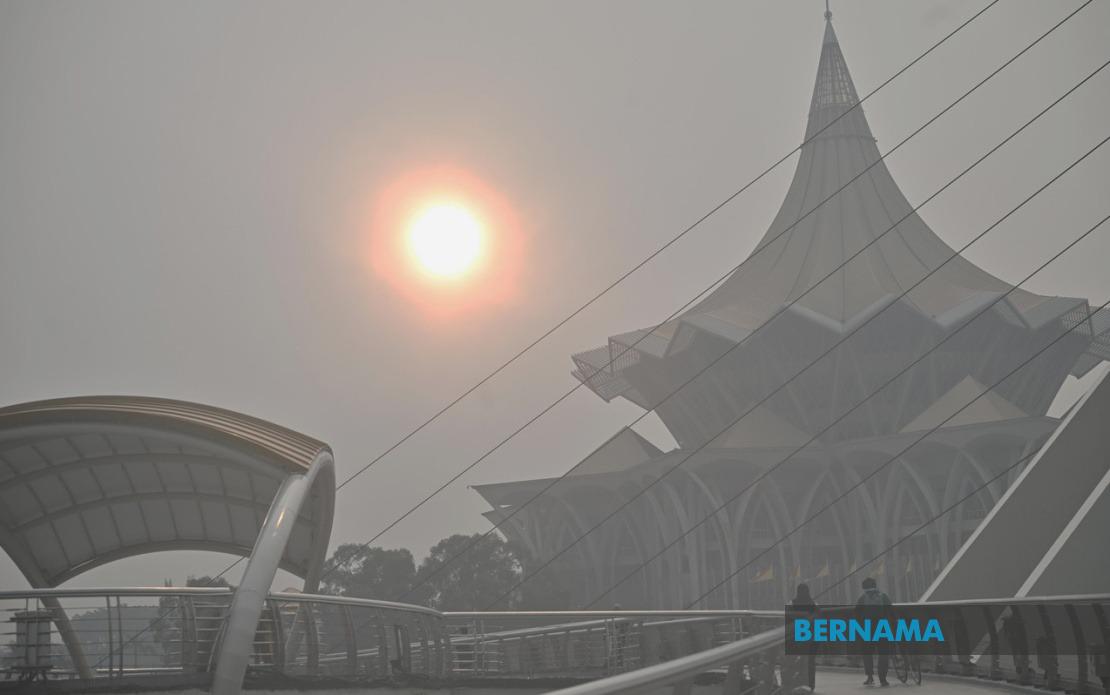
The Sarawak state government has confirmed that childcare centres across the region will cease operations without delay whenever the Air Pollutant Index climbs to 200, marking the threshold for a "very unhealthy" air quality classification. This decision aligns with guidance established by the Sarawak Disaster Management Committee in mid-August and represents a concrete step to protect vulnerable populations during episodes of regional haze.
Women, Family and Community Development Minister Datuk Seri Nancy Shukri outlined the public health rationale during remarks to journalists in Kuching. Young children, she emphasized, face particular vulnerability to the respiratory and systemic effects of air pollution. Exposure to haze at hazardous concentrations can trigger or aggravate asthma, respiratory infections, and other conditions that disrupt their physical development and educational progress. The government views preemptive closure as the most straightforward mechanism to keep children indoors and away from contaminated air.
The Sarawak Disaster Management Committee's August 12 directive establishes API 200 as the trigger point for immediate closure of schools, kindergartens, and childcare facilities throughout the state. This threshold designation derives from Malaysia's National Haze Action Plan, which codifies air quality benchmarks and corresponding public health responses. The mechanism places enforcement responsibility with the Sarawak Education Department director, ensuring a coordinated administrative approach across multiple facility types. The inclusion of childcare centres alongside educational institutions reflects recognition that young children in supervised care require the same protective measures as school-age peers.
Minister Shukri acknowledged the policy's rationale extends beyond immediate health protection. Families with working parents who rely on childcare services face genuine hardship when centres suddenly close, creating childminding challenges that ripple through household schedules and workplace attendance. The government recognizes this tension between public health imperatives and family economic stress. However, she framed the closure decision as non-negotiable when API levels reach hazardous thresholds, prioritizing children's welfare over convenience considerations.
The minister indicated that Sarawak's framework may serve as a template should transboundary haze episodes worsen and affect other Malaysian states. During severe regional haze events—typically triggered by agricultural burning in neighbouring Indonesia—air quality degradation can spread across Southeast Asia within days. Any expansion of closure protocols to other states would operate under comparable triggers and coordination mechanisms, though implementation would remain the responsibility of respective state governments and their education authorities. This federated approach respects state autonomy while maintaining consistency in response standards.
Sarawak's experience with haze episodes has made air quality management a recurring policy concern. The state's geographical proximity to major agricultural regions in Indonesian Borneo means it frequently experiences transboundary smoke pollution. Past haze crises have prompted temporary school closures and public health alerts. The formalization of API 200 as a closure threshold represents institutional learning from these episodes, translating ad-hoc emergency responses into predictable protocols. Childcare operators and parents can now anticipate closure conditions rather than facing surprise announcements.
The decision to place implementation authority with state governments rather than the federal ministry reflects Malaysia's constitutional division of powers, where education falls within state jurisdiction despite national coordination frameworks. Minister Shukri's statement clarified that while the directive originates from federal health and family development concerns, execution rests with state authorities equipped to assess local air quality conditions and disseminate timely alerts. This arrangement potentially creates coordination challenges if multiple states experience simultaneous haze impact but apply closure decisions inconsistently.
Working parents navigating childcare disruptions face the practical burden of arranging alternative supervision, potentially requiring unpaid leave or informal childminding arrangements that themselves carry risks. The government has not announced supplementary support mechanisms—childcare subsidies, emergency childcare alternatives, or employer flexibility mandates—that might cushion the economic impact on affected families. Minister Shukri's response that state governments would "manage" the matter signals that federal leadership on complementary support remains undeveloped.
The API threshold of 200 represents a relatively high pollution level at which respiratory effects become clinically significant for most populations. Malaysia's air quality standards classify readings of 151–200 as "unhealthy," while 201 and above enter the "very unhealthy" category. The choice of 200 as the closure trigger means facilities remain open during high pollution episodes that still pose health risks, particularly to children with pre-existing respiratory conditions. This threshold reflects a balance between protection and operational disruption, though public health advocates might argue for more conservative closure points during particularly vulnerable seasons.

