Sarawak has formally established an Air Pollutant Index reading of 500 as the threshold that will activate an emergency declaration in areas experiencing severe air quality degradation, according to Sarawak Deputy Premier Datuk Amar Douglas Uggah Embas. This benchmark represents a significant escalation in the state's emergency response protocols and marks a clear decision point for triggering comprehensive contingency measures. The declaration comes as the region continues grappling with periodic transboundary haze events that originate from environmental pressures affecting broader Southeast Asia.
Once this critical API level is reached, the situation automatically escalates beyond state jurisdiction and becomes a matter for the National Disaster Management Agency in Kuala Lumpur, positioning the issue within the broader federal disaster management framework. This tiered approach reflects the complexity of environmental emergencies that cross jurisdictional boundaries and require coordinated responses across multiple administrative levels. The escalation process ensures that state-level responses can be rapidly supplemented by national resources and federal coordination mechanisms when conditions deteriorate beyond regional capacity to manage.
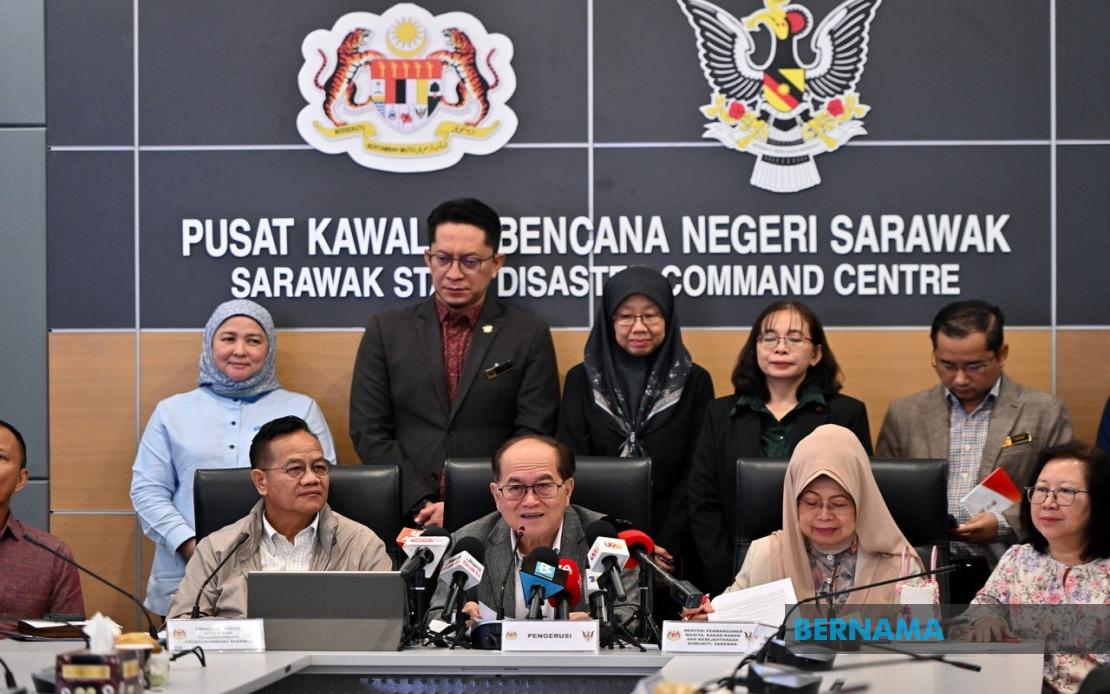
Uggah, who serves as chairman of the Sarawak State Disaster Management Committee, outlined the consequences of such an emergency declaration during a press briefing following a committee meeting in Kuching. Should the API threshold be breached and emergency status activated, all government offices and both public and private sector establishments operating within the affected zones would face mandatory closure. However, critical infrastructure and essential services maintaining public safety and health would continue operations under defined protocols, ensuring that utilities, hospitals, and emergency response mechanisms remain functional despite the widespread shutdown.
The deputy premier emphasised that the haze phenomenon transcends state boundaries and represents a regional diplomatic challenge requiring engagement through established governmental channels rather than unilateral action. He underscored that the Sarawak State Disaster Management Committee had coordinated with Natural Resources and Environmental Sustainability Minister Datuk Seri Arthur Joseph Kurup to facilitate dialogue with neighbouring countries through ASEAN institutional frameworks. This diplomatic approach reflects recognition that sustainable solutions demand cooperation between governments and cannot be achieved through emergency declarations alone.
Cross-border haze remains one of Southeast Asia's most persistent environmental challenges, driven by agricultural practices and forest management decisions in neighbouring territories. Malaysia, particularly the eastern states like Sarawak, frequently experiences air quality deterioration during dry seasons when atmospheric conditions trap particulates over populated areas. The regional nature of this problem means that Sarawak's emergency protocols must operate in concert with federal government efforts to engage Indonesia and other regional partners through diplomatic channels established under ASEAN cooperation frameworks.
Beyond emergency response measures, Sarawak is implementing proactive environmental management through cloud seeding operations scheduled for September 3 to 5, contingent upon prevailing weather conditions during that period. These operations serve a dual purpose extending beyond haze mitigation—they simultaneously work to replenish depleting water resources following an extended dry season that has stressed the state's water supply infrastructure. Four critical water catchment areas have experienced significant depletion, namely Simunjan, Lingga, Spaoh, and Lijok, representing a compounding challenge where environmental stressors simultaneously affect both air quality and water security.
The decision to pursue cloud seeding reflects sophisticated understanding of interconnected environmental challenges facing the state. Rather than treating haze purely as an air quality problem requiring reactive emergency responses, Sarawak's approach integrates meteorological interventions that address multiple resource pressures simultaneously. Water supply security stands as a fundamental infrastructure concern affecting millions of residents and industrial operations, making the dual benefit of cloud seeding particularly valuable during periods when natural precipitation remains inadequate.
For Malaysian readers and regional observers, these developments illustrate the escalating complexity of environmental governance in Southeast Asia. Individual state and national responses, while necessary, cannot fully resolve transboundary pollution problems without sustained multilateral cooperation. The API 500 threshold represents a pragmatic decision point for emergency activation, yet it also highlights that even maximum emergency measures cannot substitute for addressing root causes of regional haze generation that lie beyond Malaysia's immediate control. The framework positions federal government engagement as central to any meaningful resolution.
Sarawak's emergency protocol also carries implications for business continuity planning, occupational health, and public sector readiness across the state. Organizations operating in Sarawak must now prepare for scenarios where API 500 triggers comprehensive operational shutdowns affecting their workforce, supply chains, and service delivery. Educational institutions, manufacturing facilities, and service providers must develop contingency plans for scenarios where prolonged API 500 conditions persist, potentially extending emergency periods beyond initial forecasts.
The state's emphasis on coordination through ASEAN channels rather than bilateral action represents strategic thinking about leverage and institutional capacity. Individual diplomatic pressure between countries often yields limited results, whereas regional multilateral mechanisms can aggregate concerns and mobilize collective action. Malaysia's participation in ASEAN environmental cooperation forums provides established pathways for raising haze concerns with legitimacy and backing from neighbouring countries experiencing similar impacts.
Cloud seeding operations, while addressing immediate water and air quality concerns, also represent the limits of technological interventions without addressing underlying drivers of haze generation. Weather modification can provide temporary relief during acute episodes, but cannot eliminate transboundary pollution arising from agricultural expansion, land conversion, and forest management practices across borders. The integration of cloud seeding into Sarawak's response framework acknowledges both the utility of available tools and the necessity of pursuing parallel diplomatic solutions.
Moving forward, the success of Sarawak's emergency management framework will depend substantially on federal government effectiveness in regional diplomacy and coordination with ASEAN partners. The API 500 threshold provides clear triggering mechanisms, yet the frequency with which this level might be reached depends on factors largely beyond state control. Sustained improvements in regional air quality will ultimately require changes in land management and agricultural practices across Southeast Asia, accomplished through diplomatic engagement and economic incentives rather than emergency declarations alone.

