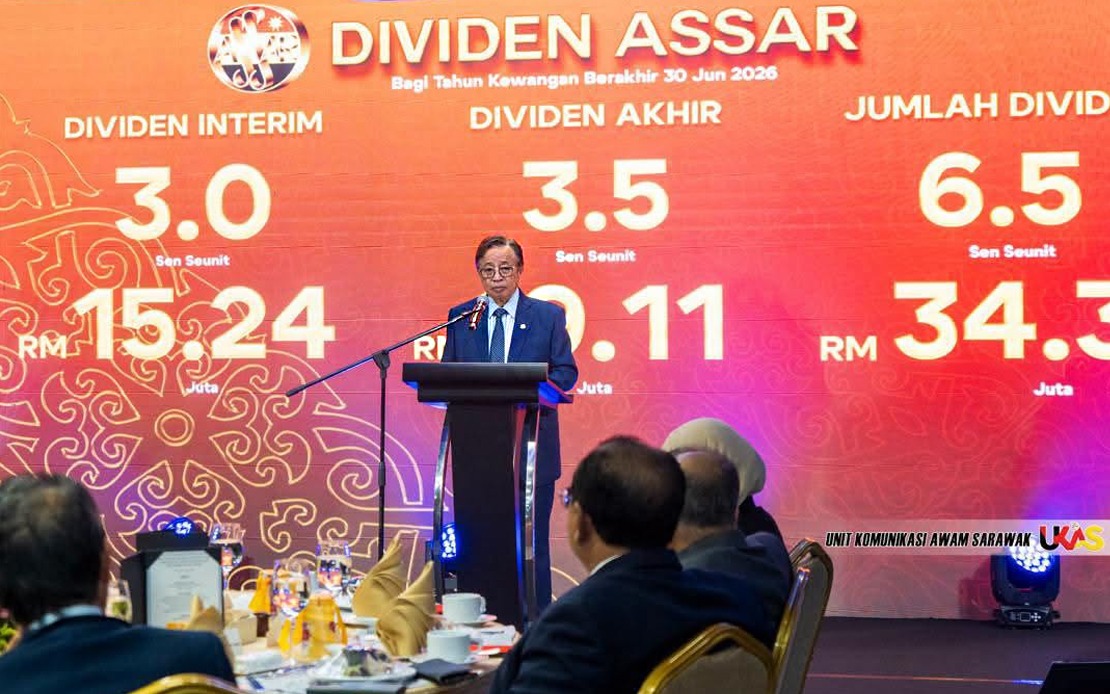
The Sarawak state government is actively exploring plans to extend its popular Amanah Saham Sarawak investment vehicle to non-Bumiputera residents by launching a complementary fund structure, marking a significant shift in the state's investment accessibility policy. Premier Tan Sri Abang Johari Tun Openg announced the initiative during the ASSAR Dividend Announcement ceremony for the financial year ending June 30, 2026, signalling strong intent to broaden participation in the state's wealth accumulation mechanisms.
Currently, ASSAR functions exclusively as a Bumiputera-focused savings and investment scheme, following Malaysia's constitutional framework protecting indigenous interests. The proposed ASSAR 2 structure would operate alongside the existing fund, creating a parallel investment channel for non-Bumiputera Sarawakians who have previously lacked access to this particular wealth-building instrument. This dual-track approach represents a pragmatic response to growing demands for inclusive economic participation while maintaining the integrity of existing Bumiputera provisions.
The state leadership intends to model the expansion on Permodalan Nasional Berhad's successful precedent, which has demonstrated how investment bodies can serve diverse constituencies through structurally separate but operationally complementary vehicles. PNB's experience provides a proven template for managing two distinct investor bases while maintaining transparent governance and equitable returns mechanisms. Abang Johari emphasised that the proposal would undergo thorough scrutiny by ASSAR's board of directors and management team to evaluate practical feasibility and operational requirements before implementation.
Sarawak's consideration of this expansion reflects broader policy evolution toward inclusive capitalism in the state. Rather than maintaining rigid sectoral boundaries, the state government is positioning itself as committed to enabling broader-based economic participation while respecting constitutional protections for Bumiputera communities. This balancing act carries significant implications across Malaysia's federal structure, where other states may scrutinise Sarawak's approach as a potential model for their own investment schemes.
The timing of this proposal during an economic expansion period appears deliberate. Abang Johari specifically cited Sarawak's currently robust economic growth trajectory as justification for widening investment opportunities. Stronger economic fundamentals provide the capacity to attract larger capital pools, and extending ASSAR eligibility would substantially increase potential investment contributions by incorporating a demographic segment representing approximately forty percent of Sarawak's population.
For non-Bumiputera Sarawakians, the proposed ASSAR 2 fund represents long-awaited parity in accessing state-backed wealth accumulation schemes. Many have historically viewed ASSAR as a competitive disadvantage, creating divergent investment pathways based on constitutional status. Opening equivalent investment structures addresses legitimate concerns about equitable access to state-facilitated wealth-building while acknowledging the constitutional framework that has structured Malaysian economic policy for decades.
The proposal's emphasis on pooling larger investment capital speaks to strategic financial considerations underlying the initiative. Expanded investor bases enable fund managers to deploy greater resources across state economic development priorities, potentially strengthening returns for all shareholders. Increased capital aggregation also enhances the fund's influence over corporate governance and investment outcomes across Sarawak's economy, amplifying the state's ability to steer capital toward priority sectors.
Investment scheme expansion carries implications extending beyond immediate participants to broader economic structuring. Non-Bumiputera investor participation in Sarawak-focused vehicles potentially increases domestic capital retention, reducing capital flight to other states or federal-level alternatives. This geographic concentration supports Sarawak's state-building objectives by creating stronger stakeholder alignment with local economic performance and development outcomes.
The ASSAR 2 proposal also reflects contemporary discussions about merit-based investment accessibility and meritocratic inclusion within Malaysia's evolving regulatory landscape. Rather than dismantling Bumiputera protections, the dual-fund approach acknowledges that constitutional provisions need not preclude parallel mechanisms offering equivalent opportunities to other communities. This frameworks demonstrates how federalism accommodates competing principles of social protection and economic inclusion through creative institutional design.
Implementation details remain pending board deliberation, but the proposal's announcement signals genuine policy momentum toward greater economic inclusivity. The state government appears committed to moving beyond preliminary exploration toward concrete action, contingent on technical feasibility assessment. Timeline for ASSAR 2 establishment remains undefined, reflecting the need for comprehensive planning around governance, administration, and investor education mechanisms.
For regional observers in Southeast Asia, Sarawak's approach offers an interesting case study in managing economic inclusion within frameworks of constitutional particularism. Several ASEAN economies struggle with analogous tensions between protecting indigenous or majority communities and enabling broad-based economic participation. Sarawak's practical institutional response may provide valuable precedent for other jurisdictions navigating comparable policy dilemmas.
The broader significance lies in recognising that investment scheme expansion represents state capacity and political will to address equity concerns constructively. Rather than maintaining rigid institutional boundaries, Sarawak demonstrates that constitutional frameworks can accommodate complementary structures serving different communities simultaneously. This nuanced approach potentially offers sustainable pathways toward greater economic inclusion while maintaining constitutionally protected provisions.
Ultimately, ASSAR 2 would constitute an important precedent in Malaysian investment policy, demonstrating how state governments can advance inclusive economic participation through institutional innovation rather than zero-sum confrontation over existing frameworks. As the board begins its feasibility review, other Malaysian jurisdictions will likely monitor outcomes closely, considering whether comparable expansion models could address equity concerns within their own state investment schemes.

