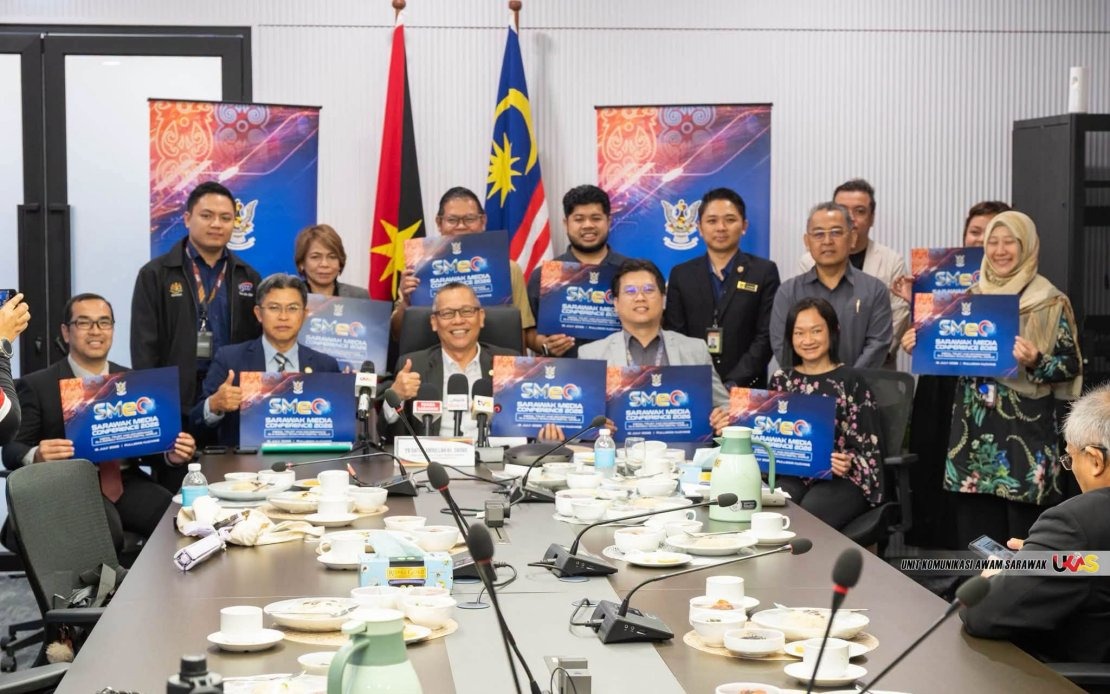
Sarawak's communications sector is preparing for a major gathering that will bring together the region's media ecosystem to address pressing questions about trust, governance and technological disruption. The Sarawak Media Conference 2026, scheduled to take place in Kuching, will attract approximately 800 participants spanning journalists, academics, government officials, industry leaders and students. The event represents a concerted effort by the Sarawak Government to facilitate dialogue on how the media industry can navigate an increasingly complex digital landscape while maintaining public confidence and ethical standards.
Organised through the Sarawak Public Communications Unit (UKAS) under government auspices, the conference will operate under the thematic umbrella of "Media, Trust and Governance in a Rapidly Evolving Digital World." This framing reflects growing regional and global anxieties about the credibility of news institutions, the spread of misinformation through digital channels, and the capacity of traditional oversight mechanisms to manage emerging technologies. By positioning trust and governance as central concerns, organisers acknowledge that the media industry faces legitimacy challenges that extend beyond technical or operational matters into the realm of public perception and institutional accountability.
Sarawak Premier Tan Sri Abang Johari Tun Openg will officiate the proceedings, underlining the state government's commitment to supporting media development and dialogue within its jurisdiction. This high-level endorsement signals that media governance has become a priority concern for Sarawak's political leadership, and reflects the broader recognition across Malaysia that healthy media ecosystems are essential to social stability and good governance.
According to Datuk Abdullah Saidol, Deputy Minister in the Sarawak Premier's Department overseeing corporate affairs and communications, the conference will prioritise substantive examination of how digital technologies, particularly artificial intelligence, are reshaping journalism and communications practice. The inclusion of AI in the discussion agenda reflects a sophisticated understanding that technological change poses both opportunities and risks for ethical journalism. Participants will explore how algorithms influence news distribution, how automated systems can augment reporting capabilities, and how newsrooms can maintain editorial integrity while adopting new tools.
The emphasis on ethical journalism within a technology-driven context addresses a genuine tension facing modern newsrooms. As digital platforms become primary sources of information for many Malaysians, the mechanics of how stories reach audiences—algorithms, data analytics, audience engagement metrics—increasingly influence editorial decision-making in ways that traditional journalism education did not anticipate. The conference will provide space for reflection on whether and how professional codes of conduct can adapt to technological realities.
Industry luminaries will contribute their expertise and perspectives to the discussions. SOL Digital founder Lunnie Gan brings experience in digital media innovation and entrepreneurship, while Premesh Chandran, deputy chairman of the Malaysian Media Council, represents formal industry governance structures and self-regulatory initiatives. These participants embody different approaches to contemporary media challenges—commercial disruption, technological innovation, and institutional oversight—and their presence suggests the conference will offer multifaceted analysis rather than narrowly partisan perspectives.
The event extends beyond formal conference sessions to include recognition of outstanding practitioners. The presentation of the Sarawak Premier's Special Appreciation Awards across five categories—Editor/Journalist/Stringer, Photographer, Videographer, Radio News Presenter/Broadcaster and Social Media Influencer—acknowledges the diverse skillsets and platforms through which journalism is practised in contemporary Malaysia. By honouring social media influencers alongside traditional journalists, organisers recognise that information dissemination and public discourse now occur across multiple channels and involve diverse communicators beyond institutional newsrooms.
A dinner celebration will accompany the conference, honouring HAWANA 2026, the Sarawak-level observance of National Journalists' Day. Deputy Prime Minister Datuk Seri Fadillah Yusof's attendance at this evening event reflects federal-level engagement with media development issues and suggests that conversations emerging from Sarawak may inform broader national policy discussions. The presence of federal leadership alongside state officials and industry participants creates an opportunity for vertical integration of perspectives on media governance.
For Malaysian and Southeast Asian media professionals, this conference represents a significant convening opportunity at a moment when the industry confronts fundamental questions about its future. The scale of participation—800 people—indicates substantial interest in structured dialogue about these challenges. In a region where media freedom concerns persist and where technological change often outpaces regulatory adaptation, forums enabling substantive conversation among stakeholders become valuable for developing shared understandings and collaborative responses.
The timing of SMeC 2026 positions it as a milestone event for Sarawak's development as a communications hub within Malaysia. As the state continues to expand its economy and international profile, investing in media infrastructure, professional development and industry dialogue supports broader aspirations for sophisticated governance and informed public discourse. The conference may also serve as a model for similar initiatives in other Malaysian states seeking to strengthen their media ecosystems and facilitate dialogue among communications stakeholders.
Looking forward, the questions addressed at SMeC 2026 will likely extend well beyond Sarawak. Issues of media trust, the implications of artificial intelligence for journalism, and the relationship between technology platforms and editorial responsibility are fundamentally national and regional concerns. Sarawak's initiative to convene these discussions contributes to a broader Southeast Asian conversation about how media institutions can sustain their social role while adapting to technological and commercial disruption. The conference framework—bringing together practitioners, regulators, academics and policymakers—offers a template for comprehensive engagement with media governance challenges.

