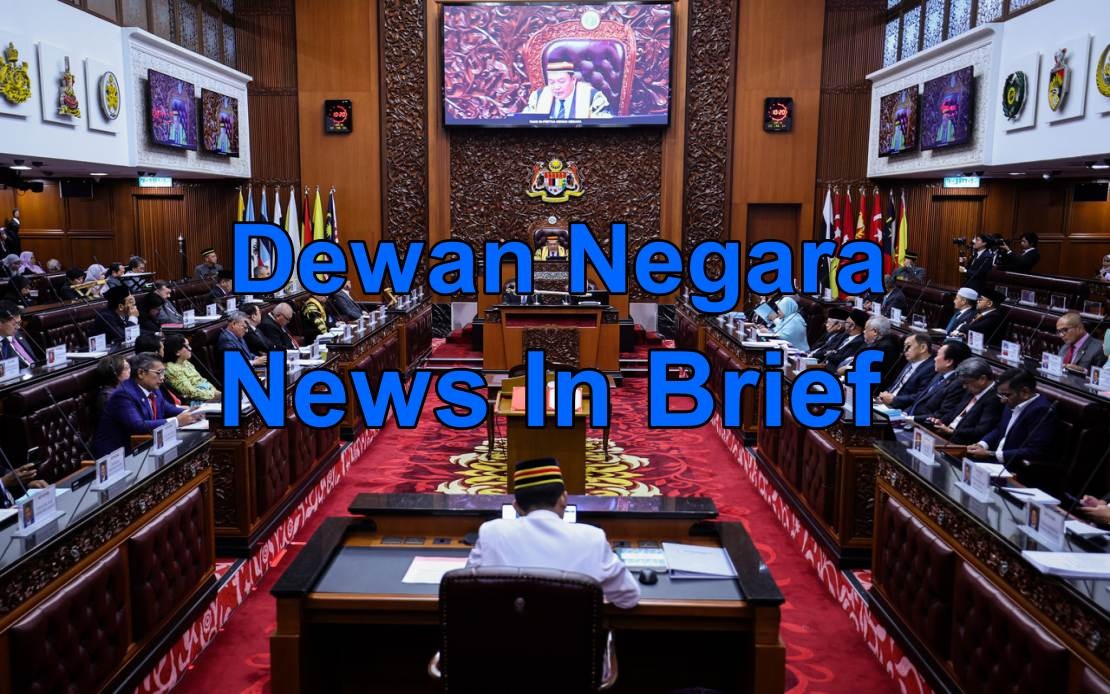
Infrastructure development in Sarawak's remote regions is gathering momentum as two major road upgrading initiatives costing RM414 million have advanced to the competitive tendering stage. Deputy Rural and Regional Development Minister Datuk Rubiah Wang informed the Dewan Negara that both projects, which received government approval in 2024, are now progressing through the open tender process. The distinction between the two undertakings reflects the government's commitment to improving accessibility across different parts of the state, with the Sarawak Public Works Department managing implementation of both schemes.
The Baram project, allocated RM231 million, focuses on upgrading the Lapok to Long Aya route and represents a significant investment in that division's infrastructure. The initial phase of this work, covering the Lapok to Long Teran section, completed its tendering process on May 19, 2026, and currently sits within the evaluation phase as the Public Works Department assesses submitted bids. This methodical approach to procurement ensures that contracts ultimately favour both quality delivery and value for public funds.
Parallel to the Baram initiative, the RM183 million Julau undertaking targets the Nanga Meluan to Nanga Maong corridor in Sarikei. This project has progressed further in the tendering cycle, having entered the second phase of pre-qualification screening. The invitation window for interested contractors ran from June 27 through to September 15, allowing adequate time for potential bidders to prepare comprehensive submissions. Both projects address a longstanding gap in rural connectivity where former logging tracks have deteriorated over years of minimal maintenance.
These infrastructure commitments carry significance for Malaysian regional development policy at a time when improving linkages between urban centres and peripheral communities remains a policy priority. Remote areas like Baram and Julau have historically faced pronounced isolation, with journey times and transportation costs creating economic friction that constrains agricultural marketing, access to education and healthcare, and general economic participation. By investing in road quality upgrades, the government seeks to reduce these barriers and unlock broader development potential across Sarawak's interior regions.
Beyond physical infrastructure, Malaysia's political apparatus is simultaneously addressing the social dimensions of national cohesion. The Ministry of National Unity, operating through its Department of National Unity and National Integration, has intensified efforts to revitalise neighbourhood harmony through the Kawasan Rukun Tetangga framework. Minister Datuk Aaron Ago Dagang indicated that these initiatives focus particularly on strata and high-density residential areas across Selangor, where demographic diversity and tighter living arrangements can amplify social tensions if left unmanaged.
The ministry's approach draws evidence from the State of Discrimination Survey 2023, conducted by Architects of Diversity Malaysia, which functions as an early warning system for identifying emerging social friction points. Rather than responding reactively to community conflict, the framework attempts to diagnose vulnerabilities and deploy preventative programming. This includes empowering community spaces, promoting ethical digital literacy to counter misinformation, and deploying the e-Sepakat platform for real-time monitoring and swift response to sensitive developments.
Community-based programmes organised at the neighbourhood rukun tetangga level constitute the operational core of this strategy. These activities deliberately create circumstances for residents to understand and recognise differing circumstances across their communities before collectively celebrating shared cultural plurality. Such an approach recognises that sustained social harmony requires continuous cultivation rather than intermittent intervention, particularly in increasingly complex urban environments where residents from diverse backgrounds inhabit close quarters.
Simultaneously, the government has expanded its support architecture for women navigating legal and economic vulnerability. The Women's Legal Literacy and Rights programme, known as IRIS, has reached approximately 84,000 beneficiaries through 78 sessions delivered as of June. The initiative targets a specific knowledge gap where women may lack awareness of legal entitlements, complaint mechanisms, and protection schemes available to counter exploitation. Deputy Women, Family and Community Development Minister Lim Hui Ying explained that such awareness directly reduces vulnerability by enabling more informed decision-making and earlier intervention.
The programme's expansion addresses widening concerns regarding women in economically precarious circumstances, particularly those married to foreign nationals who face heightened risk of identity misuse for illicit business registration or financial fraud. The complementary MATAHARI initiative bolsters psychological resilience, while the PRISMAnita one-stop centres in each state consolidate information provision and referral services. Together, these programmes construct a more comprehensive support ecosystem than previously existed, though implementation quality remains contingent on adequate resource allocation and effective coordination across state-level agencies.
These three distinct policy areas—rural infrastructure investment, neighbourhood unity programming, and women's legal empowerment—reflect the Malaysian government's broader development philosophy encompassing geographic equity, social stability, and vulnerable population protection. However, the distance between parliamentary announcements and ground-level outcomes frequently exceeds policy makers' anticipations. Successful delivery of the Sarawak road projects depends on competitive bidding generating quality proposals and timely contract management throughout construction. Community unity programmes require sustained participation from residents rather than nominal attendance, and women's legal literacy gains value only when recipients translate awareness into action and when institutional responses appropriately address complaints.
For Southeast Asian observers, Malaysia's parallel focus on infrastructure modernisation and social cohesion development offers instructive illustration of how regional governments increasingly recognise interconnections between physical development and human-centred governance. The commitment of resources toward neighbourhood harmony initiatives reflects awareness that rapid urbanisation and information proliferation can destabilise communities unless deliberately managed. Similarly, targeted legal literacy for vulnerable populations represents recognition that procedural rights prove meaningless without corresponding knowledge and confidence to exercise them.

