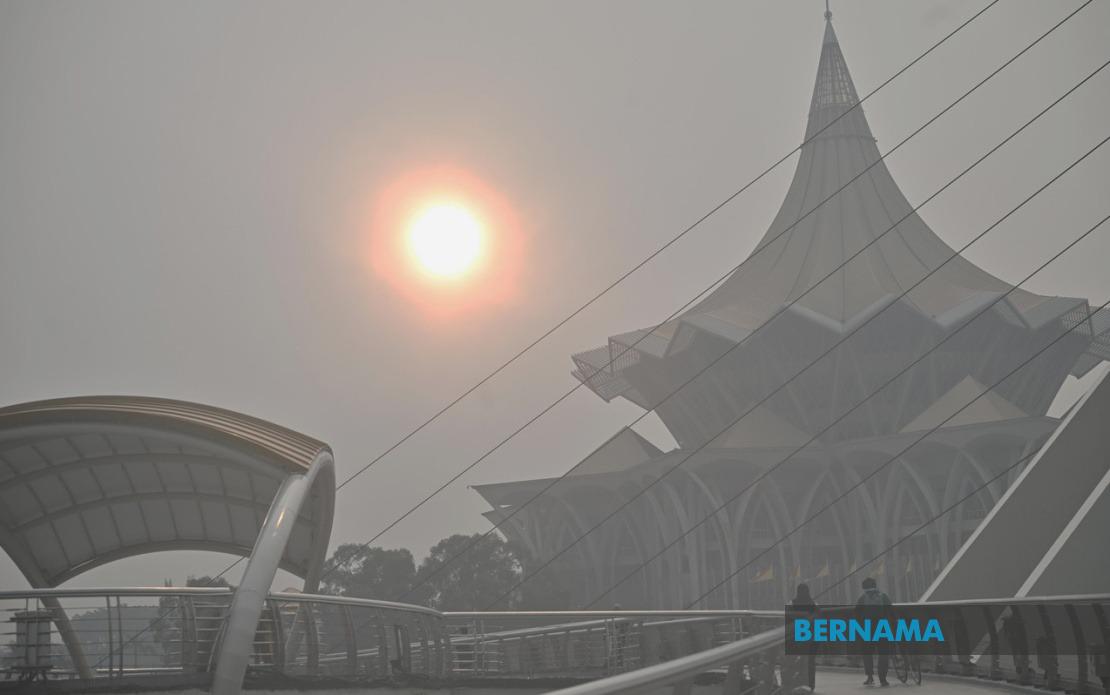
Sarawak's education sector faces unprecedented disruption as the state grapples with an intensifying heatwave and drought that has forced officials to close nearly 600 schools for two consecutive days. The temporary shutdown affects approximately 197,000 students across primary and secondary institutions, underscoring the severity of meteorological conditions that have gripped multiple regions of the state simultaneously.
The Sarawak Education Department announced the closure of 509 primary schools housing 107,590 pupils and 82 secondary schools containing 89,733 students. These institutions operate under the jurisdiction of ten District Education Offices spread across Kuching, Padawan, Bau, Lundu, Samarahan, Simunjan, Serian, Sri Aman, Lubok Antu and Betong. The breadth of the closure—spanning both urban and rural administrative zones—reflects how pervasively elevated temperatures and moisture deficits have settled across Sarawak's landscape.
Beyond the immediate educational disruption, state authorities have begun escalating their response framework to address cascading environmental and resource security threats. The Sarawak State Disaster Management Committee has activated enhanced surveillance protocols, monitoring weather patterns, atmospheric pollutant concentrations, forest hotspot activity and the vulnerability of the state's freshwater infrastructure. This multi-sector approach recognises that extreme heat and prolonged dryness do not operate in isolation but generate interlocking risks that can rapidly destabilise communities.
The most pressing concern centres on wildfire propagation across forest and peatland ecosystems. Extended periods of low humidity and elevated temperatures substantially elevate ignition probability and accelerate fire spread once blazes commence. Peatlands present particular hazard, as their saturated subsurface layers, when dried to critical thresholds, become exceptionally combustible and can smoulder uncontrollably across vast underground networks. Such fires generate dense smoke that can persist for weeks, degrading air quality across broad geographical zones.
Air quality deterioration has already manifested across multiple population centres. As of mid-afternoon on the closure announcement date, nine locations were registering unhealthy Air Pollutant Index readings. Kuching recorded 191, Samarahan 175, Serian 195, Sri Aman 178, Sarikei 154, Sibu 108, Lundu 180, Tebedu 169 and Lubok Antu 191. These measurements indicate that outdoor activity poses demonstrable respiratory risks, particularly for children, elderly persons and those with pre-existing pulmonary or cardiovascular conditions. The decision to close schools thus represents a precautionary public health measure alongside an environmental management strategy.
The water resource dimension amplifies concerns among policymakers. Prolonged drought conditions strain municipal water supply systems, potentially necessitating rationing or temporary service interruptions during peak demand periods. Sarawak, despite its equatorial position, has experienced historical droughts that temporarily constrained water availability for domestic and commercial consumption. State administrators are evidently preparing contingency arrangements should precipitation remain deficient over coming weeks.
For Malaysian policymakers observing from other states, Sarawak's experience offers instructive warnings about climate variability impacts on essential services. School closures represent visible, quantifiable disruptions to educational continuity, but they signal deeper infrastructure and environmental vulnerabilities that merit systematic long-term planning. The simultaneous pressures on air quality, wildfire risk, and water availability demonstrate how climate extremes create compounding crises that overwhelm sectoral responses.
The Sarawak State Disaster Management Committee has committed to strengthening preventative and mitigation operations, with particular emphasis on high-vulnerability zones. This includes community awareness campaigns, fire suppression resource pre-positioning, and water conservation messaging. Such measures acknowledge that reactive crisis management, while necessary, cannot substitute for proactive landscape and resource stewardship during climatically volatile periods.
The two-day school closure represents the immediate response phase to acute atmospheric and environmental degradation. Whether conditions normalise rapidly or persist will determine whether additional disruptions occur. Extended closures would compound educational impacts, particularly for examination candidates whose preparation schedules face compression. Parents managing childcare responsibilities would face mounting logistical pressures, whilst students from economically disadvantaged households might experience nutrition gaps if school feeding programmes remain suspended.
Regional climate analysts have increasingly documented heat and drought intensification across Southeast Asia, driven by large-scale atmospheric circulation pattern shifts and warming ocean temperatures. Sarawak's current predicament may foreshadow challenges that other Malaysian states and neighbouring territories will confront with increasing frequency. Institutional preparedness—encompassing early warning systems, coordinated inter-agency protocols, and community resilience frameworks—thus warrants substantial investment and continuous refinement across the region.
The broader implications extend beyond Sarawak's borders to influence investor confidence, agricultural productivity, and public health trajectories across Malaysia and Southeast Asia. Climatic extremes that disrupt basic services signal to commercial actors and international observers the vulnerability of regional infrastructure to environmental shocks. Demonstrating effective crisis management and rapid recovery capacity becomes economically and geopolitically significant, positioning jurisdictions as reliable partners for sustained commercial and developmental engagement.

