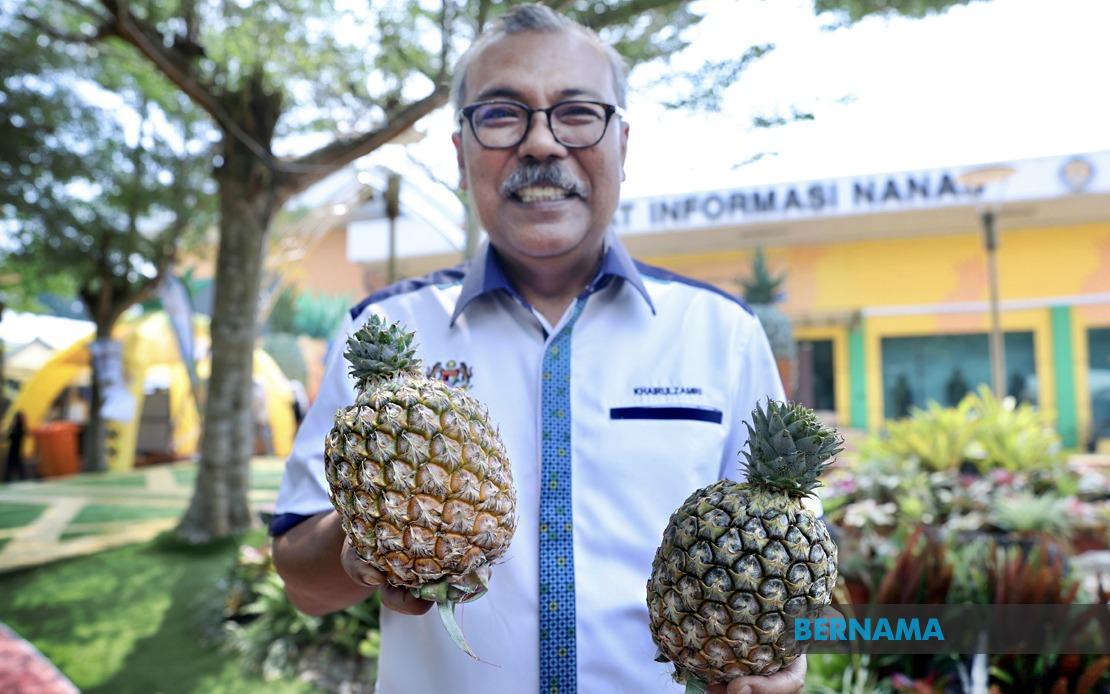
The Sarawak Gold pineapple variety is commanding attention at Malaysia's premier agricultural showcase, MAHA 2026, as the nation's pineapple industry seeks to revitalize its competitive standing in regional and global markets. Seven tonnes of the SG1 variety, first cultivated in Miri, have been transported to the Malaysia Agriculture Expo Park (MAEPS) at Serdang for the exhibition running through early September, offering visitors unprecedented access to taste and evaluate this promising agricultural innovation.
According to Mohd Khairuzamri M. Salleh, director-general of the Malaysian Pineapple Industry Board (LPNM), the SG1 represents a significant advancement in commercial pineapple production, combining desirable characteristics that address long-standing industry challenges. The variety achieves sweetness levels comparable to the globally dominant MD2 cultivar whilst delivering a distinctive aesthetic appeal, with its crown naturally forming an elegant rose-like appearance that enhances market presentation and consumer appeal.
Perhaps most significantly for growers facing land constraints and rising agricultural costs, SG1 achieves full maturity in just nine months, substantially faster than the fourteen-month cycle required for MD2. This accelerated production timeline means farmers can generate multiple harvests within a shorter timeframe, directly improving cash flow and return on investment—a critical consideration in Malaysia's increasingly competitive agricultural landscape where productivity drives profitability.
The planting density advantages further underscore SG1's commercial potential. Unlike conventional pineapple cultivation requiring extensive acreage for viable yields, SG1 thrives at significantly higher densities, with optimal performance demonstrated between twenty-five thousand and thirty thousand plants per acre. This intensive cultivation approach transforms marginal or limited farming areas into productive assets, permitting smallholder farmers and larger operations alike to maximize output without proportional increases in land acquisition, making the technology particularly relevant for Peninsular Malaysia where agricultural land remains constrained and expensive.
Building on initial success in Sarawak, the LPNM is actively pursuing expansion of SG1 cultivation across Peninsular Malaysia, with commercial seedlings expected to reach growers throughout 2027. This deliberate nationwide rollout reflects confidence in the variety's adaptability to diverse Malaysian agro-climatic conditions and suggests institutional commitment to establishing SG1 as a cornerstone variety for the domestic industry.
Early export trials have already validated international market viability. Shipments from Sarawak to Singapore have demonstrated successful reception, and industry leaders anticipate that SG1's robust characteristics position it competitively for penetration into more demanding markets including China and New Zealand, where premium pineapple varieties command substantial price premiums. Such export prospects carry significant implications for Malaysian agricultural earnings and foreign exchange generation, particularly as regional and global demand for premium tropical fruits continues expanding.
Beyond the fresh fruit market, the LPNM is emphasizing a comprehensive value-creation narrative that resonates with modern consumer preferences and sustainability imperatives. Under this year's MAHA theme, "Value Creation for Food Security," industry representatives are promoting the concept of "one planting, three harvests," highlighting the multiple commercial streams emanating from pineapple cultivation. Whilst the fruit itself represents the primary yield, crowns and plant residues generate substantial secondary revenue through transformation into ruminant feed, textile fibres, and paper products—pathways that convert agricultural waste into marketable commodities whilst reducing environmental disposal challenges.
This holistic resource utilization approach addresses growing consumer and regulatory interest in circular economy practices, positioning Malaysian pineapple production as environmentally progressive and economically efficient. Such positioning enhances sector competitiveness globally whilst aligning domestic agricultural practices with contemporary sustainability standards increasingly demanded by international trade partners and consumer markets.
MAHA 2026, hosting approximately two thousand exhibitors and anticipating over four million visitors across its ten-day run, provides an ideal platform for introducing SG1 to domestic stakeholders and international observers. The showcase environment permits farmers, agricultural entrepreneurs, export intermediaries, and policy makers to evaluate tangible samples and engage directly with LPNM specialists, facilitating informed decision-making regarding variety adoption and cultivation planning.
The emergence of SG1 reflects Malaysia's ongoing efforts to enhance agricultural innovation and competitiveness amid regional competition from established pineapple producers in Thailand and the Philippines. By developing and promoting distinctive domestic varieties offering superior agronomic characteristics and commercial advantages, Malaysia reinforces its positioning as an innovation-driven agricultural economy capable of delivering premium products commanding justified price premiums in sophisticated international markets.
For Malaysian smallholder and commercial growers, SG1 adoption presents tangible pathways to improved productivity, faster cash conversion cycles, and expanded export revenue opportunities, directly contributing to agricultural income security and rural economic development. The variety's potential represents a significant positive development for an industry facing structural pressures from land scarcity, labour availability, and international competition, offering concrete evidence that strategic innovation can generate meaningful competitive advantages in global agricultural trade.

