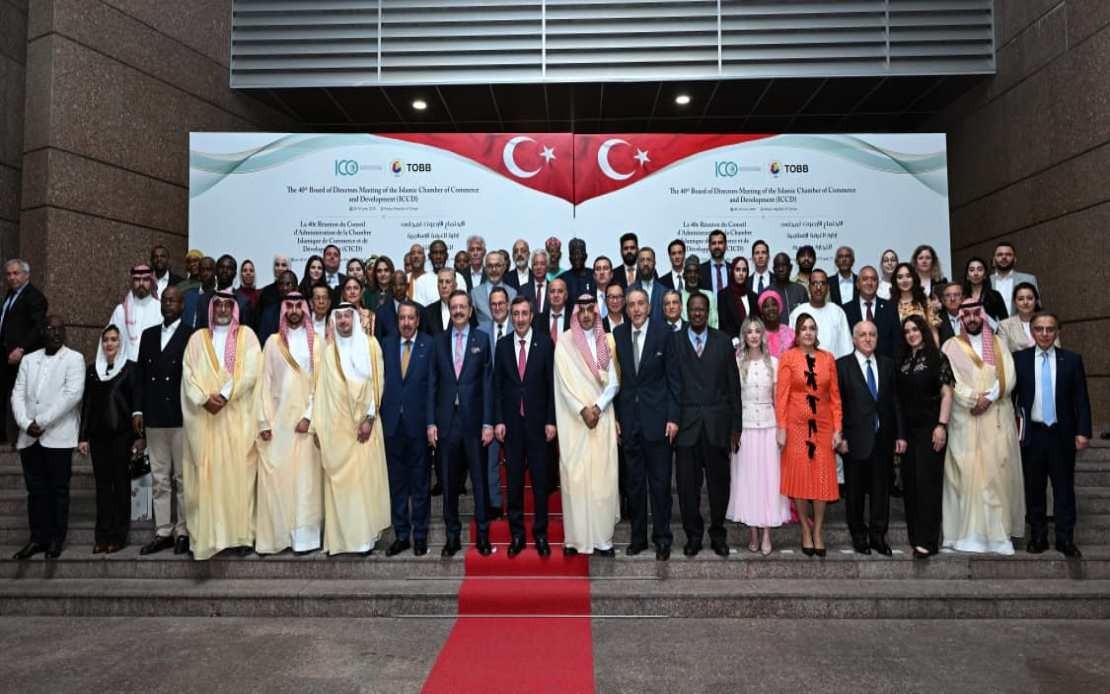
Saudi Arabia has renewed its push for deeper economic integration among Islamic nations, with prominent business leaders emphasising the critical role that major Muslim-majority economies like Malaysia and Indonesia must play in this regional development agenda. The call came from Abdullah Saleh Kamel, chairman of the Federation of Saudi Chambers and president of the Islamic Chamber of Commerce and Development, during the 40th ICCD Board of Directors Meeting held in Ankara, Turkiye, underscoring Riyadh's commitment to leveraging the private sector as a vehicle for strengthening ties across the Islamic world.
Kamel's remarks positioned the Saudi business community's participation in the ICCD as a continuation of the Kingdom's historical role as a major institutional backer since the chamber's founding. This framing reflects Saudi Arabia's broader strategic interest in positioning itself not merely as a financial powerhouse but as an active orchestrator of economic collaboration among nations united by Islamic ties. By having its private-sector representatives present at these high-level forums, Riyadh signals that it views chamber-to-chamber engagement as equally important to traditional government-to-government diplomacy in advancing mutual commercial interests.
The explicit mention of Malaysia and Indonesia in Saudi Arabia's economic outreach carries particular significance for Southeast Asian policymakers. Both nations represent dynamic, growing markets with substantial Muslim populations and increasingly sophisticated financial sectors. Malaysia, in particular, has established itself as a regional hub for Islamic finance and commerce, making it an obvious partner for initiatives aimed at expanding halal trade, Islamic banking cooperation, and sharia-compliant investment vehicles across the Islamic world. Indonesia's vast internal market and emerging role as a manufacturing and agricultural powerhouse similarly position it as indispensable to any credible framework for intra-Islamic economic integration.
The focus on youth entrepreneurship and private-sector growth reflects a recognition within Saudi leadership circles that economic cooperation among Islamic nations requires more than simply facilitating trade between government entities or large corporations. Instead, the emphasis on young people and entrepreneurs suggests an understanding that sustainable prosperity depends on creating pathways for innovation, skill development, and business creation across the Islamic world. For Malaysia and Indonesia specifically, this approach resonates with domestic policy priorities in both countries, where governments have invested heavily in startup ecosystems and small-and-medium enterprise development programmes.
Food security and sustainable agriculture emerged as focal points in Saudi Arabia's economic agenda, areas where Southeast Asian nations can offer genuine expertise and resources. Malaysia and Indonesia together represent significant agricultural producers and exporters, with established supply chains reaching global markets. The integration of these capacities within a coordinated Islamic framework could address vulnerabilities that many Muslim-majority nations face in ensuring stable, affordable food supplies. This is particularly relevant for smaller or less developed Islamic nations that currently depend on imports to meet domestic food needs, creating opportunities for Malaysian and Indonesian producers to expand market access.
Regional trade connectivity stands out as another pillar of the Saudi-led agenda, one with immediate ramifications for Southeast Asia. Enhanced intra-Islamic commerce requires investments in logistics infrastructure, harmonisation of trade regulations, and digital platforms that reduce transaction costs and friction. Malaysia's position as a maritime trading hub and Indonesia's strategic location astride key shipping routes position both nations to benefit from and contribute to such infrastructure development. Moreover, deeper integration with Middle Eastern markets could provide Southeast Asian exporters with alternative demand sources, reducing dependence on traditional Western markets and diversifying commercial risks.
The ICCD's mandate to expand investment flows among Islamic countries opens potential avenues for capital mobilisation that could benefit Malaysian and Indonesian entrepreneurs. Islamic finance instruments such as sukuk and mudaraba arrangements have matured considerably, particularly in Malaysia's highly developed capital markets. Channelling greater volumes of Middle Eastern capital toward Southeast Asian ventures through these instruments could accelerate development of priority sectors, from renewable energy to high-value agriculture. For Malaysia, which has positioned itself as an international Islamic financial centre, such arrangements reinforce its competitive advantages and influence within the broader Islamic economic ecosystem.
The upcoming golden jubilee celebration of the ICCD in 2027 signals that this organisation intends to remain a significant player in economic diplomacy among Islamic nations for the foreseeable future. The lead time before this milestone celebration suggests that the chamber is already planning major initiatives to showcase the results of enhanced cooperation. For Malaysian and Indonesian policymakers, this timeline provides an opportunity to structure substantive collaborative projects that can be highlighted during anniversary proceedings, effectively raising both their profile and their tangible achievements within Islamic economic circles.
The participation of Saudi Arabia's business community at the ICCD meetings reflects a broader strategic shift toward private-sector-led development cooperation. Unlike traditional aid or concessional financing, this model emphasises mutual commercial benefit and market-driven solutions. For Malaysia and Indonesia, engaging with this framework means positioning their own private sectors as active participants rather than passive beneficiaries. Chamber-of-commerce partnerships, sector-specific working groups, and business-to-business networking initiatives facilitated through the ICCD can generate commercial opportunities that might not emerge through conventional government channels.
However, realising the potential of intensified Islamic economic cooperation requires addressing structural challenges that have historically limited intra-regional trade among Muslim-majority nations. These include tariff barriers, regulatory divergences, and limited awareness among smaller enterprises about trading opportunities within the Islamic world. Saudi Arabia's emphasis on quality employment creation and sustainable development suggests a recognition that purely extractive or exploitative commercial relationships do not generate the broad-based prosperity needed for long-term political stability and social cohesion. For Malaysia and Indonesia, this implies opportunities to export not just goods and services but also development models and expertise in governance.
The broader context of these ICCD discussions occurs amid evolving geopolitical alignments in the Middle East and Asia-Pacific. As traditional power balances shift, economic corridors forged through organisations like the ICCD may acquire heightened strategic importance. For Southeast Asian nations, maintaining robust engagement with multiple poles of economic power—whether in the Middle East, East Asia, or the West—provides valuable flexibility and reduces vulnerability to external pressures. Malaysia's long-standing commitment to the Islamic world, combined with its deep integration into Asian supply chains, positions it well to serve as a bridge between these regions, potentially amplifying its influence in both domains.
The call for deeper cooperation also arrives at a moment when many Muslim-majority economies face shared challenges ranging from debt sustainability to technological competitiveness. Collaborative mechanisms that facilitate knowledge transfer, technology sharing, and joint research initiatives could address these common pressures more effectively than bilateral arrangements. Malaysia's experience in building resilient financial systems and diversifying its economy offers lessons relevant to other Islamic nations, while Indonesia's management of large, complex, multicultural societies provides governance insights applicable across the Muslim world. Formalising such knowledge-sharing within ICCD structures could transform it from a primarily commercial forum into a platform for developmental learning.

