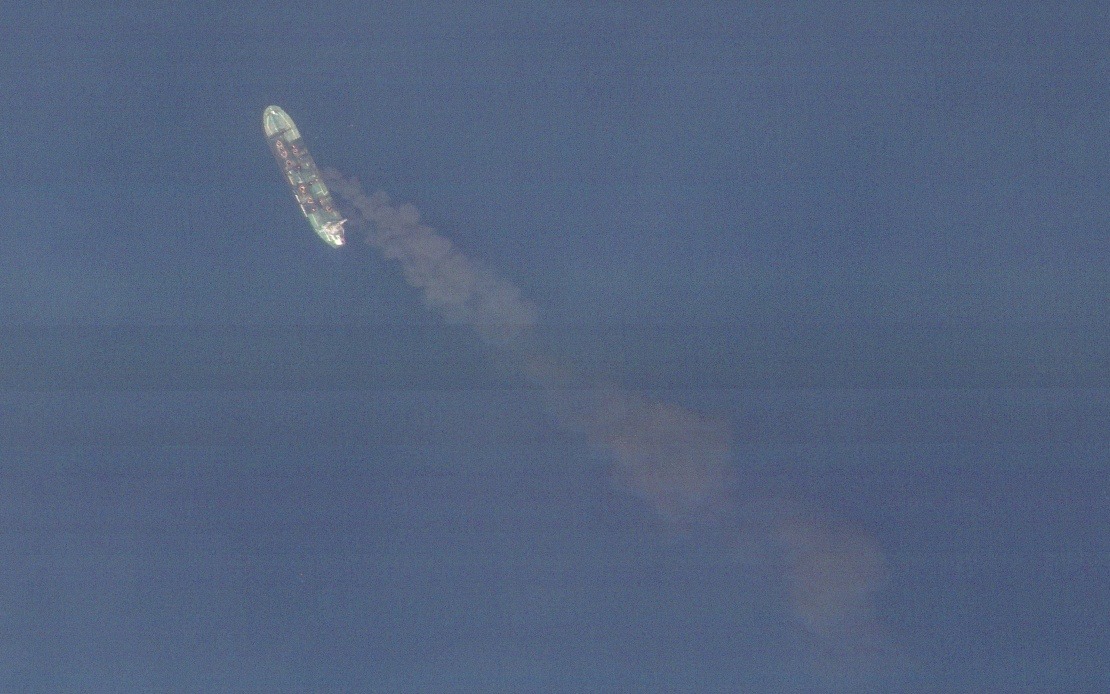
The Saudi-led military coalition operating in Yemen has committed to implementing all necessary operational measures to ensure the safe passage of commercial vessels through the strategically vital Bab al-Mandab Strait, following a newly announced maritime restriction by the Houthi movement targeting Saudi Arabia's shipping interests. The coalition's response, articulated through Joint Forces Command spokesperson Turki Al-Malki on Monday evening, signals a hardening stance amid deteriorating security conditions in one of the world's most critical maritime corridors—a waterway through which roughly 15 percent of global trade passes annually.
The Houthi group's declaration of a maritime ban came as part of what movement leaders characterised as a retaliatory measure, framed within what they termed a "blockade for blockade" principle. This rhetoric reflects the rebels' characterisation of Saudi Arabia's military operations and economic measures in Yemen as constituting a nearly twelve-year siege of territory under their control. The announcement followed a dramatic incident involving an attempted Iranian aircraft landing at Sanaa International Airport, which the Saudi-backed Yemeni government had previously targeted in a pre-emptive strike designed to prevent a senior Houthi delegation from arriving in the capital. The subsequent Houthi response involved launching missiles and drone attacks directed toward Saudi territory, demonstrating the group's capacity to project force across international borders.
Turki Al-Malki's formal statement dismissed the maritime ban as "fallacies and escalation," deploying rhetorical language intended to delegitimise the Houthi action while simultaneously asserting the coalition's operational capabilities and commitment to international legal frameworks. The spokesperson pointed to empirical data suggesting broad commercial access to Houthi-controlled territories, citing the passage of over three hundred commercial vessels into ports administered by the group during the first six months of the calendar year. These vessels, according to coalition sources, transported essential commodities including foodstuffs and petroleum products, characterising the Saudi-led forces as facilitators rather than obstructors of humanitarian supply flows to Yemeni populations.
The Saudi Foreign Ministry mounted a parallel diplomatic offensive, issuing a formal statement that categorically rejected Houthi allegations regarding a blockade, instead repositioning the kingdom's role as that of a development partner and economic supporter of Yemen. The ministry emphasised Saudi Arabia's investment in development initiatives and budgetary transfers intended to ameliorate the humanitarian situation affecting ordinary Yemenis. This framing seeks to distinguish between military operations and their strategic objectives on one hand, and humanitarian considerations on the other—a distinction that remains contested by international observers and humanitarian organisations working within Yemen's conflict zones.
The unfolding crisis reflects the deeply entrenched nature of Yemen's civil conflict, which has persisted since late 2014 when the Houthi movement consolidated control over Sanaa and extensive territories in northern Yemen. The Saudi-led coalition's intervention, initiated in 2015, ostensibly aimed to restore the internationally recognised government to power, yet the conflict has instead settled into a protracted stalemate characterised by periodic escalations and fragile ceasefire arrangements. The 2022 United Nations-brokered truce represented a significant diplomatic achievement, substantially reducing active combat operations and creating space for tentative de-escalation efforts across the region.
However, recent developments suggest that this carefully constructed truce framework faces mounting pressure from multiple directions. The incident at Sanaa airport and its immediate aftermath exemplify how localised confrontations between rival governance entities can rapidly cascade into broader security challenges affecting international maritime commerce. The Bab al-Mandab Strait, through which this tension now manifests, represents far more than a regional concern; its security directly impacts global energy markets, international shipping costs, and the economic stability of nations dependent upon uninterrupted sea lanes for critical supplies including fuel and grain.
For Malaysian stakeholders, these developments carry particular significance given Malaysia's substantial maritime trade dependencies and its position as a major participant in global shipping networks. Malaysian-flagged vessels and Malaysian shipping companies operating throughout the Red Sea and Indian Ocean regions face heightened operational risks should the security environment continue deteriorating. The potential disruption of shipping lanes through Bab al-Mandab could increase insurance premiums, lengthen transit times, and impose additional costs throughout regional supply chains—consequences that would inevitably ripple through Malaysia's import-dependent economy and export-oriented manufacturing sectors.
The coalition's explicit invocation of "international law" as the framework governing its operational response suggests awareness of the legal and diplomatic dimensions of the emerging crisis. Yet the Houthi movement, historically resistant to international pressure and emboldened by military capabilities developed through Iranian support, demonstrates limited inclination toward legally-bounded compromise. This fundamental gap between the coalition's legalistic framing and the Houthis' escalatory rhetoric creates a dangerous potential for miscalculation, wherein each side interprets the other's actions through lenses of military necessity rather than restraint.
The stated commitment to "firm" responses to threats represents intentionally vague language that preserves operational flexibility whilst signalling resolve to domestic audiences and international observers. The coalition's previous conduct suggests that such rhetoric can precede intensified military operations, including airstrikes targeting ports, infrastructure, and vessels suspected of Houthi connections. Should such escalation occur, the consequences for regional stability could extend far beyond Yemen's borders, affecting shipping security throughout Southeast Asia's extended maritime neighbourhood and potentially triggering broader geopolitical realignments affecting Indonesia, Malaysia, and other nations dependent upon Indian Ocean stability.
The humanitarian dimensions of renewed conflict escalation deserve consideration alongside security analysis. Years of warfare have already displaced millions of Yemenis, decimated infrastructure, and created conditions of widespread food insecurity and disease vulnerability. Further military confrontation risks exacerbating these humanitarian catastrophes whilst simultaneously constraining the flow of supplies that, according to coalition sources, have consistently reached Houthi-controlled areas through commercial channels. The movement's maritime ban represents a deliberate strategic choice to weaponise shipping access, creating additional leverage against the coalition whilst accepting short-term humanitarian costs as acceptable prices for political and military objectives.
The trajectory of this crisis remains uncertain, dependent upon calculations within multiple decision-making centres spanning Riyadh, Sanaa, Tehran, and potentially Washington. The international community's capacity to prevent further escalation appears limited, particularly given the competing geopolitical interests at play and the deep mutual antagonisms characterising the coalition-Houthi relationship. Malaysian policymakers would be prudent to monitor developments closely, ensure adequate insurance coverage for national maritime interests, and explore diplomatic channels that might contribute to regional de-escalation efforts, recognising that Red Sea stability ultimately serves the interests of all nations dependent upon secure maritime commerce in strategically crucial global waters.

