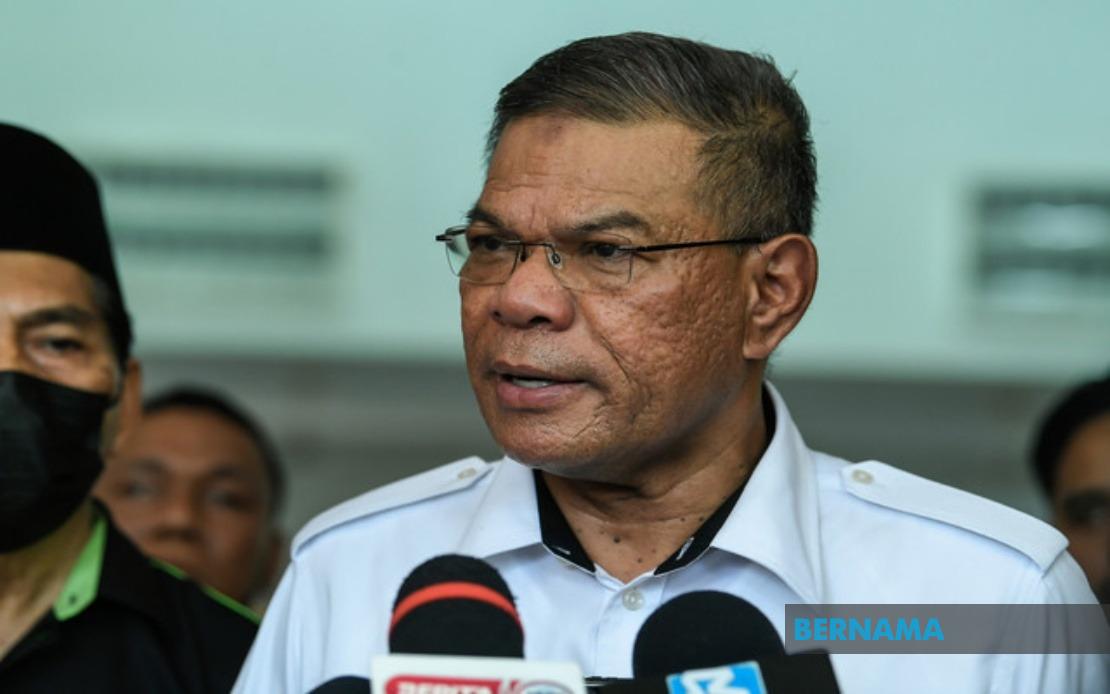
Home Minister Datuk Seri Saifuddin Nasution Ismail has clarified the expansive mandate of School Liaison Officers, underscoring that their responsibilities extend well beyond tackling bullying to encompass the full spectrum of school safety concerns. Speaking in Kulim on July 22 after visiting a fire-damaged hostel, Saifuddin noted that the Royal Malaysia Police will intensify its nationwide deployment of these officers as part of a broader institutional commitment to protecting students in educational settings.
The clarification comes amid growing public concern about school safety, particularly following several high-profile incidents that have circulated on social media. A recent bullying case in Cheras drew widespread attention, prompting questions about the adequacy of existing safety measures. However, Saifuddin's remarks suggest that the government views school security through a more comprehensive lens than public discourse sometimes reflects. He emphasized that incidents ranging from student accidents to potential involvement of substances fall within the purview of these dedicated officers.
The School Liaison Officer programme deploys police personnel stationed at district headquarters or nearby police stations who maintain regular contact with school administrations, parents, and students. These officers facilitate engagement programmes designed to establish rapport and create early warning systems for potential incidents. By embedding police presence within the school ecosystem rather than responding only to emergencies, the approach aims to create preventive capacity. The nationwide rollout represents one of the Royal Malaysia Police's significant institutional investments in educational environments.
Beyond the police-led initiative, Saifuddin revealed that the Home Ministry coordinates with the National Anti-Drugs Agency to station additional officers in schools. This multi-agency approach reflects recognition that contemporary school safety requires expertise across multiple domains. Drug prevention specialists work alongside police officers, broadening the range of issues being monitored. The coordination between agencies suggests an attempt to address holistic student welfare rather than compartmentalizing concerns.
The minister referenced a recent case involving a student who fell at a school in Kuala Nerang as an example of the investigative scope that extends beyond interpersonal conflicts. Such incidents, while potentially accidental, require police involvement to establish circumstances, determine accountability, and identify systematic weaknesses. The incident highlights how schools generate safety concerns that demand professional investigation irrespective of their origin.
Saifuddin's visit to Sekolah Menengah Agama Tarbiah Diniah was prompted by a serious hostel fire that erupted at approximately 2:30 am and destroyed the residential facility. The blaze displaced 116 students who lost personal belongings and faced immediate accommodation challenges. The incident catalyzed a multi-layered government response demonstrating how school-related emergencies trigger cross-ministerial coordination.
Immediate relief measures included RM500 cash assistance disbursed to each affected student, providing resources for purchasing replacement items such as uniforms, school supplies, and personal effects. Recognizing that displaced students required more than temporary support, Saifuddin secured Prime Minister approval for an emergency allocation of RM200,000 designated for constructing temporary accommodation facilities. This commitment signals that the government views infrastructure damage affecting student welfare as a priority warranting rapid capital deployment.
Additional assistance came through the National Registration Department, which mobilized its mobile identity document service to help students replace identification cards destroyed in the fire at no cost. This provision addresses a practical barrier that could otherwise complicate students' return to schooling and access to government services. Such coordinated responses demonstrate how school incidents trigger comprehensive administrative mobilization extending across multiple government departments.
The financial commitment extended to institutional support, with Saifuddin's office contributing RM10,000 to the school's Parent-Teacher Association. This contribution acknowledges the crucial role that parent-school partnerships play in recovery and resilience-building following traumatic incidents. By channeling resources through the PTA, the government reinforced community-based mechanisms for addressing school challenges.
Saifuddin framed the multi-layered response within the MADANI Government's stated priority of supporting critical facilities serving Malaysia's youth. The language of responsiveness and resource allocation suggests a deliberate positioning of school safety as a governance imperative rather than a peripheral concern. For Malaysian educational stakeholders, this message indicates that significant incidents within school environments will receive executive-level attention and mobilization of emergency resources.
The emphasis on deploying officers nationwide reflects understanding that school safety cannot be addressed through reactive incident response alone. By establishing permanent institutional presence through School Liaison Officers, the government is attempting to shift from emergency management to preventive engagement. For Southeast Asian observers, Malaysia's approach demonstrates how regional governments are institutionalizing school safety through specialized police deployments and inter-agency coordination mechanisms.
The hostel fire and accompanying policy clarification together illustrate how contemporary school governance involves balancing prevention, rapid response, and recovery support. Saifuddin's statements indicate that as schools in Malaysia face evolving safety challenges—from traditional bullying to substance-related concerns to infrastructure hazards—the government perceives comprehensive, multi-agency engagement as essential. This framework suggests schools will increasingly function as sites of sustained police and regulatory presence, fundamentally reshaping how institutions monitor and manage student populations.
For parents and educators across Malaysia, the government's positioning indicates that school safety has achieved status as a core governance priority warranting substantial institutional investment. Whether this translates into meaningfully improved outcomes depends on implementation fidelity, community cooperation, and sustained resource allocation beyond the emergency response phase.

