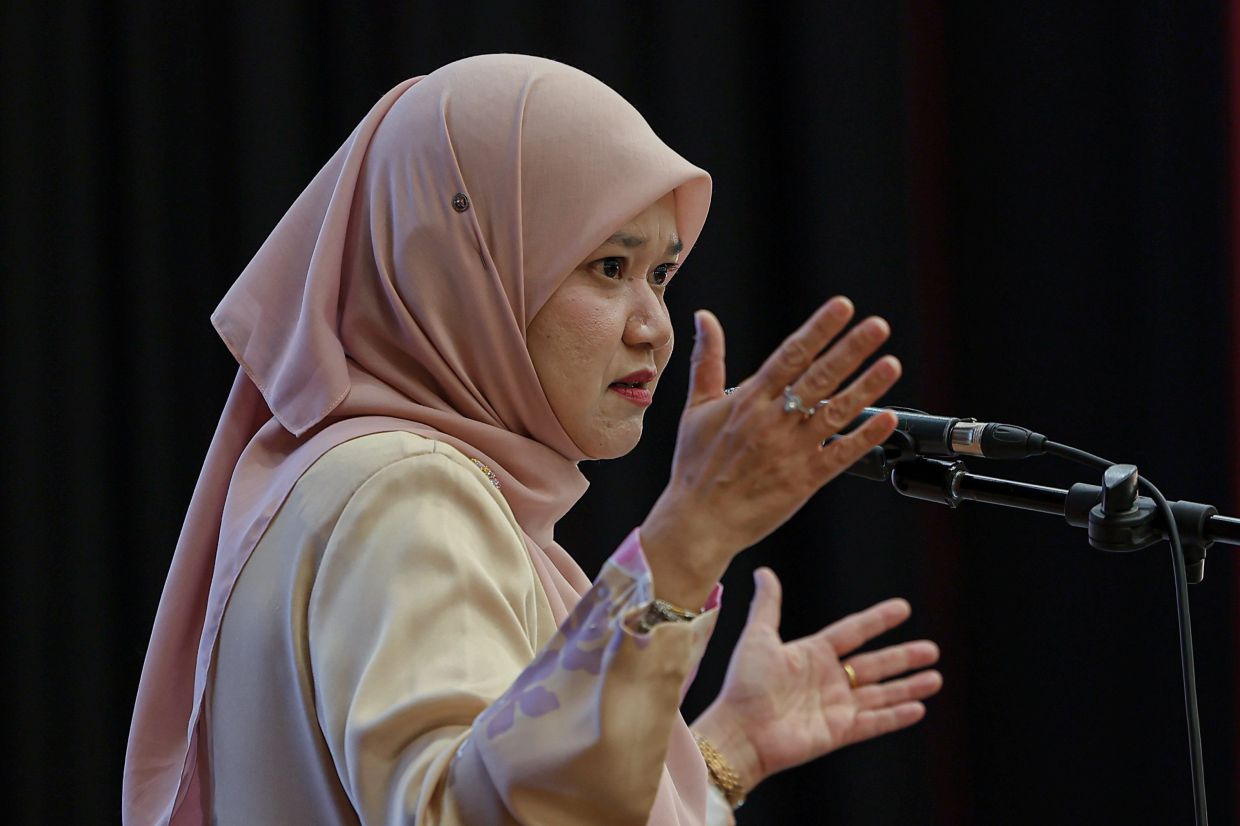
Education Minister Fadhlina Sidek has warned that successful school reform demands a fundamental shift in institutional culture and cannot be achieved through surface-level interventions or quick fixes. Speaking at the Education Ministry's monthly assembly in Putrajaya on Tuesday, July 28, she outlined an ambitious initiative that will channel resources to carefully selected educational institutions across the country, signalling the government's commitment to raising standards beyond the traditional metrics of infrastructure and facilities.
The reform programme will identify ten schools in each district—a mixture of five primary and five secondary institutions—as pilot sites for this transformation effort. These schools will serve as demonstration models, with the aspiration to eventually establish them as the highest-performing schools within their respective districts. The selection process appears designed to ensure geographic distribution and mixed educational levels, allowing the ministry to test approaches across different school types and age groups simultaneously.
Financial allocation forms a crucial component of the initiative. Each participating school will receive up to RM100,000 to fund their individual reform strategies. This sum, while modest by some measures, is intended to provide schools with sufficient flexibility to address their distinct operational challenges and developmental priorities. Rather than imposing a standardized template from above, the ministry is allowing schools autonomy in deploying these resources according to their own assessment of what changes matter most.
The minister's emphasis on cultural transformation rather than mere physical improvement represents a significant ideological position within Malaysian education policy. Schools often face pressure to pursue infrastructure upgrades—new buildings, renovated classrooms, modern facilities—as visible demonstrations of progress. Fadhlina's message challenges this assumption, arguing that bricks and mortar alone cannot produce the systemic changes needed to genuinely improve educational outcomes. This perspective aligns with emerging evidence from educational research globally suggesting that school effectiveness depends far more on intangible factors than physical infrastructure.
Fadhlina articulated a holistic vision of reform encompassing multiple dimensions of school life. Beyond academic pedagogy and teaching methodology, the transformation must extend to how schools address mental health, combat bullying, and foster overall wellbeing throughout the entire school community. This approach recognizes that student learning occurs within a broader ecosystem of social and emotional development. Schools struggling with disciplinary issues, peer conflict, or mental health challenges inevitably experience compromised academic performance regardless of resource levels.
The requirement for institutional mindset change carries particular significance in the Malaysian context. Educational systems often operate according to entrenched practices and assumptions that educators have internalized over years of professional experience. Shifting these deep-rooted approaches demands not merely policy directives but genuine engagement with teachers, principals, and support staff to help them reconceptualize their roles and responsibilities. This process is inherently time-consuming and cannot be mandated through bureaucratic fiat alone.
The minister's framing emphasizes collective responsibility across the entire school community rather than concentrating change efforts on individual actors. Parents, students, teachers, administrators, support staff, and local stakeholders must all participate in reimagining how their school functions. This inclusive approach potentially addresses one of the persistent challenges in educational reform efforts—the tendency for top-down initiatives to encounter resistance when implementation communities feel excluded from planning and decision-making processes.
The specific focus on educator mindset transformation suggests recognition that teachers represent the pivotal factor in determining whether reform initiatives succeed or stall. Professional development, ongoing support, and creating conditions where educators feel empowered to experiment and innovate become essential. The RM100,000 allocation likely needs to encompass not just material investments but also funding for professional learning, coaching, and collaborative planning time for staff.
The timing of the announcement, with the programme commencing the following week, indicates the ministry's determination to move beyond planning into concrete implementation. This rapid transition from announcement to action reduces opportunity for implementation momentum to dissipate and signals genuine commitment to the initiative rather than treating it as merely rhetorical positioning.
For Malaysian schools, this initiative represents a meaningful departure from the traditional focus on examination results and facility improvements as primary measures of institutional success. By centering cultural transformation and comprehensive wellbeing, the ministry is addressing longstanding critiques that have identified high-stress learning environments and inadequate attention to student mental health as serious challenges within Malaysia's education system.
The initiative carries implications extending beyond participating schools. If successful, these ten schools per district could generate valuable evidence about what approaches to systemic school improvement prove most effective within Malaysian contexts. This learning could inform subsequent broader policy changes, making the pilot phase genuinely generative rather than merely token.
The success of this reform programme ultimately depends on whether schools embrace the philosophical foundations Fadhlina articulated. Schools attempting to meet the initiative's expectations while maintaining traditional hierarchical structures or teacher-centered pedagogies will likely fall short of genuine transformation. Conversely, institutions that use the funding and platform to fundamentally reconsider their cultural identity and operating assumptions could emerge as compelling models for educational excellence within Southeast Asia.

