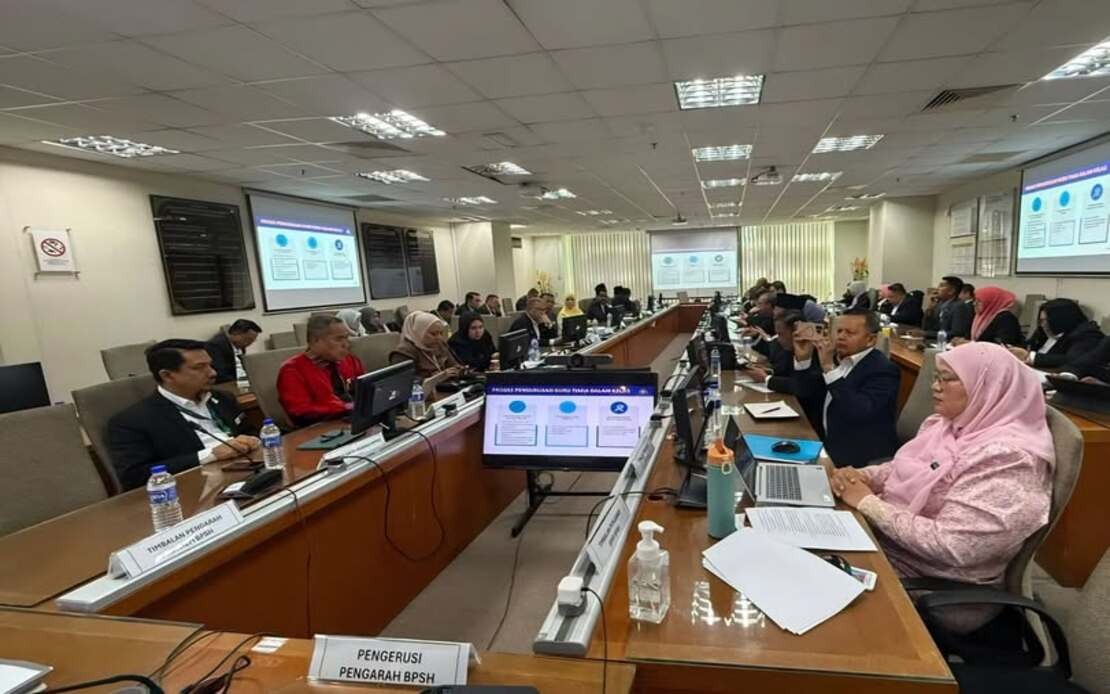
Education Minister Fadhlina Sidek has moved to allay concerns among Malaysian educators that the newly introduced School Pupil Protection Policy places excessive responsibility on teachers by emphasising that the framework is deliberately structured to distribute safeguarding duties across the entire education ecosystem. Speaking on August 14, Fadhlina stressed that the policy represents a coordinated approach to child protection rather than an attempt to make teachers the sole guardians of pupil welfare and safety in schools.
The policy establishes a clearer operational structure by defining specific responsibilities for each party involved in child protection within the school environment. Rather than expecting individual teachers to independently investigate and resolve safety concerns, the framework sets out a chain of reporting and response mechanisms that involves school administrators, district and state education departments, and external agencies including police and social welfare authorities. This compartmentalisation of duties reflects international best practice in safeguarding, where professionals are trained to recognise and report concerns while specialists trained in investigation and intervention handle case management.
Fadhlina emphasised that educators should not hesitate to escalate concerns about a child's safety by immediately reporting suspicions to school administrators without waiting for conclusive proof or complete evidence. This lower threshold for reporting is intentional, designed to catch potential harm early before situations deteriorate. The policy shifts the burden of investigation and evidence-gathering away from classroom teachers, whose primary expertise lies in education rather than child protection investigations. Instead, trained specialists within the education ministry and government agencies take the case forward once a report reaches administrators.
Recognising that policy documents alone cannot address every scenario teachers might encounter, the Ministry of Education has committed to an intensive programme of engagement sessions and briefings to clarify educator roles and responsibilities. The ministry has already conducted consultation sessions with major stakeholders including the National Union of the Teaching Profession, the Human Rights Commission of Malaysia, the United Nations Children's Fund, and various non-governmental organisations working in child welfare. These sessions serve both to educate teachers about their specific responsibilities and to gather feedback on practical implementation challenges.
The broader protection ecosystem extends well beyond schools and teachers. State Education Departments and District Education Offices coordinate responses within the educational system, while the Royal Malaysia Police and Social Welfare Department handle investigations and interventions appropriate to their expertise. This multi-agency approach prevents children from experiencing repeated interviews with different officials or receiving fragmented responses when concerns arise. Instead, once a report enters the system, a coordinating body assesses the situation and directs the case to the appropriate authorities based on its specific nature and severity.
One significant concern that the policy addresses is the risk of traumatic re-victimisation when child protection systems are poorly coordinated. When different agencies interview a child independently or handle a case without communicating with others, the child may be forced to recount distressing experiences multiple times. The School Pupil Protection Policy aims to prevent this through centralised coordination that ensures proper case handling and minimises unnecessary additional trauma. By establishing clear protocols, the system protects children from the secondary harm caused by poorly integrated institutional responses.
Fadhlina provided assurance that the ministry recognises teachers should not be left vulnerable when they fulfil their reporting obligations. The policy framework includes provisions for legal support and protection where appropriate, acknowledging that teachers may face criticism or complications when they report concerns. This represents a critical commitment: educators will not be made into scapegoats or find themselves isolated if their reports trigger investigations or institutional action. The ministry's willingness to provide legal assistance signals that reporting concerns about pupil safety is a protected action rather than a liability.
The policy explicitly distances itself from a blame-focused approach to child protection. Rather than creating a system designed to find fault with teachers or identify wrongdoing within schools, the framework positions educators as frontline observers and initial responders within a larger protective system. This distinction is important psychologically and professionally—it encourages reporting by framing the role as supportive rather than adversarial. Teachers are fellow guardians of child welfare rather than potential culprits under scrutiny.
Implementation of this comprehensive policy framework carries implications beyond schools themselves. Malaysian society has experienced increasing awareness of child safety issues through media coverage and public discourse, creating expectations that institutions will respond appropriately to concerns. The policy demonstrates governmental commitment to establishing professional standards for child protection within the education sector, aligning Malaysian practice with international conventions on children's rights. For parents, the framework offers clearer visibility into how schools and authorities will respond when safety concerns emerge.
The ministry's emphasis on continued briefing and engagement sessions reflects understanding that policy change requires sustained effort to shift institutional culture and educator confidence. Teachers need to understand not only what they must do but also where their responsibilities end and those of other professionals begin. Building this clarity reduces both anxiety and the risk of either under-reporting (teachers staying silent due to confusion) or over-stepping (teachers attempting tasks beyond their expertise). The commitment to ongoing engagement rather than one-time policy distribution suggests a learning-focused approach to implementation.
For Malaysia's education sector, the School Pupil Protection Policy represents evolution toward more sophisticated institutional responses to child safety. As awareness grows about child protection issues globally and within Southeast Asia, Malaysian schools are adapting their systems to meet contemporary standards. The policy demonstrates recognition that modern safeguarding requires systematic coordination across multiple agencies rather than isolated action by individual educators. Success will depend on how thoroughly teachers, administrators, and external agencies understand and execute their specific roles within this integrated framework.

