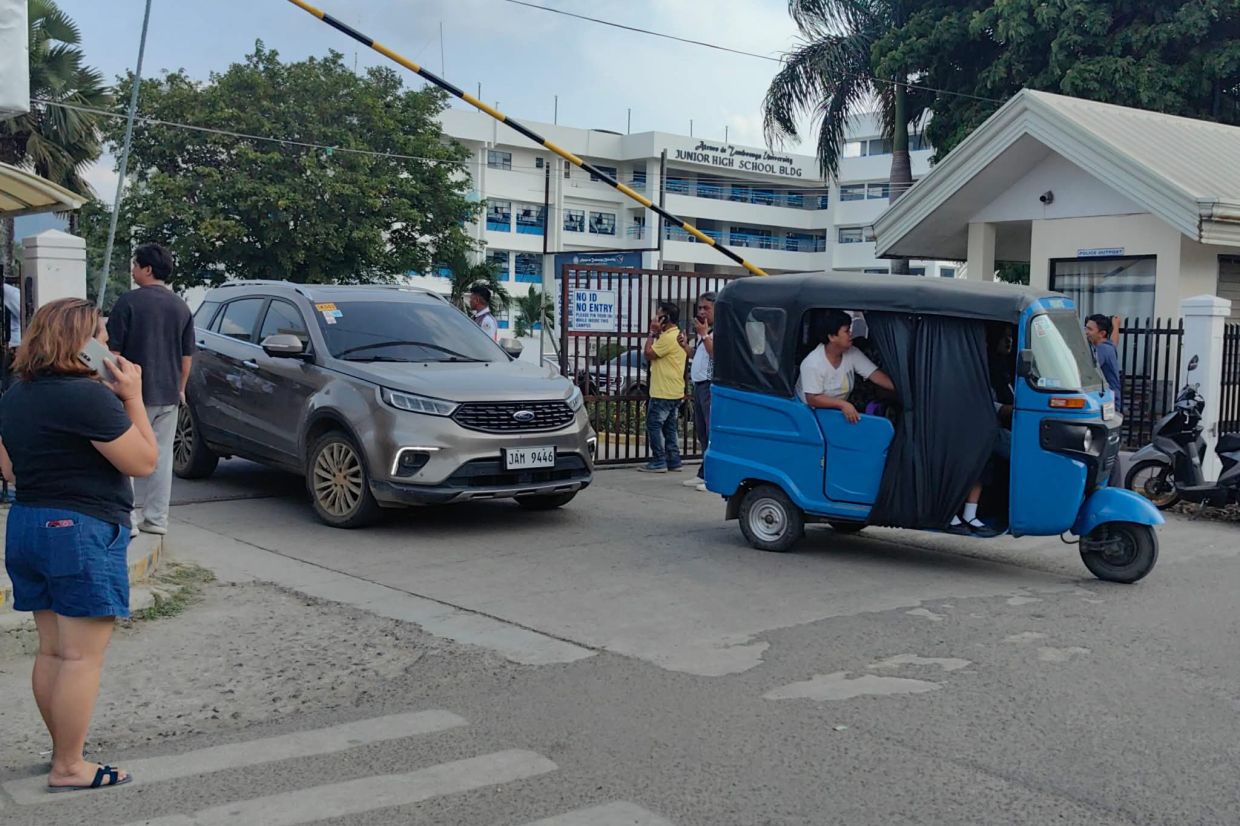
The Philippines is confronting a security challenge that has long seemed distant from its shores. Two coordinated school shooting incidents within eight weeks—first in Tacloban in July and then in Zamboanga in August—have shattered the country's historical insulation from the mass school violence epidemic plaguing the United States and other nations. This shift matters profoundly for Southeast Asia, where the Philippines occupies a pivotal position; what unfolds here often presages trends across the broader region. The shootings have triggered a cascade of copycat threats, campus stabbings, and recovered firearms on school grounds, creating an atmosphere of genuine alarm that prompted the Department of Education to initially plan nationwide active shooter drills before cancelling them after psychologists warned such exercises could deepen childhood trauma rather than alleviate it.
Historically, the country has weathered high levels of general gun violence without experiencing the school-based mass shooting phenomenon familiar to the American public, despite maintaining one of Southeast Asia's highest rates of civilian gun ownership. This apparent paradox has obscured mounting fragilities now coming into sharp focus. The convergence of factors behind the recent incidents paints a disturbing portrait of a society grappling with multiple, reinforcing vulnerabilities. Psychologists, sociologists, and lawmakers have identified what experts term a "perfect storm"—the widespread cultural acceptance of violence as a normal response to problems, the deep digital immersion of young Filipinos from early childhood, and the acute shortage of trained adults capable of identifying and supporting adolescents experiencing severe social isolation or psychological distress.
Senator Risa Hontiveros, who led investigative hearings into the shootings and the phenomenon of nihilistic violent extremism, has drawn explicit connections between the escalating school violence and what she describes as the toxic residue of the previous administration's drug war. The anti-narcotics campaign conducted under former president Rodrigo Duterte from 2016 to 2022 left tens of thousands dead, with widespread reports of extrajudicial killings and systematic impunity. Duterte himself now faces trial at the International Criminal Court in The Hague on charges of crimes against humanity stemming from this campaign. Hontiveros posed a provocative question to her colleagues: what lasting effect might the normalisation of violence emanating from the nation's highest political office—through inflammatory rhetoric, the framing of killing as state policy, and the visible absence of accountability—have exerted on the national character and adolescent psychology?
Sociologist Filomin Gutierrez of the University of the Philippines Diliman has articulated how the drug war may have established a broader cultural framework in which violence becomes instrumentalised as a legitimate tool for resolving disputes and achieving objectives. When a government openly employs mass killing as administrative policy, it sends profound messages about the acceptability of lethal force permeating through society. However, both Gutierrez and psychologist Peejay Bengwasan, who specialises in children in conflict with the law, have cautioned against attributing school shootings to a simple, linear causal relationship with the drug war. The connection is more subtle and epidemiological: a child repeatedly exposed to a political environment that celebrates or normalises violence does not automatically become violent, but does face substantially elevated probabilistic risk of internalising aggression as an ordinary response to frustration, conflict, or perceived injustice.
The challenge becomes exponentially more complex when this cultural backdrop intersects with the second major vulnerability: the unprecedented digital saturation of Philippine adolescents. Government data reveals that sixty percent of Filipino children aged ten to seventeen possess active internet access and regular social media engagement. Both the Tacloban shooters were aged fourteen and fifteen, while the Zamboanga shooter was fourteen. This cohort differs fundamentally from preceding generations in their relationship to technology. Psychologist Bengwasan emphasises that Filipino teenagers today have inhabited social media ecosystems since early childhood, never experiencing the extended period of face-to-face interaction that characterised adolescence for older Filipinos. This means they encounter algorithmic recommendation systems, digital strangers with radically different values and worldviews, and curated online communities during precisely the developmental years when susceptibility to external influence peaks and identity formation remains fluid.
Cybersecurity expert Angel Redoble provided Senate testimony detailing the systematic methodology through which extremist networks exploit these vulnerabilities. Recruiters identify lonely or socially marginalised children on mainstream platforms—online gaming servers, standard social media feeds—then gradually migrate them into private servers and encrypted messaging applications. Within these closed environments, relationship-building escalates methodically into psychological isolation, coercion, and blackmail. The process culminates in what Redoble termed "status through brutality," wherein progressively extreme ideological positions and violent acts earn social standing and recognition within the group. Eventually, this performative extremism transitions from the digital realm into physical violence. Philippine police have reported handling seventy-four cases involving nihilistic violent extremism and rescuing forty-two minors, thirty of them aged fifteen or younger, demonstrating the scale and precocity of the threat.
The digital dimension extends beyond recruitment mechanics to include post-attack glorification and contagion effects. Within hours of the Tacloban shooting, online posts celebrating and glorifying the attackers proliferated across social networks. Footage from the Zamboanga incident has been repeatedly reposted, creating a documentation archive that potentially inspires copycat perpetrators. This is particularly concerning in a nation where social media penetration rates rank among the world's highest and where digital literacy education remains inconsistent across school systems. Authorities are investigating whether subsequent bomb threats, stabbings, and firearm discoveries on campuses represent a genuine copycat phenomenon or isolated incidents, but the psychological and tactical parallels suggest the former represents a serious concern.
Yet digital factors alone cannot explain the violence. Sociologist Gutierrez articulates a paradox embedded in Philippine society itself. The nation culturally valorises tight family bonds and robust community networks, yet within this ostensibly cohesive social fabric exists a distinct class of individuals—those perceived as "weak," "strange," "delinquent," or "problematic"—who experience profound social rejection and systematic exclusion. Rather than weakening, Gutierrez argues, Filipino social bonds are "transforming," creating pockets of acute isolation for those unable to achieve conventional acceptance. These structural gaps in social integration establish the vulnerability that alternative groups and extremist subcultures exploit, offering acceptance and belonging to the rejected.
Schools function as crucial domains where adolescents negotiate complex hierarchies of popularity, peer acceptance, and social visibility. As Gutierrez explains, students develop acute awareness of whether they occupy positions of high status, genuine acceptance, or complete invisibility within the school community. Psychological research on mass shooting perpetrators identifies common patterns: attackers frequently seek through spectacular public violence to overturn the social identities imposed upon them by peers and authority figures, to destroy the narrative of rejection and invisibility. In Gutierrez's formulation, they attempt to "write their own biography" through acts of destruction, reclaiming agency by determining the violent terms through which they will be remembered.
Psychologist Bengwasan stresses that school violence must be understood not as a singular causal outcome but as emerging from accumulated exposure to multiple forms of trauma and adversity. Filipino children encounter distinctive stressors—natural disasters including typhoons, floods, and earthquakes; endemic societal violence; community instability—that accumulate psychologically. Individual children manifest distress through different channels: some internalise through anxiety and depression, others express through externally aggressive behaviour. An adolescent simultaneously exposed to normalised political violence, equipped with unprecedented digital access to extremist networks, experiencing social rejection within school hierarchies, and processing cumulative trauma from environmental and social sources faces compounded risk factors that interact synergistically.
Effective intervention requires addressing multiple levels simultaneously. The cancelled active shooter drills demonstrated awareness that security responses alone may deepen rather than mitigate trauma. Comprehensive approaches must integrate mental health screening and support, digital literacy education about extremist recruitment tactics, teacher training in identifying distressed or isolated students, family counselling programs, and community reintegration pathways for marginalised youth. The Department of Education's initiatives represent necessary first steps, but implementation will demand substantial resource commitment and sustained political will across multiple government agencies.
The international dimension cannot be overlooked. The Philippines' experience illuminates how global extremist networks operate across borders and platforms, targeting vulnerable adolescents irrespective of geography. Southeast Asian governments face shared challenges in monitoring digital spaces, coordinating law enforcement responses, and developing culturally appropriate prevention frameworks. Malaysia, Singapore, Indonesia, and Thailand have confronted similar extremism recruitment dynamics; the Philippines' current crisis offers urgent lessons for regional cooperation and policy coordination.

