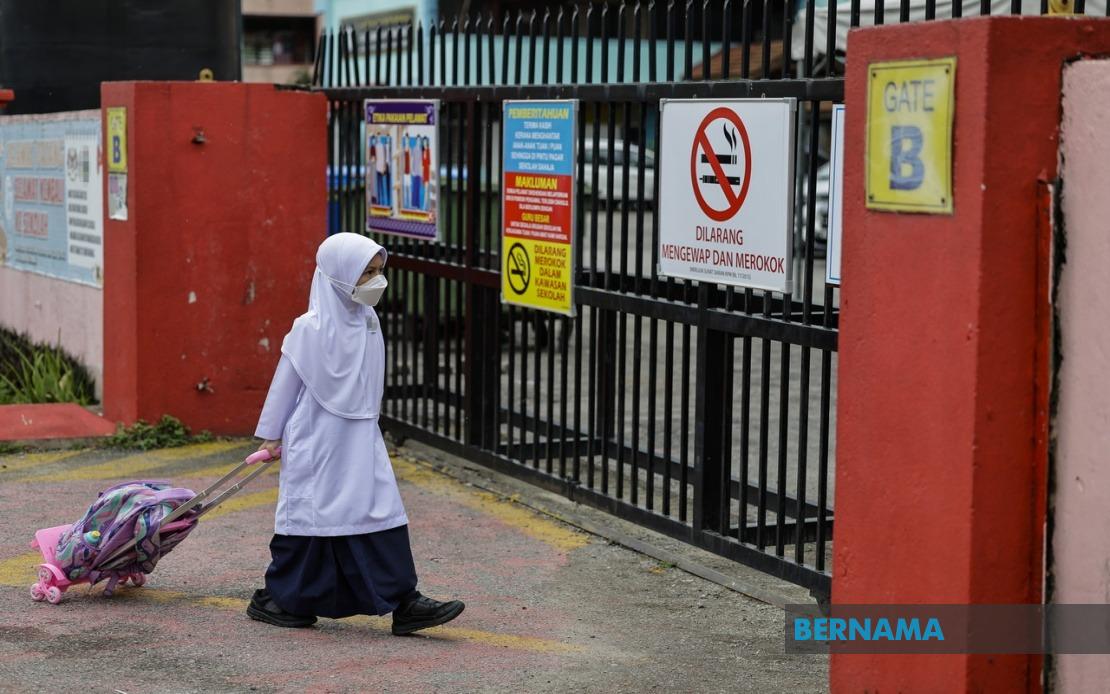
The Ministry of Education has affirmed that school principals and headmasters across the country possess the authority to close their institutions whenever the Air Pollutant Index reaches levels exceeding 200, though such decisions must align with recommendations from State Education Departments and District Education Offices. Deputy Education Minister Wong Kah Woh disclosed this framework in Taiping, emphasizing that closure decisions hinge on localised conditions rather than a blanket national directive. This decentralized approach reflects recognition that air quality varies significantly across regions and states, meaning a school in one locality may face severe haze while another in a different area experiences acceptable conditions.
The ministry has maintained established protocols for managing haze episodes dating back several years, with formal Circulars issued in 2016, 2019, and 2023 providing comprehensive guidance to education administrators. These documents serve as reference points for schools navigating hazardous air quality periods, though they offer flexibility rather than rigid mandates. The existence of multiple iterations reflects evolving understanding of haze impacts and the ministry's commitment to refining its response mechanisms over time. Wong's comments suggest the ministry recognizes that environmental crises require adaptive management strategies that account for changing circumstances.
Education authorities will maintain continuous monitoring of haze conditions and API readings through established institutional channels, distributing real-time information to schools so administrators can make informed decisions. This surveillance infrastructure ensures that principals receive reliable data rather than relying on ad-hoc observations or media reports. The responsibility for implementing protective measures ultimately rests with school leaders, who must balance competing considerations including student health, academic continuity, and logistical feasibility. Wong's attribution of decision-making authority to principals suggests the ministry trusts school administrators to exercise judgment appropriate to their circumstances.
When API readings climb to 100 or above, schools must immediately suspend all outdoor activities and public gatherings, creating indoor-only learning environments until air quality improves. This threshold sits well below the 200 closure benchmark, indicating a graduated response system with multiple intervention points. Postponement of outdoor sporting events, competitions, and field activities becomes mandatory at this level, preventing students from inhaling polluted air during strenuous physical exertion when respiratory intake increases significantly. The implementation of such measures protects student health while maintaining educational operations, recognizing that temporary activity modifications represent a less disruptive alternative to full closures.
Wong's statement followed reports of multiple locations nationwide experiencing unhealthy API readings, prompting questions about how the education system would respond to deteriorating air quality. The timing of his clarification demonstrates the ministry's responsiveness to emerging environmental challenges and public concern about student welfare. Several regions had already recorded concerning pollution levels, raising awareness among parents and school administrators about potential operational disruptions. By providing clear guidance, Wong sought to reduce uncertainty and prevent schools from making ad-hoc decisions without proper coordination.
The framework acknowledges that air quality crises demand flexibility from educational institutions, departing from conventional expectations of uninterrupted classroom operations. Severe haze episodes represent genuine health emergencies, particularly for vulnerable populations including young children whose respiratory systems remain underdeveloped. Schools operating in heavily affected areas may face situations where maintaining normal schedules poses unacceptable risks to student wellbeing. The discretionary closure provision thus recognizes practical realities while avoiding unnecessary disruptions in areas where pollution levels remain manageable.
State Education Departments and District Education Offices function as intermediary institutions providing expert guidance and coordination, preventing schools from acting in isolation. These bodies can synthesize information about prevailing air quality across their jurisdictions, identifying patterns and anticipating problems before they become acute. Their advisory role enables principals to make decisions informed by official expertise rather than relying solely on their own observations. This institutional arrangement distributes responsibility across multiple levels of the education system, ensuring that no single entity bears complete accountability for complex environmental responses.
The existence of multiple Circulars spanning nearly a decade indicates that haze management has become an established component of Malaysian educational administration. Earlier iterations likely incorporated lessons learned from previous episodes, with each new document reflecting refinements to existing protocols. The continuity of this guidance system suggests haze episodes constitute recurring challenges rather than unprecedented emergencies. Schools have developed experience implementing these procedures, and teachers understand the operational adjustments required when air quality deteriorates. However, individual episodes vary in intensity and geographic extent, necessitating adaptation of general guidelines to specific circumstances.
For Malaysian readers and educational stakeholders, this clarification carries significant implications given the country's geographic proximity to sources of transboundary haze, particularly from seasonal agricultural burning in neighbouring regions. Schools in peninsular Malaysia have experienced disruptive air quality episodes periodically, particularly during dry seasons. The formal acknowledgment that principals possess closure authority provides important reassurance to parents concerned about exposing children to hazardous conditions. Simultaneously, the threshold-based approach—requiring suspension of outdoor activities at API 100 and permitting closures at API 200—establishes clear standards rather than leaving decisions entirely to subjective judgment.
The ministry's emphasis on continuous monitoring through established institutional channels suggests growing sophistication in environmental response systems. Schools can now anticipate deteriorating conditions rather than reacting only after pollution becomes severe. This proactive stance benefits students by minimizing exposure to hazardous air and allows families to make advance arrangements if closures occur. Teachers can plan lessons accordingly, potentially shifting outdoor curriculum components indoors or rescheduling them when air quality improves. Such preparation reduces operational chaos that might otherwise accompany unexpected closures.
Beyond immediate health protection, the framework reflects broader recognition that climate-related and environmental challenges increasingly intersect with educational operations. As transboundary haze becomes more frequent and intense, Malaysian schools must develop resilience and adaptive capacity. The discretionary closure system enables institutions to prioritize student welfare without requiring central government authorization for each episode. This approach distributes decision-making authority in ways that respect local knowledge while maintaining accountability to national standards. Education administrators across the country now possess explicit permission to protect their students during environmental crises, establishing a precedent for responding to future climate-related disruptions that may extend beyond haze to include flooding, extreme heat, and other hazards.
Wong's clarification also underscores the ministry's recognition that student health constitutes a prerequisite for effective education. Children exposed to severe air pollution experience respiratory distress, reduced oxygen intake, and cognitive impairment that undermines learning outcomes regardless of whether schools remain technically open. By authorizing closures at API 200 and activity suspensions at API 100, the ministry acknowledges that sometimes the most educationally sound decision involves temporary cessation of normal operations. This perspective prioritizes long-term student development over short-term attendance metrics, suggesting a maturing approach to educational administration that incorporates environmental and public health considerations alongside traditional academic metrics.

