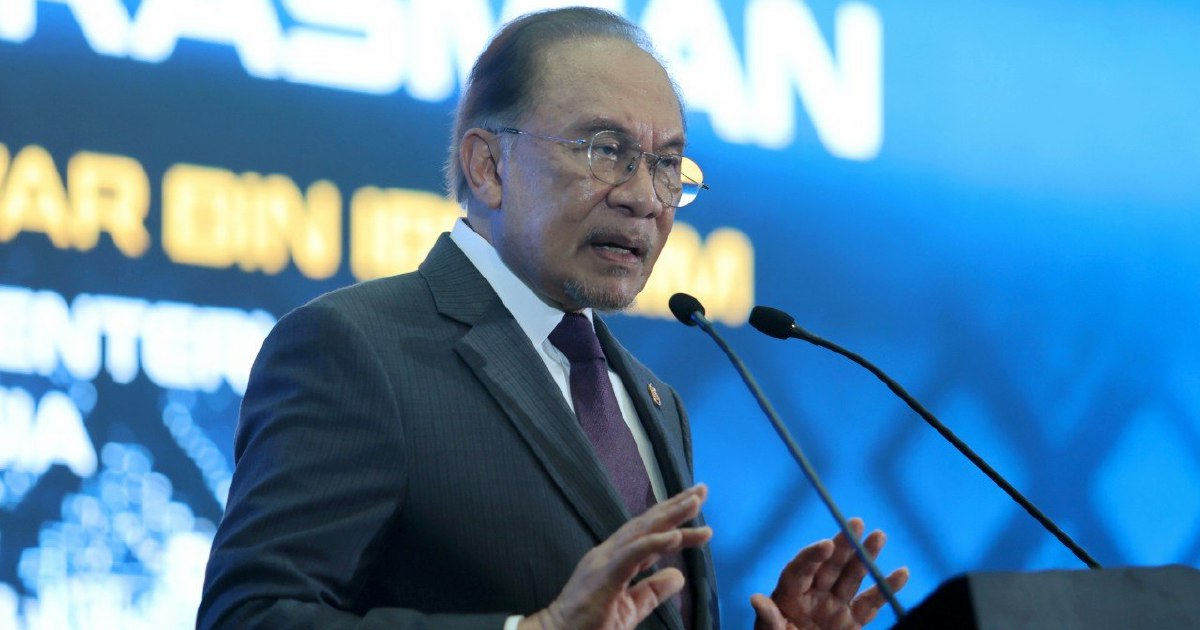
Prime Minister Datuk Seri Anwar Ibrahim has sounded a direct warning to Malaysian schools that concealing bullying cases to shield their institutional reputations is both ethically indefensible and ultimately counterproductive. Speaking in Nilai, the Prime Minister stressed that swift, transparent action remains indispensable when addressing incidents of student harassment and intimidation within school premises.
Anwar's intervention comes against a backdrop of persistent concerns over how Malaysian educational institutions handle behavioural incidents. Bullying in schools—whether physical, verbal, or digital—continues to afflict students across the country, yet many cases reportedly go unaddressed or are managed quietly behind closed doors. The reluctance of some schools to formally acknowledge and investigate such matters reflects a concerning institutional culture in which reputational protection takes precedence over student welfare.
The Prime Minister's statement carries significant weight given his position as the nation's chief executive and his recurring emphasis on institutional accountability and good governance. By singling out this issue, Anwar has signalled that the government views school bullying not merely as a disciplinary matter for individual educators to handle but as a systemic concern requiring transparency and proper oversight. This positioning elevates bullying from a routine pastoral issue to one deserving elevated policy attention.
The rationale for schools to cover up bullying incidents typically centres on institutional self-interest. A well-publicised bullying case may tarnish a school's reputation, potentially affecting enrolment numbers, donor confidence, and parental perceptions. However, such short-term reputational calculations ignore the profound, lasting harm inflicted on victims. Students subjected to repeated bullying often experience psychological trauma, academic decline, and in severe cases, self-harm or suicidal ideation. The true damage to a school's reputation occurs not when incidents are transparently investigated but when cover-ups are subsequently exposed—a pattern that has played out repeatedly in Malaysian and international school contexts.
Transparency in bullying cases also carries protective benefits for schools themselves. When institutions establish clear reporting mechanisms, conduct impartial investigations, and implement visible corrective measures, they demonstrate a genuine commitment to student safety. This approach typically strengthens rather than weakens community confidence in the school. Parents and guardians increasingly expect educational institutions to act as responsible custodians of their children's physical and emotional wellbeing, and institutions that meet this expectation build sustainable trust.
The implementation of Anwar's guidance will require structural changes in how schools operate. Many institutions currently lack formal protocols for documenting, investigating, and resolving bullying complaints. Teachers and administrative staff may receive limited training in recognising bullying or responding appropriately. Creating anonymous reporting channels, establishing independent investigation procedures, and ensuring that victims receive psychological support represents a considerable institutional commitment. Yet these measures are essential if schools are to transition from a culture of concealment to one of accountability.
Malaysia's broader educational context adds urgency to this directive. The education system operates under increasing scrutiny regarding student mental health and welfare. The rise of cyberbullying alongside traditional forms of harassment has created new complexities for schools attempting to monitor and address student conduct. Furthermore, Malaysia's diverse, multi-ethnic society means that bullying sometimes intersects with ethnic, religious, or socioeconomic prejudice, amplifying its severity and the stakes involved in proper institutional response.
Parental engagement emerges as another crucial element in creating an environment where schools feel obligated to report rather than suppress bullying. When parents and guardians actively seek information about incidents affecting their children and take seriously any suggestions of harassment, schools face real accountability pressure. Parent-teacher associations and school governance structures can play pivotal roles in establishing transparent complaint procedures and monitoring institutional responses. Parents who find that schools are minimising or concealing bullying cases have legitimate channels—including educational regulators and media—through which to escalate concerns.
The Ministry of Education and relevant oversight bodies must now translate the Prime Minister's warning into actionable policy. This might include mandatory reporting requirements for bullying cases, prescribed investigation timelines, standardised documentation procedures, and regular external audits of school compliance. Training programmes for school leaders and counsellors should emphasise that institutional reputation is best protected through demonstrable commitment to student safety rather than through silence. Clear consequences for schools that systematically conceal or mishandle bullying complaints would reinforce the seriousness of the government's position.
Anwar's intervention also signals to students and families that speaking up about bullying carries government endorsement. When a Prime Minister explicitly advocates for transparency, it reduces the social cost of reporting incidents. Young people who might otherwise remain silent, fearing that their complaints would be minimised or suppressed, gain reassurance that senior leaders consider their experiences worthy of serious investigation and action. This psychological shift can be transformative in encouraging help-seeking behaviour among bullying victims.
Looking forward, the effectiveness of Anwar's directive will ultimately depend on consistent implementation across diverse school environments. Urban schools with greater resources may relatively easily establish robust protocols, while rural or under-resourced institutions may require targeted government support to do so. The Ministry of Education should consider directing additional counselling, training, and administrative resources to schools serving disadvantaged populations, where bullying sometimes intersects with poverty and social marginalisation.
The Prime Minister's warning also invites reflection on how Malaysian society more broadly approaches institutional accountability and the relationship between reputation and responsibility. The principle that institutions should be transparent about failures rather than concealing them applies well beyond schools. By firmly anchoring this principle in the education sector, where the stakes—young people's psychological development and safety—are particularly high, Anwar has established a benchmark for institutional culture that extends broader implications for governance across multiple sectors.

