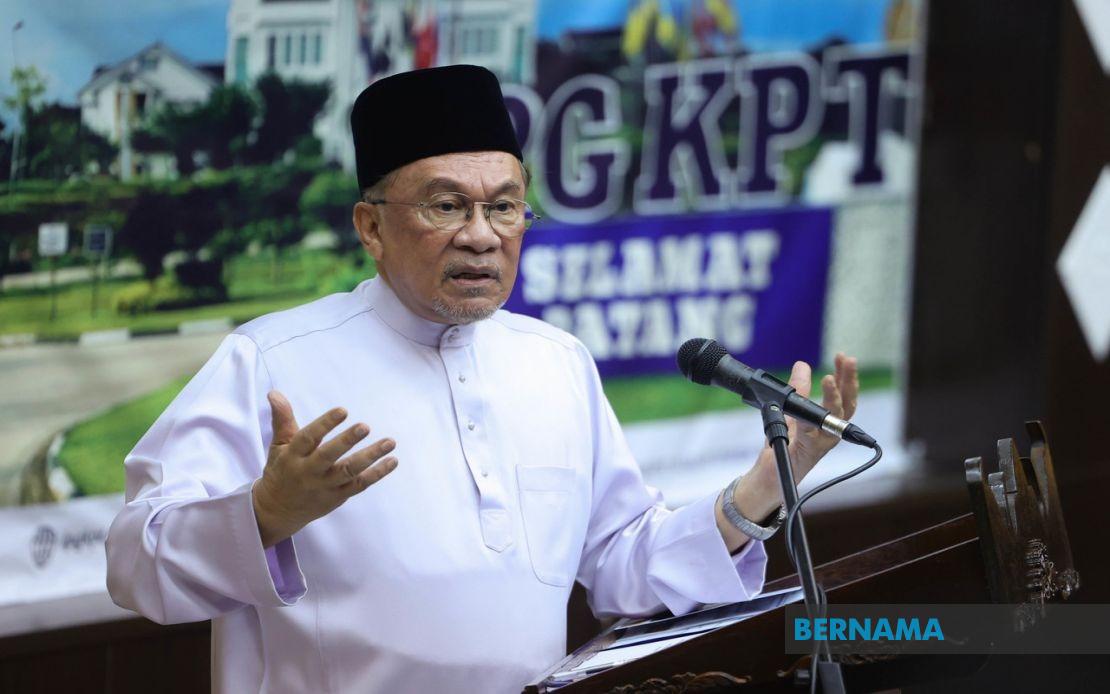
Prime Minister Datuk Seri Anwar Ibrahim has urged Malaysian schools to abandon the practice of concealing bullying incidents in order to preserve their institutional image, warning that such cover-ups ultimately harm students and undermine the true purpose of education. Speaking in Nilai on July 17, Anwar stressed that school leadership must prioritise victim welfare and effective remedial action over concerns about how bullying cases might reflect on their establishment's standing within the community.
The Prime Minister's remarks challenge what appears to be a persistent institutional culture where some schools treat bullying reports as reputational threats rather than disciplinary matters requiring transparent resolution. Anwar articulated a nuanced position on institutional accountability, suggesting that reporting bullying cases should not be viewed as evidence of leadership failure. Instead, he argued that principals and headteachers demonstrate genuine responsibility by acknowledging problems and implementing corrective measures, whereas concealing such incidents constitutes a genuine breach of duty to students.
Anwar illustrated his point with a practical example, noting that a school with 1,000 students reporting two bullying cases should not face criticism for transparency. The hypothetical framing underscores a broader argument: that the presence of disciplinary issues in any educational institution is not inherently shameful, but the failure to address them transparently and effectively represents a serious institutional failure. This distinction carries particular significance for Malaysian schools, where competitive pressures and rankings often create incentives to suppress negative information.
The Prime Minister's intervention reflects growing national concern about bullying in Malaysian schools, a phenomenon that has triggered multiple high-profile cases and community outcry in recent years. By placing bullying disclosure squarely in the realm of institutional ethics rather than image management, Anwar's comments establish a clear policy direction: schools will be evaluated not on the absence of bullying, but on their candour and responsiveness when such incidents occur. Education Minister Fadhlina Sidek's presence at the event signalled ministerial support for this policy orientation.
Beyond procedural matters of reporting, Anwar characterised bullying as symptomatic of deeper educational deficiencies. He contended that the persistence of such behaviour suggests systemic failures in character development and moral formation, despite increased access to religious education programmes throughout Malaysia's schooling system. This diagnosis shifts the conversation from treating bullying as an inevitable feature of school life toward viewing it as evidence of inadequate holistic education that prioritises academic or technical achievement over ethical development.
Anwar's critique extends to the fundamental purpose and philosophy of Malaysian education. He challenged the prevailing assumption that educational success should be measured primarily through academic excellence or technical proficiency, arguing instead that schools bear responsibility for cultivating individuals grounded in humanistic values and interpersonal respect. The Prime Minister questioned the worth of producing graduates with advanced qualifications if those individuals lack fundamental understanding of human dignity and mutual respect, a rhetorical move designed to reframe educational priorities for Malaysian policymakers and school administrators.
The comments underscore a philosophical tension in contemporary Malaysian education: between preparing technically skilled workers capable of serving the nation's development ambitions and fostering morally grounded citizens capable of building cohesive, respectful communities. Anwar's intervention suggests that the current balance has shifted too heavily toward technical and academic metrics, leaving character education undernourished despite theological and moral frameworks ostensibly embedded within the curriculum.
Teachers emerge from Anwar's remarks as central actors responsible for translating this broader educational vision into daily practice. He emphasised that educators carry substantial responsibility for ensuring schools function as genuine learning environments that produce graduates characterised by strong faith, robust moral foundations, and authentic concern for others' wellbeing. This framing positions teachers not merely as content deliverers but as moral educators whose professional obligations extend significantly beyond subject matter instruction.
Despite his critical observations about bullying and character education, Anwar offered measured recognition of Malaysia's teaching profession. He acknowledged that educators are generally performing at high standards and expressed confidence that professional performance will continue improving alongside broader efforts to elevate overall education quality. This balanced approach—combining constructive criticism with institutional recognition—establishes a collaborative rather than adversarial tone for implementing the bullying disclosure policy.
For Malaysian schools, particularly those under pressure to maintain competitive standing and prestigious reputations, Anwar's remarks establish clear expectations that transparency in reporting bullying cases constitutes professional responsibility rather than institutional failure. The Prime Minister's intervention effectively redefines institutional reputation, suggesting that trustworthiness and transparent problem-solving should supersede the absence of reported incidents as markers of institutional excellence. This reframing has implications across Southeast Asia's education systems, where similar pressures often incentivise silence about disciplinary matters.
The practical consequences of this policy direction remain to be seen as schools navigate the tension between reportage requirements and parental concerns about institutional image. However, Anwar's unambiguous position creates political cover for schools choosing transparency, potentially diminishing the reputational risks previously associated with bullying disclosures. The articulation of this principle at the highest governmental level signals that Malaysian education authorities expect forthright institutional behaviour from schools regardless of how such transparency might initially appear to external stakeholders.
Looking forward, Anwar's emphasis on character education and moral formation suggests that addressing bullying requires intervention extending beyond disciplinary procedures to encompass comprehensive curriculum reform and teaching practice evolution. The challenge facing Malaysian educational institutions involves translating the Prime Minister's philosophical position into concrete pedagogical approaches that genuinely cultivate respect, empathy, and ethical behaviour among students. Success requires sustained commitment beyond policy pronouncements, suggesting that schools must invest substantially in teacher training, curriculum redesign, and school culture transformation to fulfil the educational vision Anwar articulated.

