The Sejahtera MADANI initiative operating in Perak has successfully channeled RM2.3 million in assistance to approximately 2,000 residents, marking a significant milestone in the government's targeted welfare delivery. Building on this momentum, the programme has now secured an additional RM3 million allocation to deepen its reach and strengthen support mechanisms for vulnerable communities across the state.
Muhammad Kamil Abdul Munim, political secretary to the Finance Minister, outlined the expanded scope of the initiative during an official event in Kuala Kangsar. The additional funding represents a deliberate strategy to broaden the beneficiary base beyond initial recipients, with particular emphasis on three demographic groups: small-scale business operators struggling to establish sustainable enterprises, households earning below the poverty line, and academically gifted students pursuing tertiary education.
The assistance model employed by Sejahtera MADANI extends considerably beyond simple cash transfers. The programme recognizes that sustainable poverty alleviation requires multifaceted intervention. Micro-entrepreneurs receive not only financial grants but also practical business equipment and tools designed to enhance operational efficiency and revenue generation capacity. This approach acknowledges that access to capital alone often proves insufficient without corresponding improvements to productive capacity.
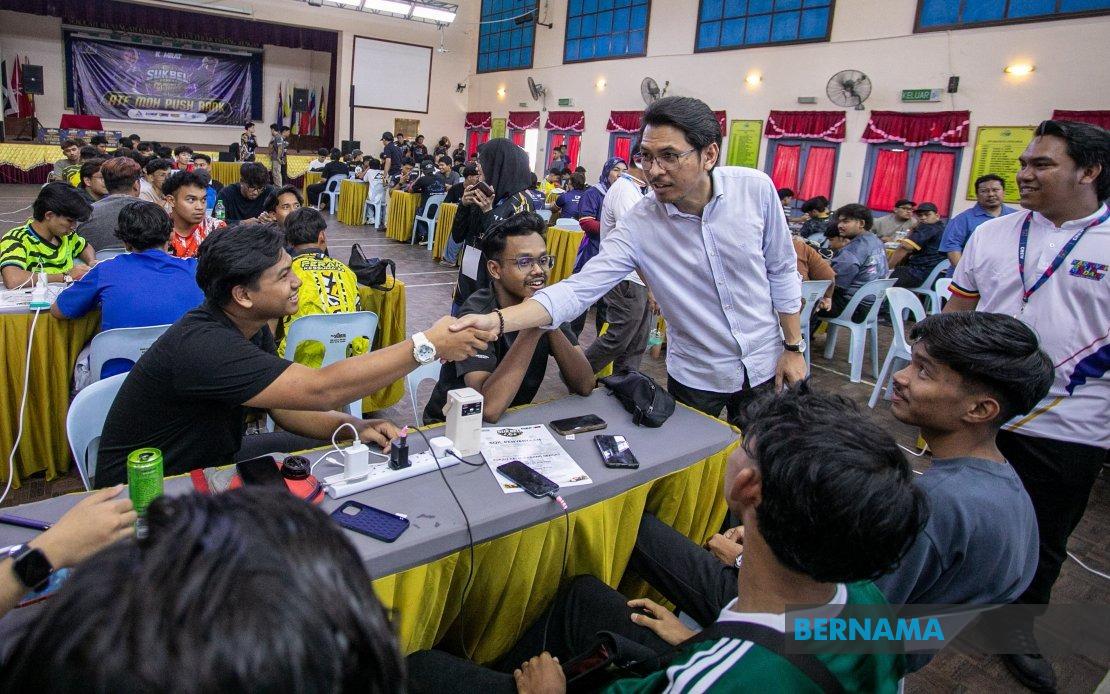
At a roadshow held in the Padang Rengas parliamentary constituency at Millennium Hall in Lubok Merbau, the programme demonstrated its commitment to educational advancement by providing laptops to thirteen high-performing SPM students preparing to enter universities and other institutions of higher learning. Simultaneously, five small-scale business operators received equipment packages tailored to their respective enterprise needs. These concurrent presentations illustrated the programme's holistic philosophy of investment across different life stages and economic circumstances.
According to Muhammad Kamil, the distribution of aid through Sejahtera MADANI reflects a broader policy commitment by the current administration to ensure public resources reach intended beneficiaries with measurable, tangible impact. The government views targeted assistance not merely as charity but as strategic investment in human capital and economic productivity. By focusing on students with demonstrated academic excellence and entrepreneurs with genuine business potential, the initiative aims to multiply the returns on every ringgit spent.
However, the expansion of the programme occurs alongside acknowledgment of implementation challenges encountered during earlier phases. Muhammad Kamil disclosed that monitoring mechanisms for the related SejaTi MADANI grant scheme are being substantially strengthened following instances of project failure and inadequate fund management. These setbacks prompted a strategic recalibration of oversight practices to prevent recurrence of problematic execution.
The original design of the SejaTi component permitted local communities considerable autonomy in identifying and prioritizing development projects reflecting their specific needs and circumstances. While this community-driven approach embodied valid principles of participatory governance, experience revealed that insufficient central supervision created vulnerabilities to mismanagement and project abandonment. Acknowledging these weaknesses, the government now mandates tighter administrative control throughout the implementation cycle.
Muhammad Kamil emphasized that heightened vigilance does not suggest loss of confidence in grassroots participation but rather represents mature recognition that effective social programme delivery requires balancing community empowerment with institutional accountability. The strengthened monitoring framework aims to detect irregularities early, prevent fraudulent claims or fund diversion, and ensure projects proceed according to approved specifications and timelines. Regular supervision throughout implementation phases serves as corrective mechanism rather than punitive measure.
For Malaysian readers, the Sejahtera MADANI initiative represents the government's practical response to persistent economic inequality and barriers to upward mobility. In Perak specifically, the programme addresses longstanding challenges of rural poverty, limited entrepreneurial ecosystems, and unequal educational opportunities. The focus on students achieving SPM excellence acknowledges that academic merit alone frequently fails to guarantee university access without financial support, potentially wasting human potential.
The programme's emphasis on equipping small-scale entrepreneurs with productive assets reflects recognition that many Malaysian business operators lack access to credit markets and must compete without adequate equipment or technology. By providing these tools directly, the initiative removes a significant barrier to competitiveness and profitability for businesses operating at the margins of the formal economy.
Regional observers noting Malaysia's social protection mechanisms will recognize that Sejahtera MADANI sits within a broader architecture of means-tested assistance and universal programmes. The initiative's targeted approach complements rather than replaces comprehensive social protection systems, focusing resources on specific demographic groups facing particular constraints. This precision approach theoretically improves cost-effectiveness compared to broader universal schemes, though implementation challenges remain evident.
The additional RM3 million allocation signals sustained government commitment to expanding the programme despite earlier implementation difficulties. Rather than abandoning the initiative following setbacks, authorities have chosen to strengthen governance frameworks and scale up operations. This decision reflects confidence that the underlying concept remains sound, with problems attributable to execution rather than conceptual design.
As the programme enters its next expansion phase, success will depend on whether strengthened monitoring mechanisms can prevent previous failures while preserving the community consultation elements that make the initiative responsive to local priorities. For residents of Perak and similar states with comparable development needs, the expanded Sejahtera MADANI funding offers concrete opportunities for economic advancement and educational progress, contingent on effective, honest implementation.

