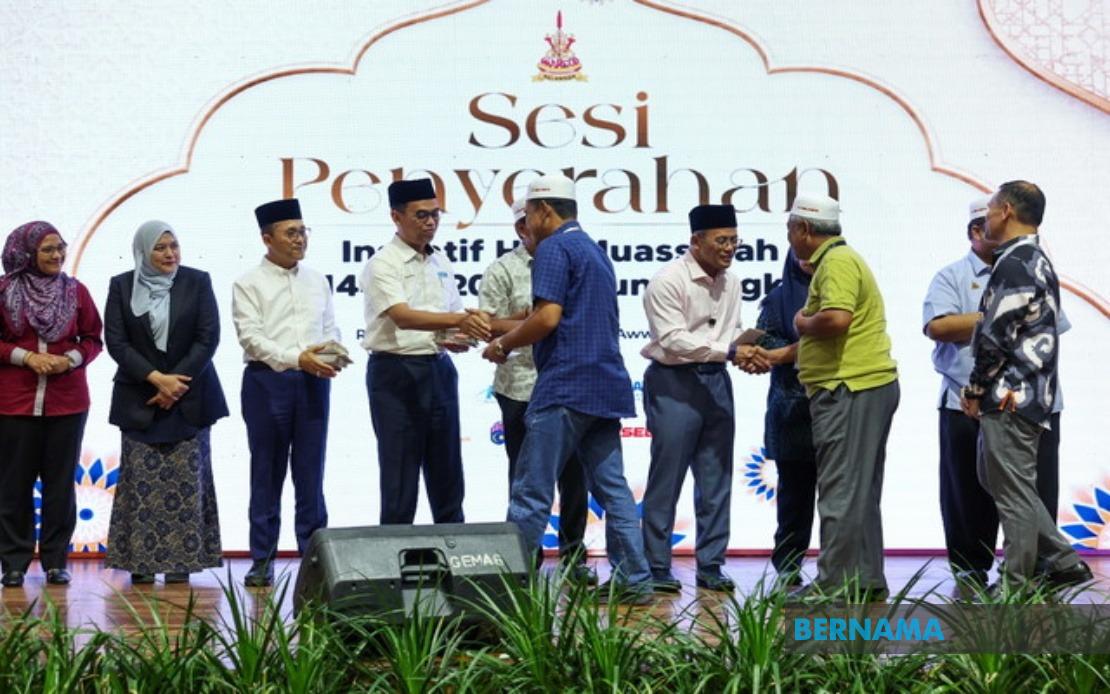
The Selangor state government is on track to complete its 2026 Haj assistance programme, with nearly 80 percent of intended recipients already receiving their allocated funds. Menteri Besar Datuk Seri Amirudin Shari announced at the Dengkil constituency payment ceremony in Puchong that 4,800 of the 6,000 eligible pilgrims have obtained their disbursements, with officials actively pursuing the remaining beneficiaries to finalise transfers by month's end or early September.
The initiative represents a significant commitment to pilgrimage preparation across Selangor. Through the Selangor Menteri Besar Incorporated Foundation, known locally as Yayasan MBI, the state has committed RM9 million to support its Muslim residents undertaking the sacred Islamic obligation. Each recipient receives RM1,500 to cover essential preparation expenses including religious garments, prescribed medications, specialised footwear, and other items necessary for the demanding journey to Mecca and Medina.
The assistance programme reflects strategic planning by Selangor's administration to reduce financial barriers facing middle and lower-income households. The RM1,500 allocation, while modest in absolute terms, addresses a meaningful portion of the estimated costs pilgrims face when purchasing appropriate clothing, medical supplies, and equipment tailored for the Middle Eastern climate and terrain. For many families in the state, this financial cushion can mean the difference between completing their religious aspiration or postponing it further.
Amirudin's statement during the Dengkil ceremony, which covered 259 recipients, indicates the government is implementing a phased distribution approach. Rather than attempting to process all 6,000 payments simultaneously, which could strain administrative resources, authorities are conducting targeted ceremonies across constituencies. This method also provides opportunities for local political representatives to engage directly with constituents and reinforce the state's commitment to supporting religious observances.
Deputy Housing and Local Government Minister Datuk Aiman Athirah Sabu, who represents the Sepang parliamentary constituency encompassing the ceremony venue, attended the event alongside Amirudin. Her presence underscores the programme's cross-level political support and integration with federal development priorities, demonstrating alignment between state and national government objectives regarding citizen welfare.
Looking ahead, Selangor's leadership has outlined ambitions to substantially strengthen the initiative. Amirudin indicated that pending favourable fiscal conditions, the state intends to raise the per-recipient allocation to RM2,000, potentially beginning in 2027 or 2028. This proposed enhancement would represent a 33 percent increase in support per pilgrim, translating to approximately RM12 million if extended across all 6,000 beneficiaries at the higher rate. The cautious framing of this commitment acknowledges that state budget pressures could necessitate postponement or modification.
The evolution of this programme reflects broader regional trends in how state governments are supporting religious observances. Across Southeast Asia's Muslim-majority nations and communities, public authorities increasingly recognise that facilitating Haj participation strengthens social cohesion and reflects responsive governance. Selangor's approach differs from some neighbouring states by establishing quantified, expandable support rather than ad-hoc interventions, suggesting administrative sophistication and medium-term planning horizons.
For Malaysian pilgrims, particularly those from middle-income backgrounds in Selangor's urban and semi-urban areas, such financial support carries practical significance. The Haj involves months of preparation, including obtaining appropriate vaccinations, acquiring specific clothing items, and undergoing physical conditioning for the arduous rituals performed across multiple sacred sites. Transportation, accommodation, and meal costs during the pilgrimage itself represent substantial additional expenditure typically handled through separate channels. State-level preparation assistance thus complements rather than replaces other funding mechanisms including personal savings, family contributions, and banking facilities specifically structured for pilgrimage financing.
The administrative challenge of identifying and contacting the remaining 1,200 recipients suggests that not all eligible applicants have been easily reachable. This common difficulty in welfare distribution schemes across Southeast Asia—where database accuracy, contact information accuracy, and awareness gaps persist—underscores why multiple payment ceremonies across constituencies remain necessary. Some beneficiaries may have relocated, changed contact details, or remain unaware of their eligibility, requiring localised outreach efforts.
Selangor's commitment to this initiative also carries political dimensions worth noting. As Malaysia's most economically developed state and home to the capital region, Selangor maintains significant fiscal capacity compared to other states. Demonstrating responsiveness to constituent needs through religious support programmes builds political capital and appeals to the state's substantial Muslim population. The visible distribution ceremonies generate local media coverage and direct engagement opportunities for elected representatives.
The programme's structure and timeline raise questions about sustainability and scalability. If Selangor successfully increases allocations to RM2,000 per pilgrim within two years, the annual commitment could approach RM12 million or more if the eligible population expands. State budgets face competing pressures from infrastructure, education, and healthcare needs, making long-term projections uncertain despite current political commitment. Amirudin's candid acknowledgment that unexpected fiscal constraints could force programme modifications reflects financial realities facing Malaysian state administrations.
For Malaysia's broader Muslim community and Southeast Asian pilgrimage dynamics, Selangor's initiative signals a trend toward state-facilitated Haj preparation. As the region's Muslim populations grow and aspire toward religious observance, state governments increasingly position themselves as facilitators of these journeys. Whether through direct cash assistance, subsidised transportation arrangements, or guidance services, the infrastructure supporting Haj participation continues expanding. Selangor's programme thus represents both a local policy response and a marker of evolving state-level engagement with religious practice across the region.

