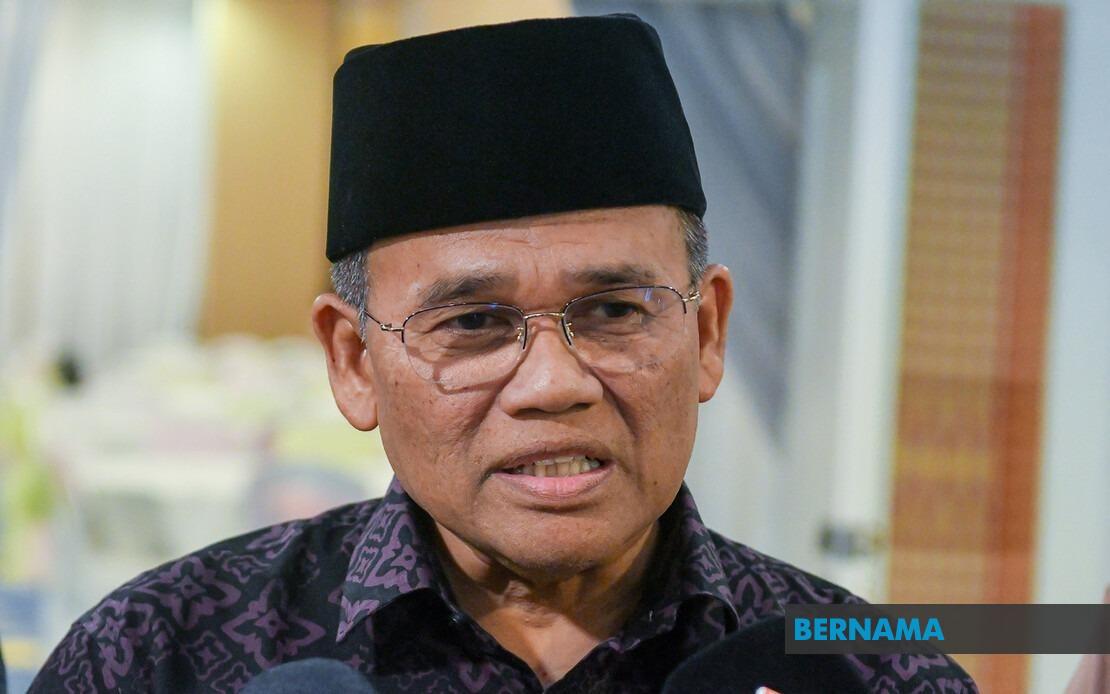
The Selangor Islamic Religious Council (MAIS) has formally confirmed that authorisation to hold Friday prayers at the Musala IOI City Mall in Putrajaya commenced on September 6, 2024, following approval by the Selangor State Mosque and Surau Governance Committee (JATUMS) and endorsement from Sultan Sharafuddin Idris Shah, the Sultan of Selangor. This decision represents a significant accommodation for the substantial Muslim workforce and regular visitors to the commercial venue, which had previously faced logistical obstacles in observing their religious obligations.
According to Datuk Salehuddin Saidin, MAIS chairman, the authorisation emerged from a comprehensive assessment demonstrating that the shopping mall complex accommodates a considerable population of male Muslim employees and attracts consistent Muslim footfall. The evaluation concluded that existing Friday prayer facilities in the vicinity proved inadequate for congregants seeking to fulfil this essential Islamic obligation without incurring unreasonable inconvenience or travel time.
The geographical constraint underpinning this decision reflects the practical realities facing urban workers. The two nearest established mosques—Masjid Al-Mustaqim Kampung Dato' Abu Bakar Baginda and Masjid UNITEN, Kajang—lie approximately 7.6 and 7.7 kilometres away respectively. Beyond distance, both facilities operate at capacity constraints during peak prayer times, rendering them unsuitable alternatives for the IOI City Mall population seeking to pray together during Friday congregations.
Importantly, MAIS has stipulated that this approval remains temporary in nature. The council anticipates that once a dedicated mosque is constructed in proximity to the premises with sufficient capacity to serve both workers and visitors, the special permission for Friday prayers at the musala will be withdrawn. This framework ensures that the temporary measure addresses an immediate need while encouraging longer-term infrastructure development aligned with Islamic institutional standards.
The decision carries particular significance for Malaysia's commercial sector, where shopping malls have increasingly emerged as major employment hubs drawing Muslim workers from diverse backgrounds. The approval acknowledges the practical tension between urban development patterns and the accommodation of religious observance, a challenge that extends across the Southeast Asian region as economies urbanise and workforces congregate in commercial districts.
Selangor's approach appears measured and strategic. MAIS, working in partnership with the Selangor Islamic Religious Department (JAIS), has positioned itself as committed to maintaining orderly, lawful implementation of Friday prayer facilities throughout the state. By grounding the decision in Islamic jurisprudence and legal provision, the council reinforces the principle that religious accommodation occurs within a framework of governance and institutional oversight rather than ad-hoc arrangements.
Crucially, MAIS initially signalled stricter boundaries on shopping centre prayer facilities. Earlier statements indicated that Sultan Sharafuddin had not provided general consent for shopping centre surahs or musalas to conduct Friday prayers broadly. The IOI City Mall approval thus represents a carefully justified exception rather than precedent for liberalising Friday prayer permissions across commercial venues. This nuanced position suggests MAIS recognises both the legitimate need to facilitate religious practice and the broader institutional concern about fragmenting Friday prayer congregations across numerous small venues.
The underlying rationale speaks to Islamic principles regarding congregational prayer. Friday prayers historically centralise Muslim communities at designated mosques, fostering social cohesion and collective identity. Proliferation of Friday prayer facilities across shopping centres could potentially diminish this unifying function. MAIS's insistence on temporary status and future mosque construction thus reflects theological considerations alongside pragmatic workforce accommodation.
For Malaysian employers and facility managers, the ruling clarifies that musala space alone does not automatically translate into Friday prayer authorisation. Establishing such capability requires demonstrating genuine accessibility barriers, worker demographics, and proximity constraints that make existing mosque facilities genuinely unsuitable. This threshold-based approach protects both worker rights and the structural integrity of mosque-centred Muslim communal life.
The decision also illuminates MAIS's governance structure, emphasising the interplay between specialist committees like JATUMS and monarchical validation through the Sultan. Religious authority in Selangor operates through institutional checks and royal consent, ensuring that individual approvals reflect collective deliberation rather than bureaucratic discretion. This institutional framework provides legitimacy while maintaining accountability.
Looking forward, the IOI City Mall approval should prompt similar assessment of worker accessibility challenges across other major employment centres in Selangor and neighbouring states. Whether other shopping complexes, industrial parks, or office districts face comparable Friday prayer barriers remains an open question. MAIS's precedent establishes that such barriers, when substantiated through rigorous evaluation, merit institutional accommodation rather than dismissal.
Ultimately, the IOI City Mall musala represents pragmatic religious governance adapted to contemporary urban labour patterns. By authorising temporary Friday prayer facilities while maintaining institutional standards and planning for permanent mosque infrastructure, MAIS demonstrates how Islamic religious authorities can balance accommodation of modern workplace realities with traditional congregational principles. This balanced approach may offer lessons for other Southeast Asian Muslim-majority jurisdictions managing similar tensions between religious observance and urban development.

